
“A Telegram to my dear Suki” opens at Gagosian Athens on June 20, 2025
The emotional tone is set by a note from Murillo that serves as a tribute and invitation:
Dearest Suki, thank you for your eternal laughter, warmth, and friendship—please read this telegram, upon my early morning landing let’s meet for Galbitang.
This exhibition follows a series of major institutional projects by Murillo, including The Flooded Garden at Tate Modern in London (2024) and Espíritus en el Pantano at the Museo de Arte Contemporáneo de Monterrey, Mexico, currently on view until August 10. Both projects transformed museums into participatory arenas, encouraging visitors to leave their own mark—turning the act of creation into one of shared authorship.
In A Telegram to my dear Suki, Murillo continues his exploration of communication and collaboration, but with a more intimate and elegiac lens. The exhibition brings together drawings, paintings, and video works that reflect on the power, potential, and fragility of the gesture.
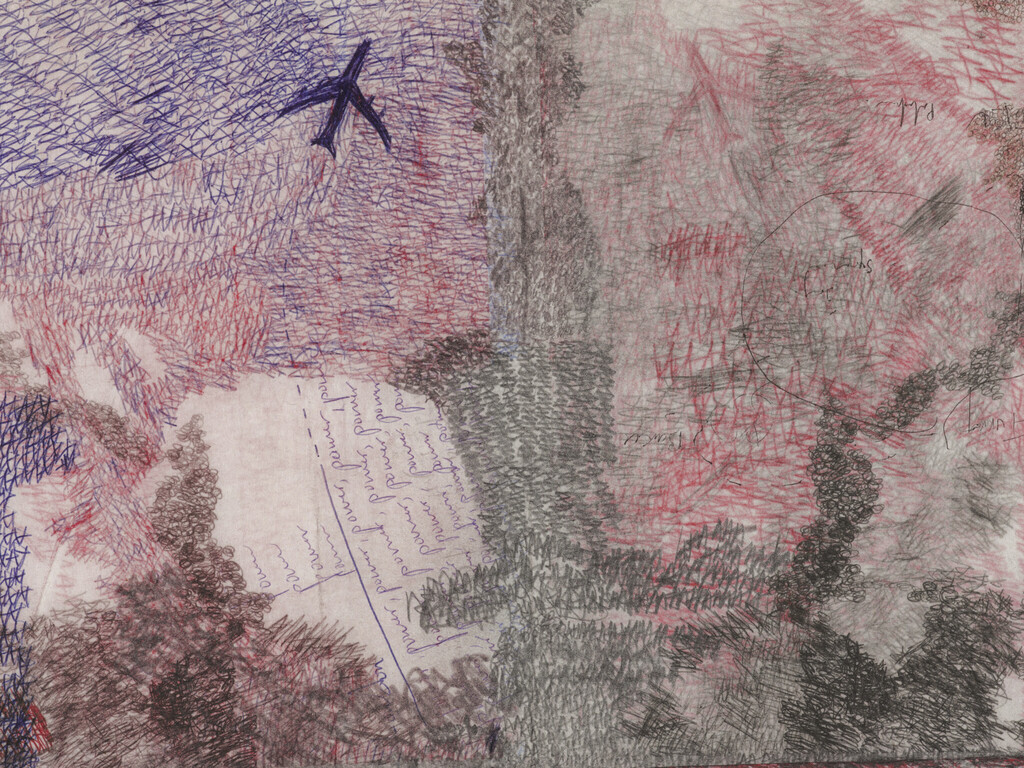
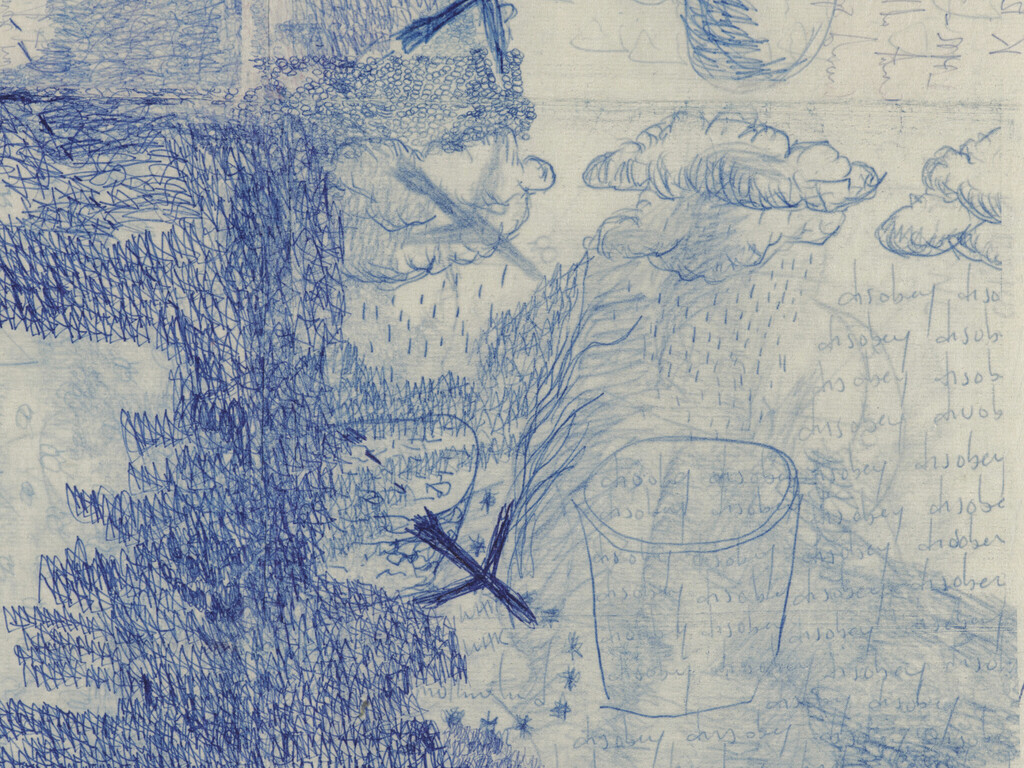
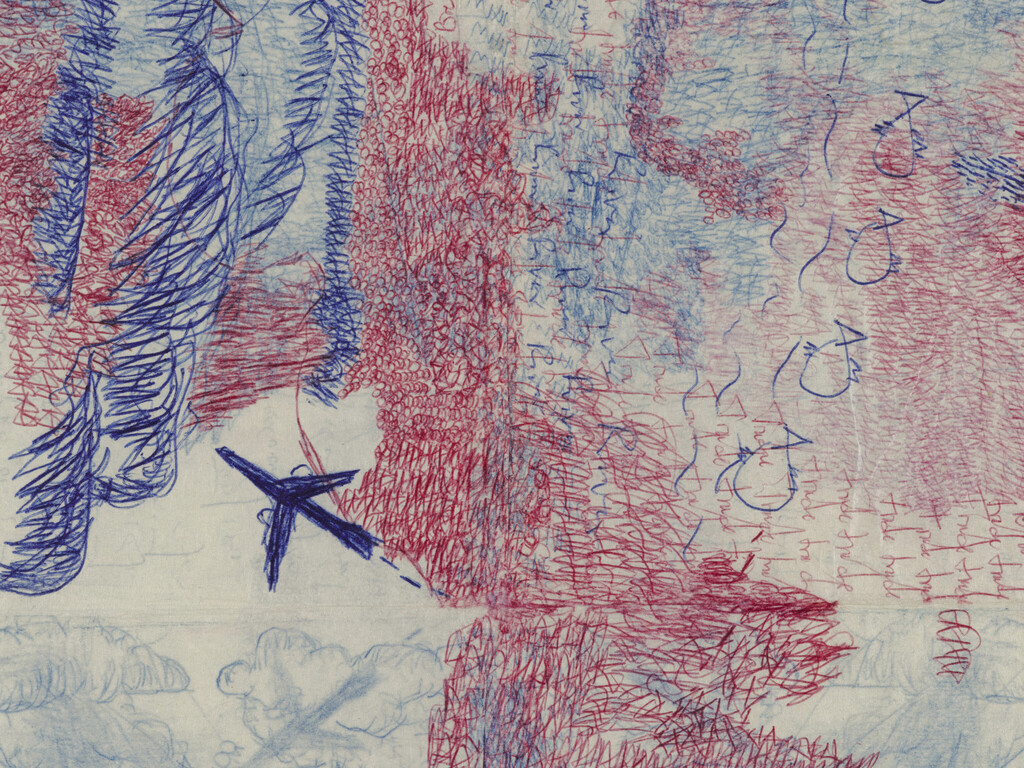
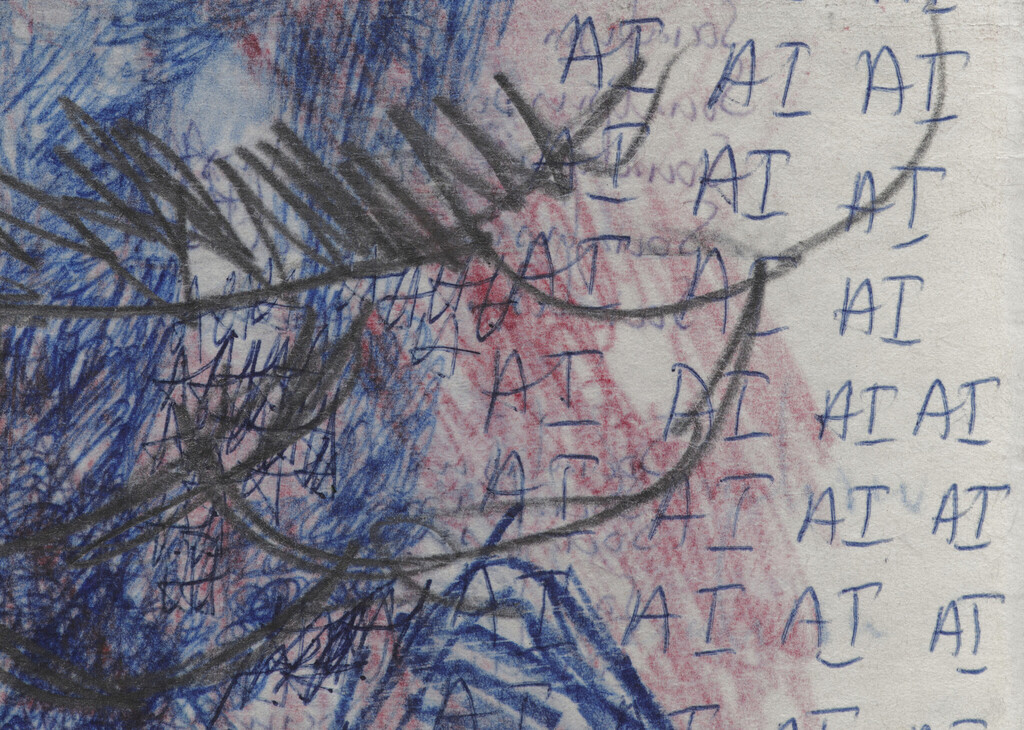
At the heart of the show are Murillo’s Flight drawings (2012–), made midair while traveling. Using minimal tools—pen, pencil, and carbon paper—on small or folded sheets of paper, Murillo creates dense, layered compositions that blur the line between intention and automatism. These works embody a kind of liberated mark making, where thought and movement are inseparable.
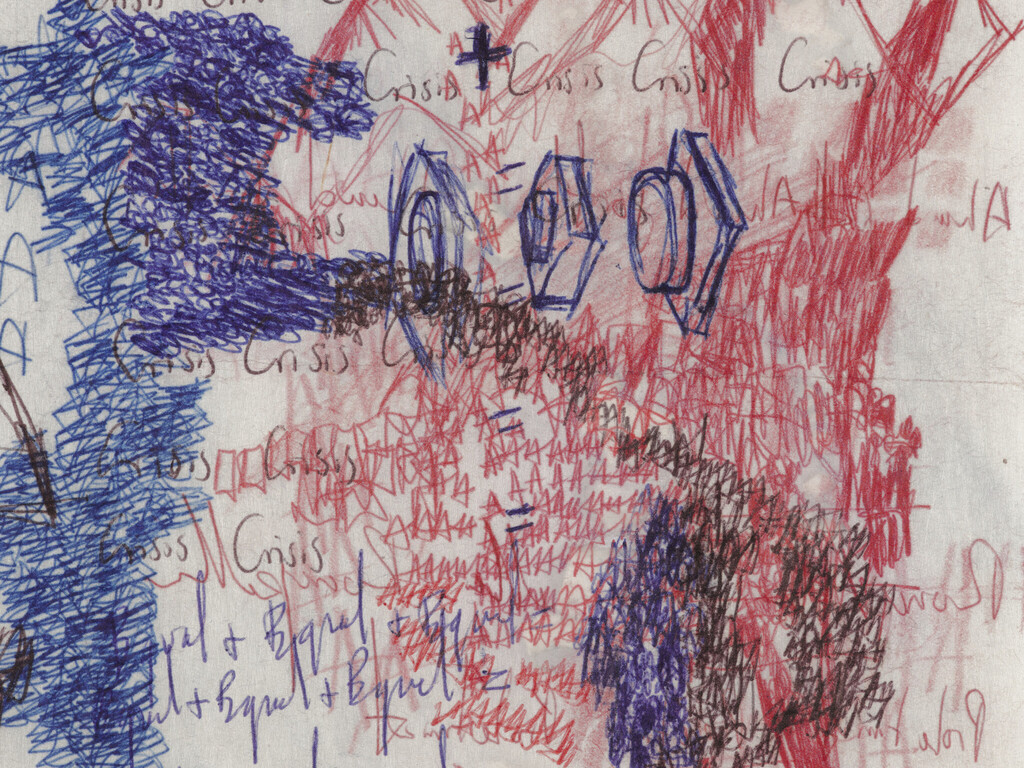
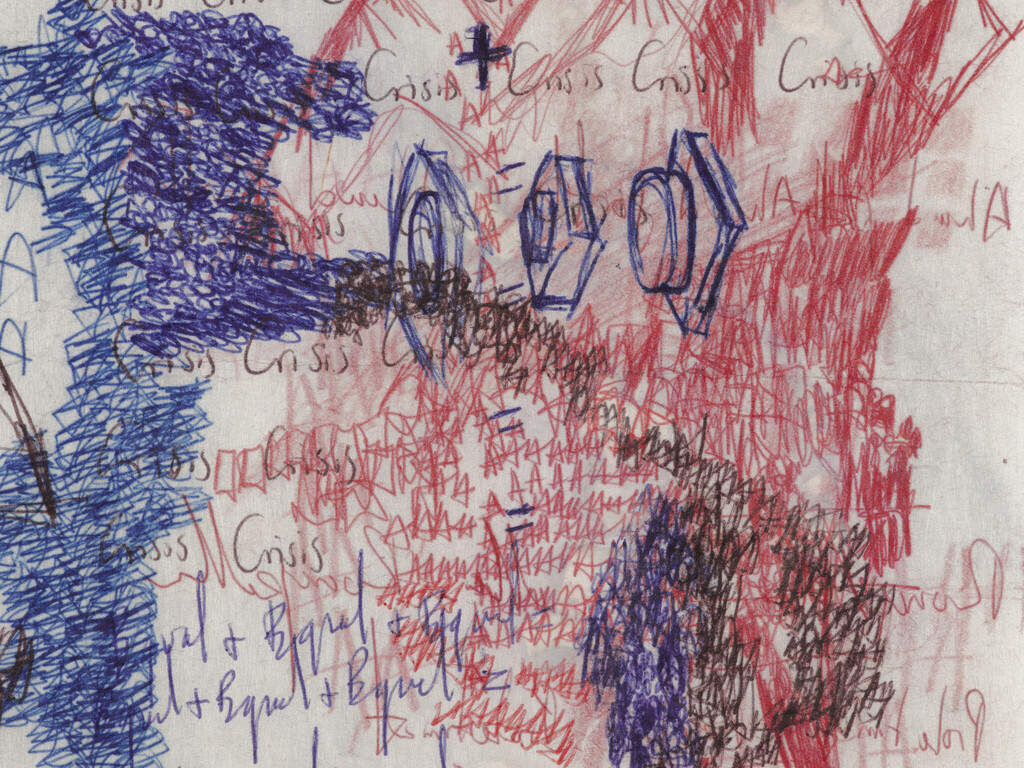
Complementing these are his Telegram paintings (2013–), born from the artist’s ongoing Frequencies project, in which blank canvases were placed on school desks around the world and left to collect the unconscious doodles, drawings, and scribbles of students. Murillo later returns to these surfaces, creating layered works that are both conversations and memorials.
Video works from the Echoing Spirits series (2022–) document performances where the Flight drawings are activated like musical scores—transformed from static images into gestures of movement, resonance, and presence.
The exhibition also includes several works from Murillo’s surge (social cataracts) series (2018–), featuring sweeping fields of blue oil stick applied in wave-like motions. These painterly floods suggest the breakdown of clarity and meaning, yet also evoke the ocean’s dual role as destroyer and healer. Within this obliteration lies the potential for renewal—a metaphor made especially poignant in Greece, a country surrounded by the sea.
Together, these bodies of work speak to connection, rupture, and remembrance. Murillo’s gestures are not merely marks on canvas; they are messages sent across time and space—telegrams, in essence—seeking communion and echoing with loss, hope, and possibility.
A Telegram to my dear Suki does not offer closure. Instead, it opens a space for reflection, where new meanings and new voices might surface through the act of looking and remembering.
For further details on Oscar Murillo’s biography and past exhibitions, visit gagosian.com.