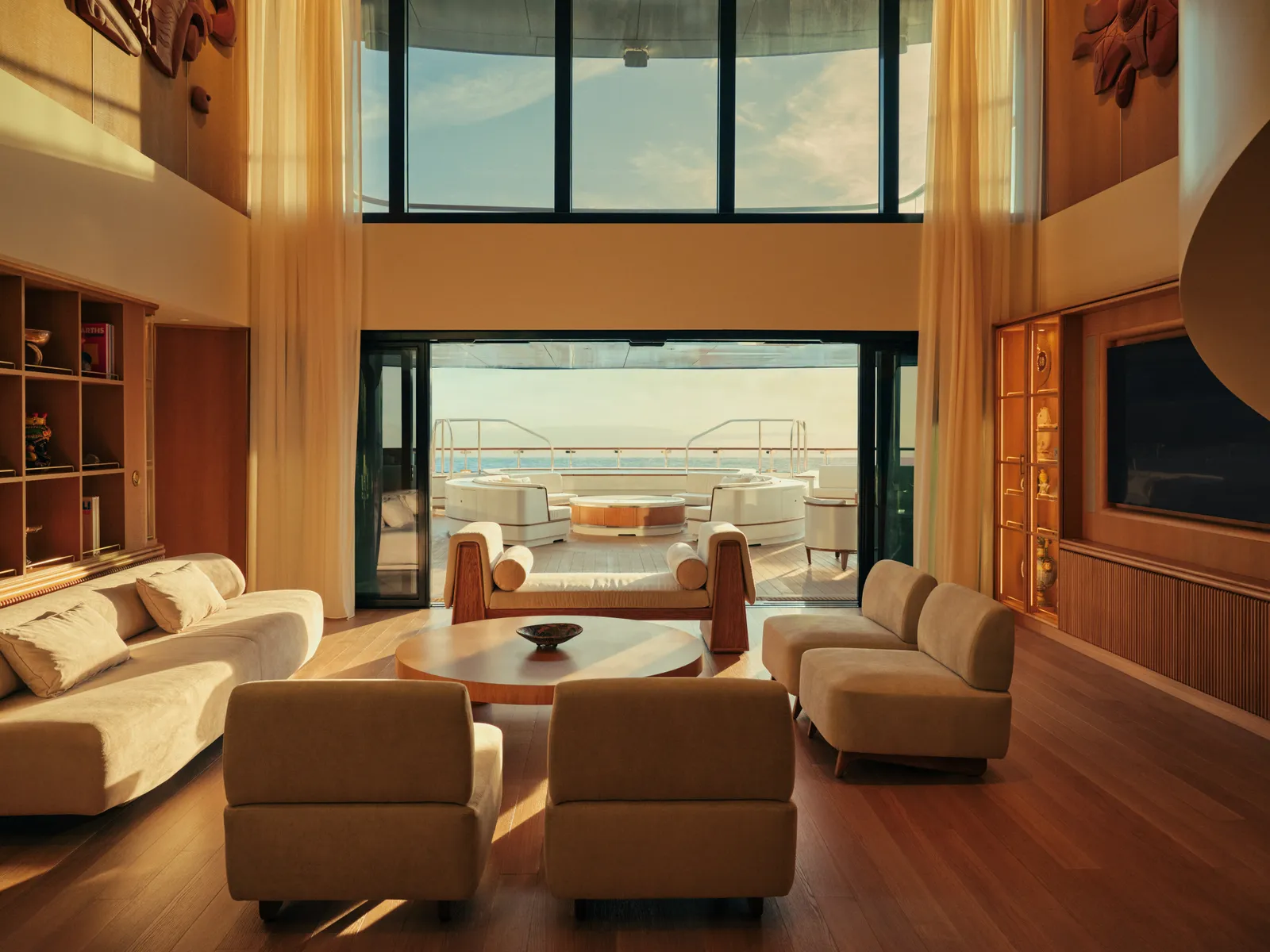

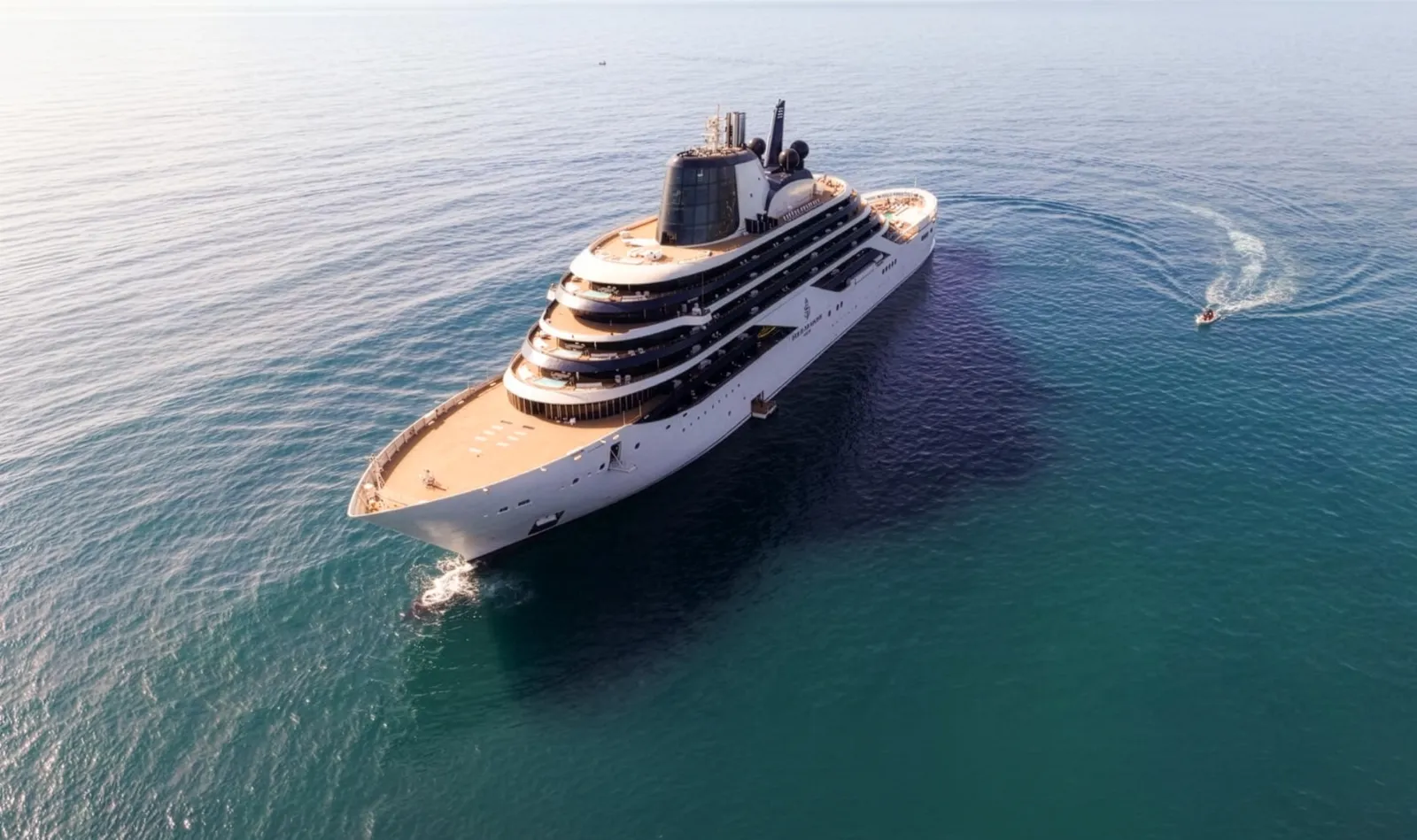
The first impression is not of movement, but of stillness. A sense that, despite the scale, 679 feet of precisely engineered presence, Four Seasons I is less about crossing distances and more about suspending them. This is where Four Seasons Yachts draws its line. Not in opposition to the idea of the cruise, but in quiet refusal of its conventions. The experience unfolds with the logic of a private world rather than a shared itinerary. Ninety-five suites, each unusually expansive, establish a rhythm defined by space, not density.
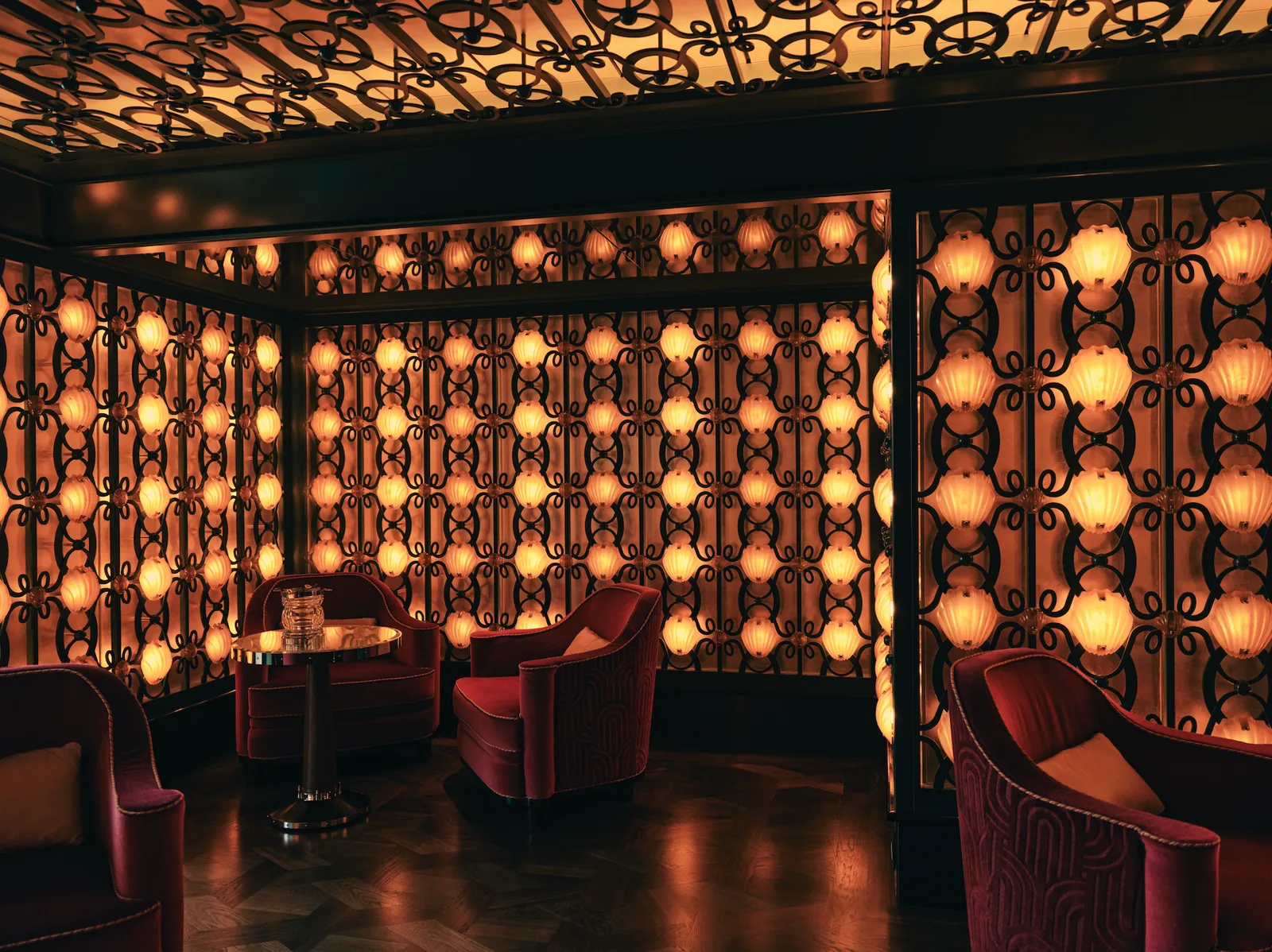
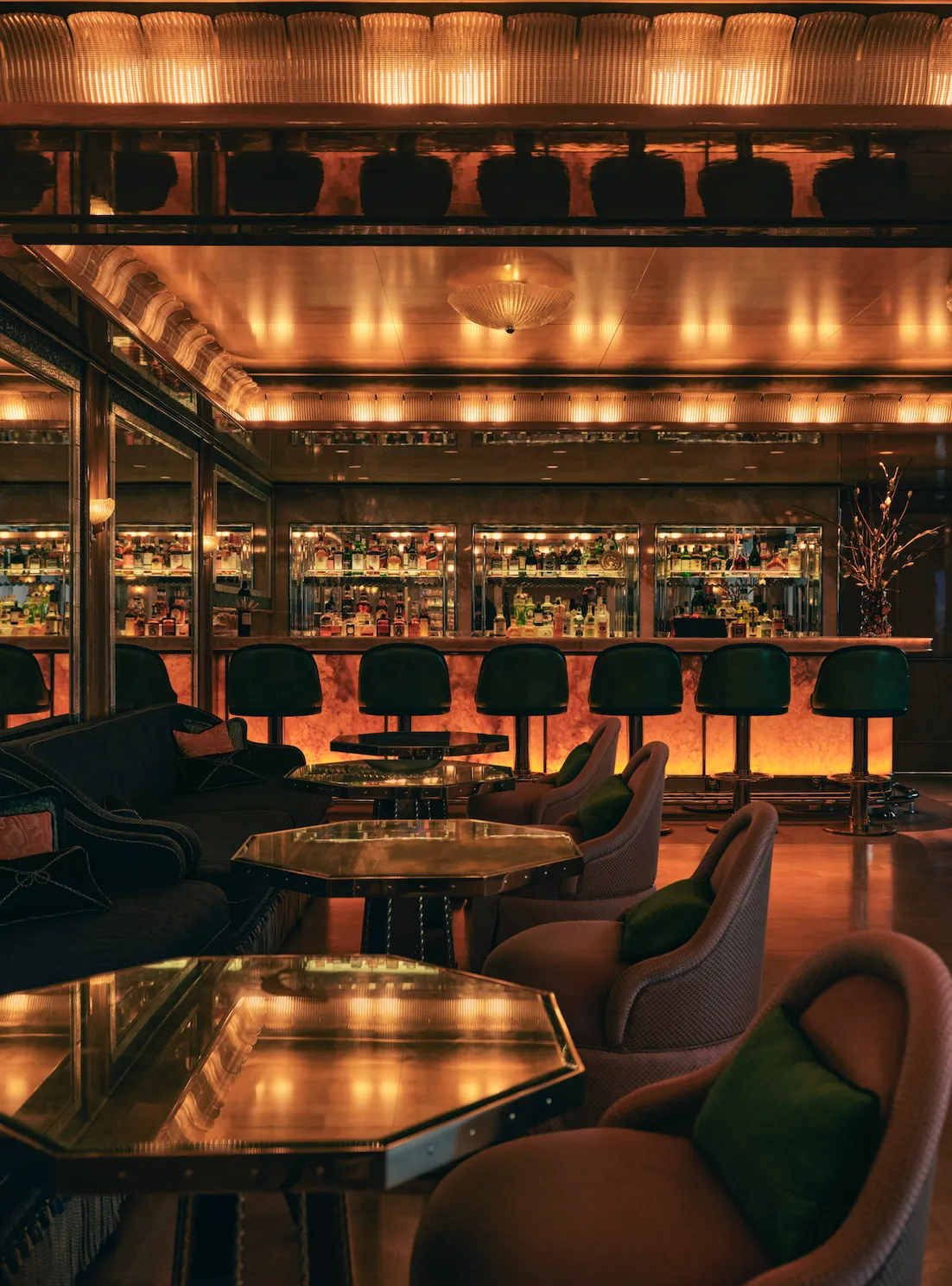
The architecture, developed by Tillberg Design of Sweden, carries an awareness of lineage without leaning on it. There are distant traces of Christina O, once the floating domain of Aristotle Onassis, yet what remains is not reference but proportion. Balance. A certain restraint that feels increasingly deliberate. Inside, Martin Brudnizki avoids the predictable language of the sea. No insistence on motifs, no decorative shorthand. Instead, the spaces rely on atmosphere. The way light settles, the tactility of materials, the controlled layering of detail. In the cigar lounge, shell lights gather overhead, casting a low, diffused glow that turns the room inward, almost introspective.
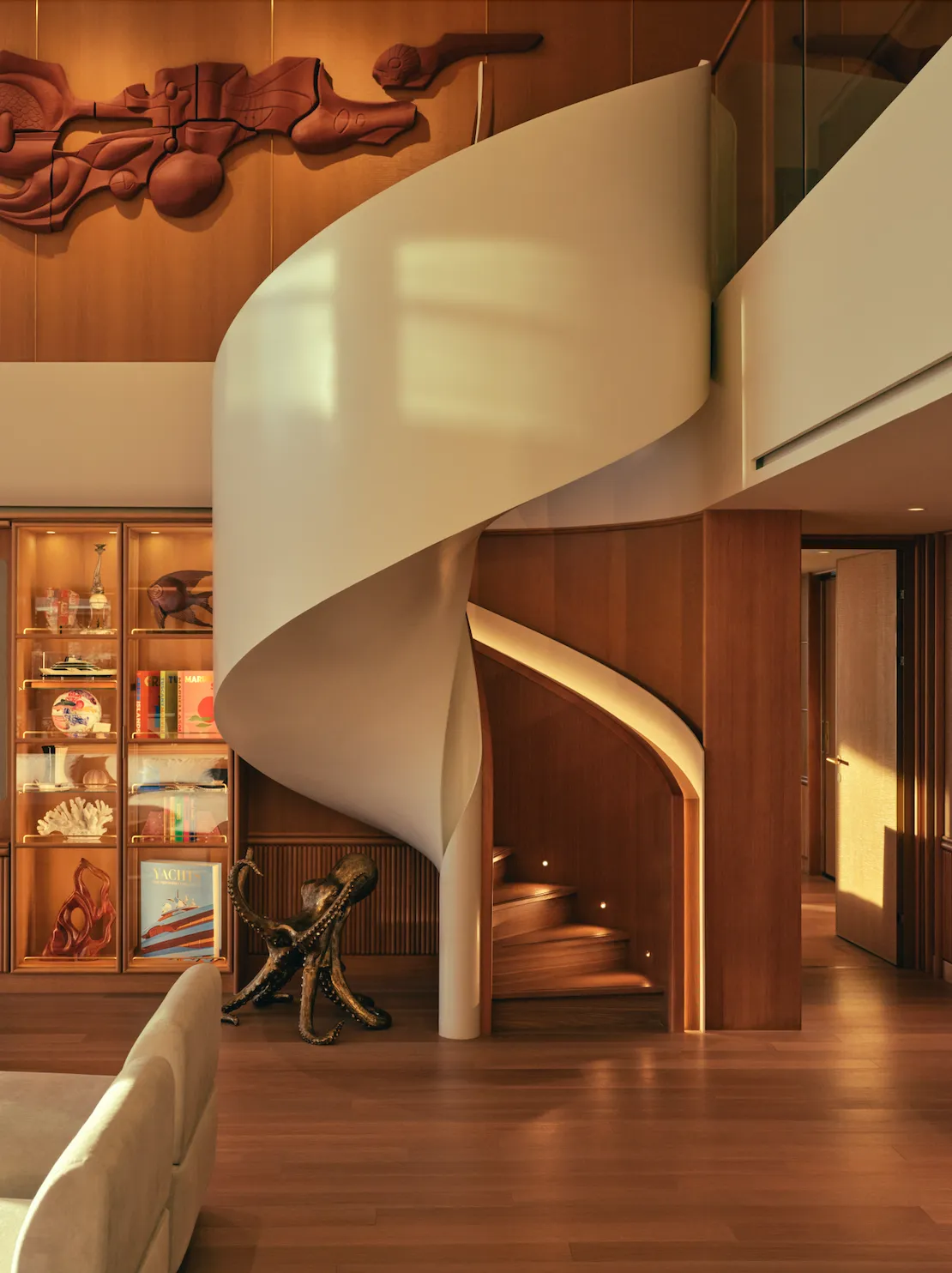
The suites follow a similar logic. Less cabin, more residence. Stone surfaces, Brazilian quartzite and marble, anchor the interiors, while engineered veneers introduce warmth without fragility. Many extend outward into private terraces, some with plunge pools, dissolving the boundary between interior and horizon. At the uppermost level, the Funnel Suite unfolds with a kind of quiet excess, its mirrored spiral staircase less a statement than a continuous movement through space.
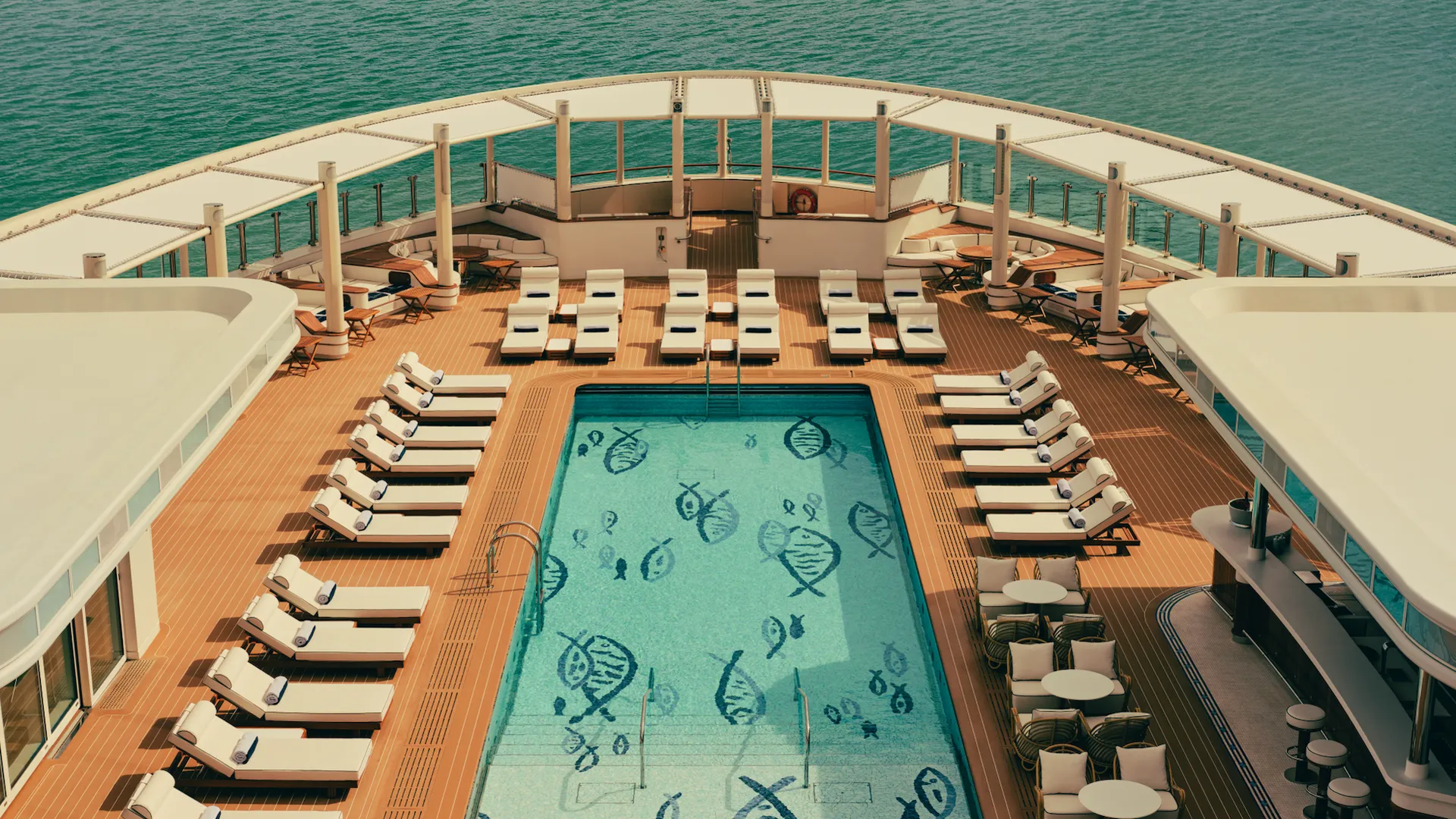
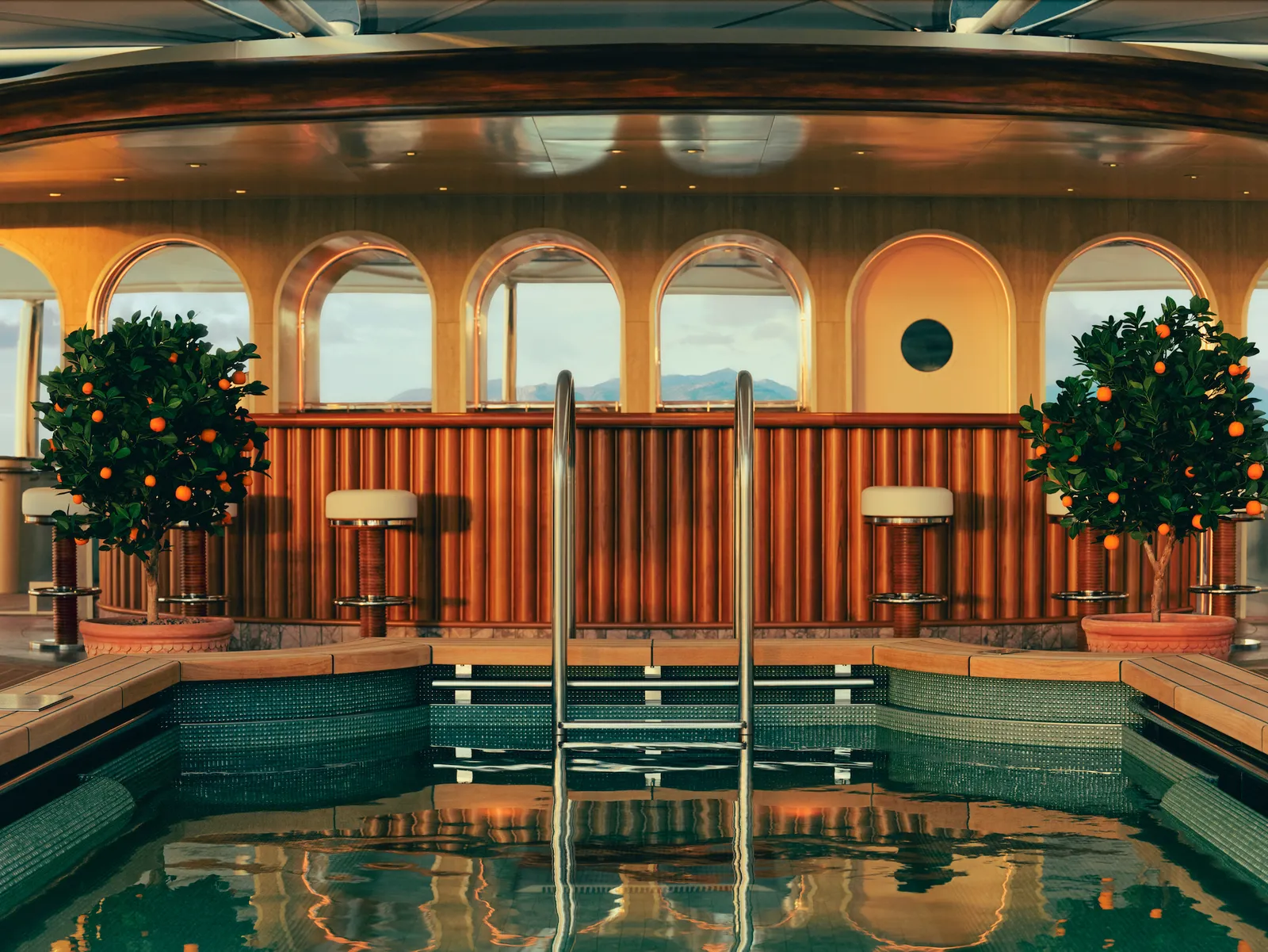
Elsewhere, gestures remain measured. A Champagne and caviar bar, lined with shell works by Katherine Lloyd, holds the light rather than reflects it. A pool shifts function almost imperceptibly, its floor rising to accommodate evening gatherings. Even a centuries-old marine fossil appears not as spectacle, but as a fragment, something encountered rather than displayed.
Creative direction by Prosper Assouline resists singular authorship. The yacht reads instead as an accumulation. Objects, textures, references that feel assembled over time. Nothing announces itself too loudly. Nothing needs to.
What emerges is a recalibration rather than a reinvention. Luxury, here, is not expressed through scale or statement, but through control. Through the confidence to leave space, physical, visual, even emotional, unfilled.
Source: Architectural Digest