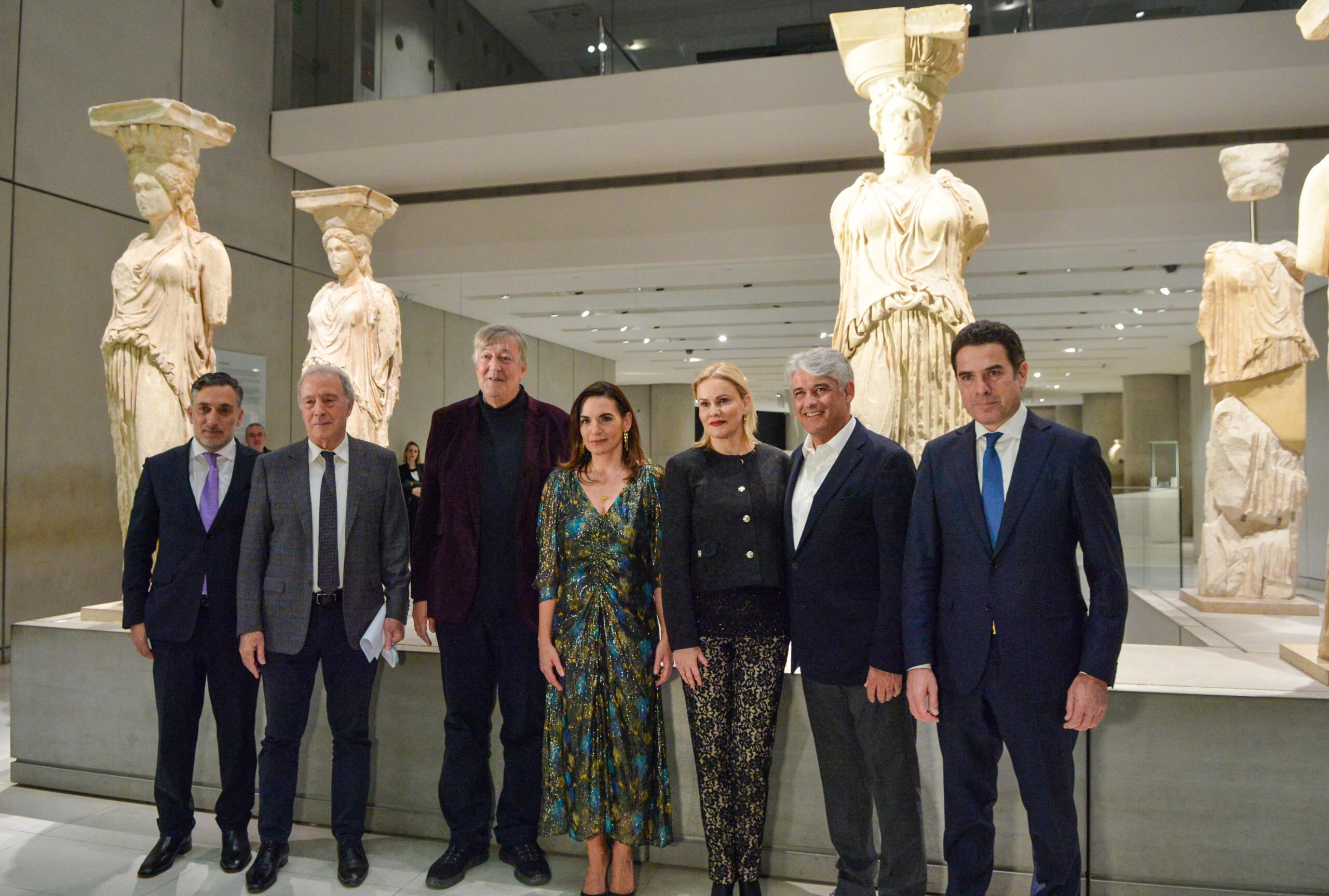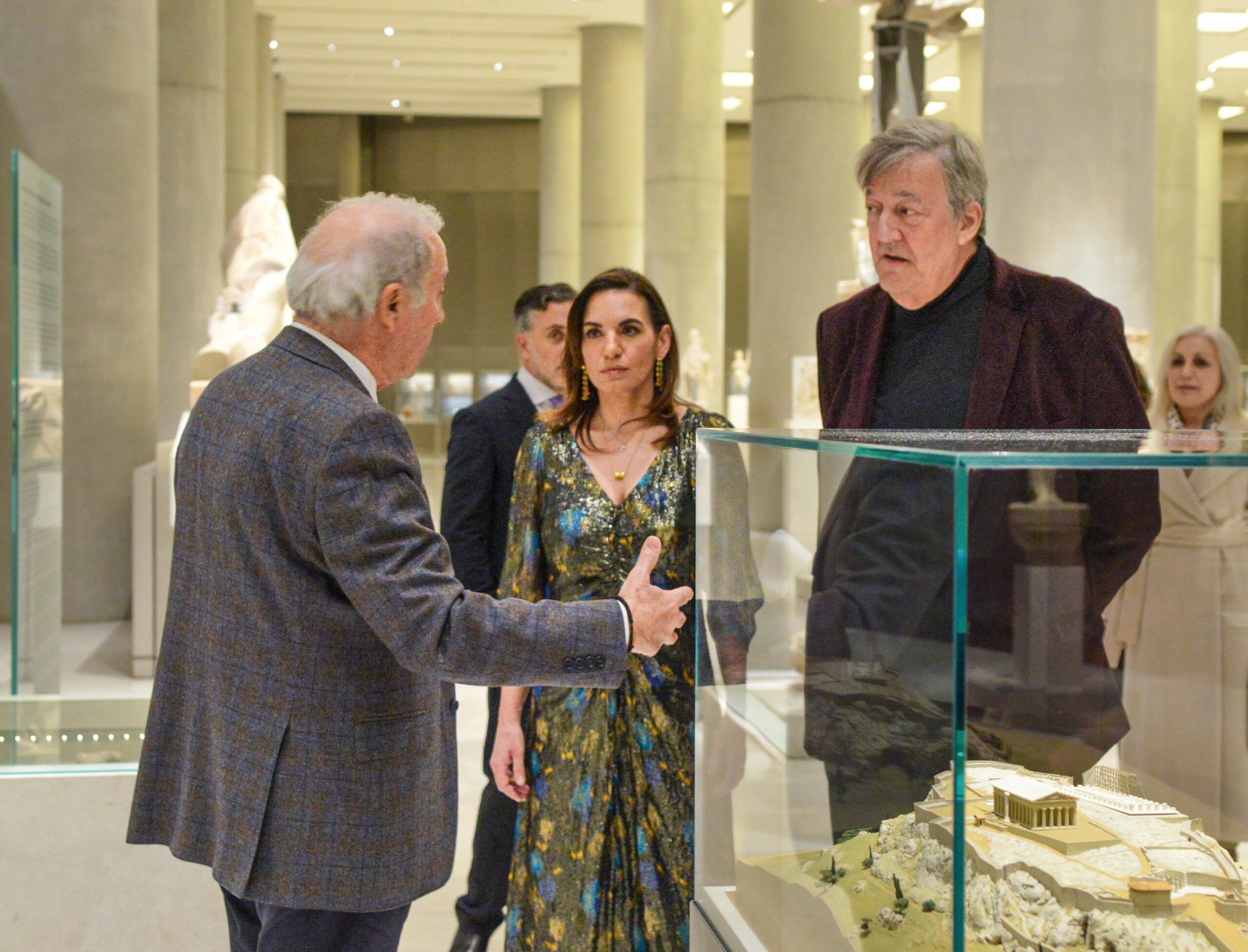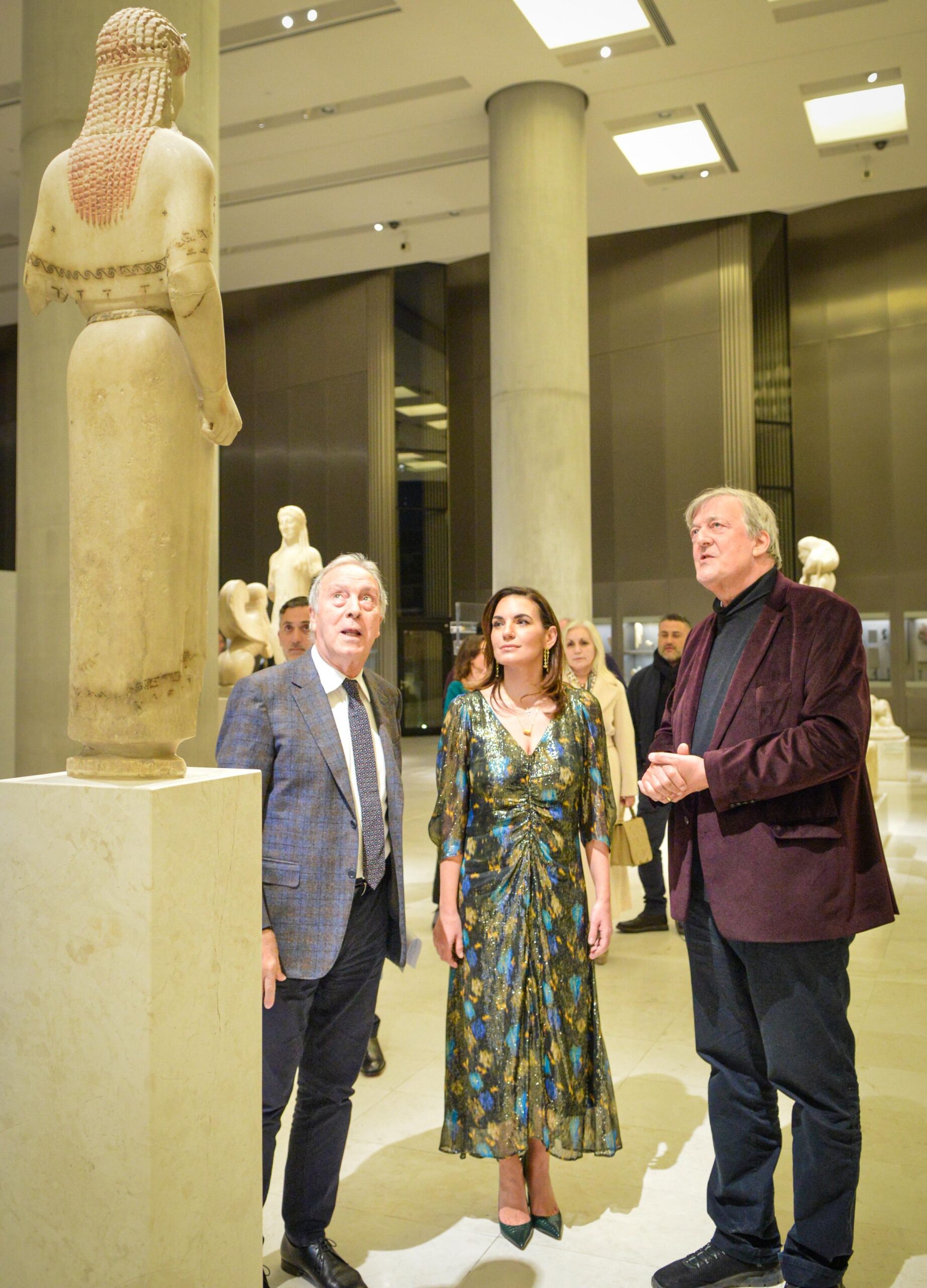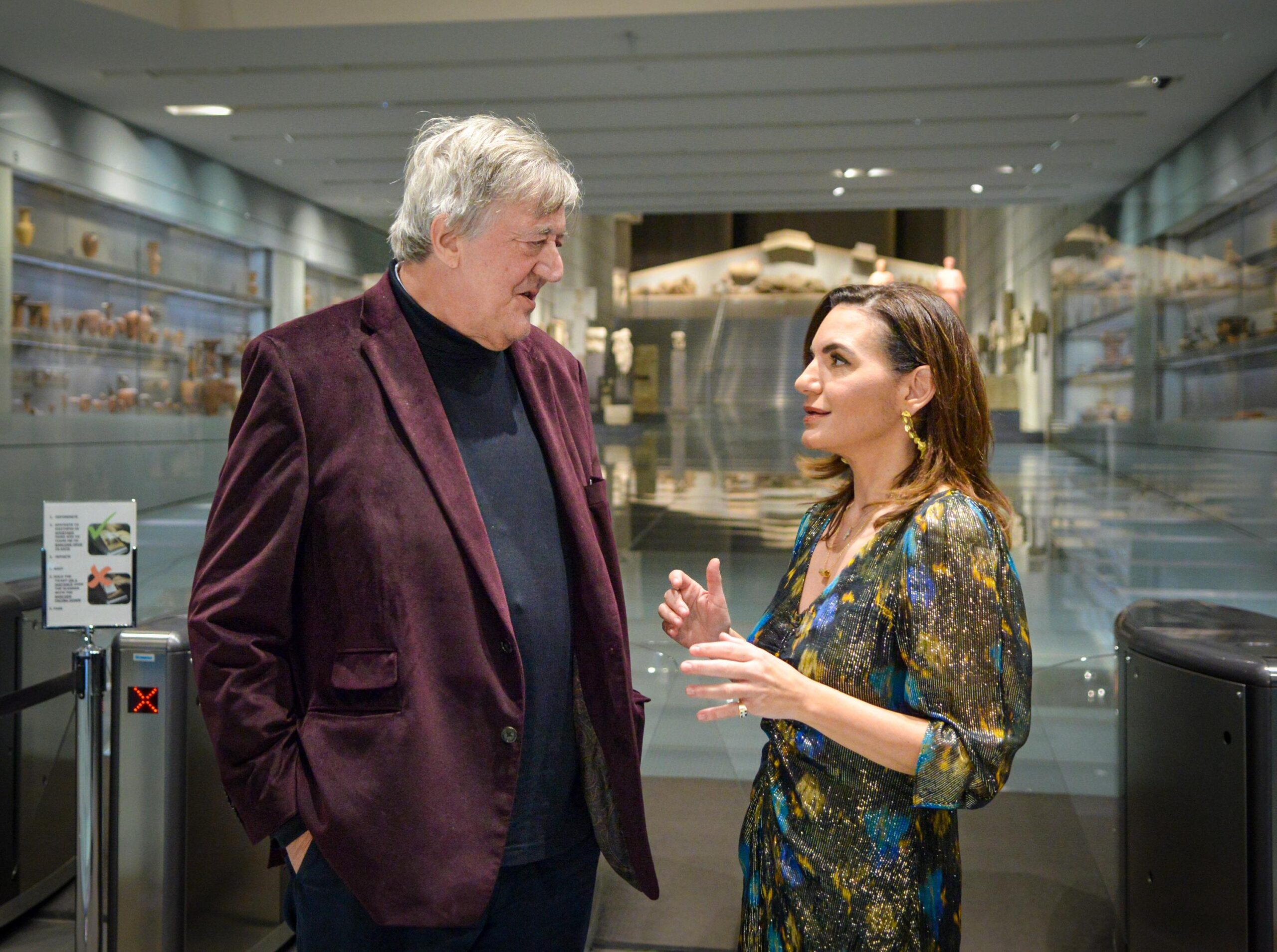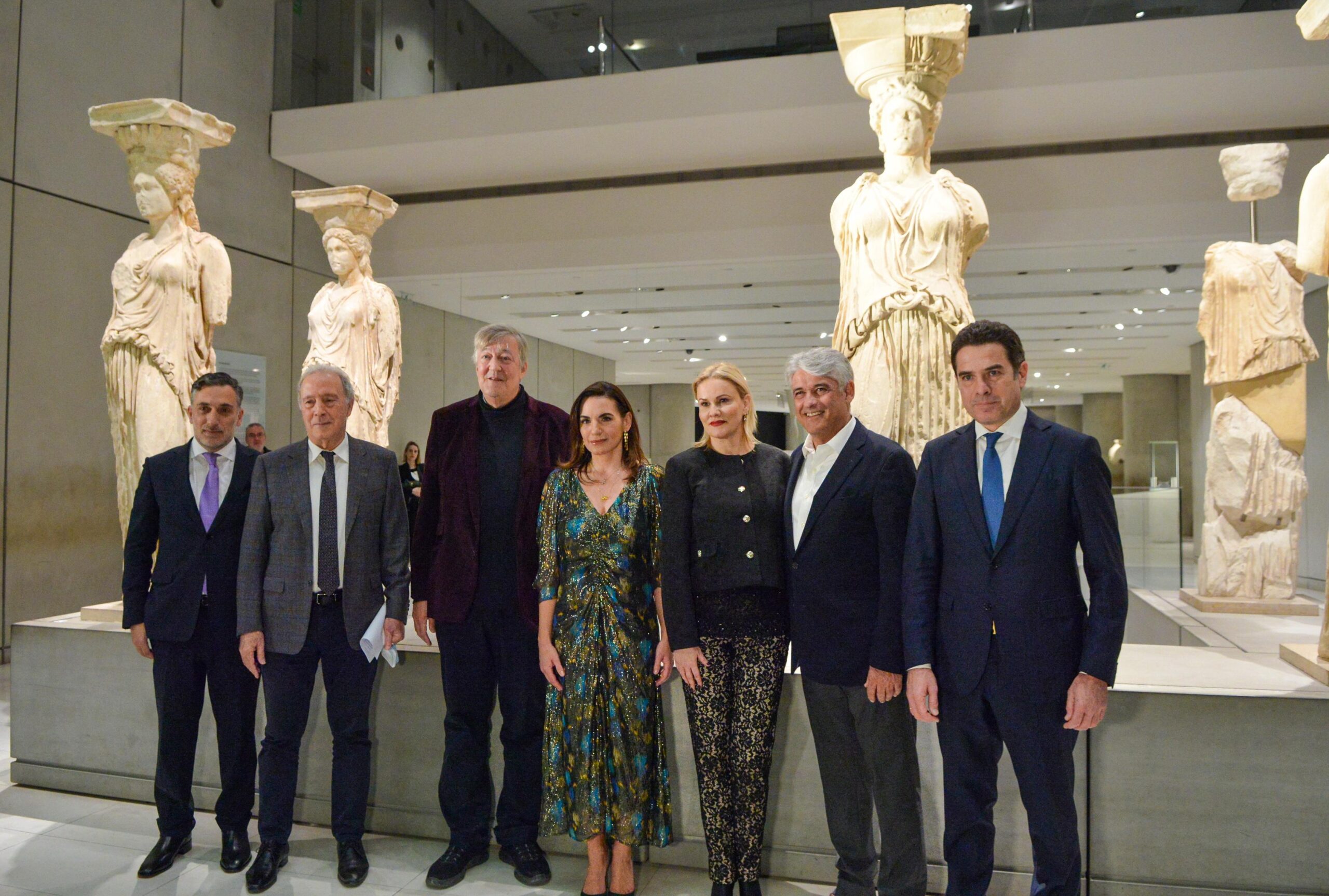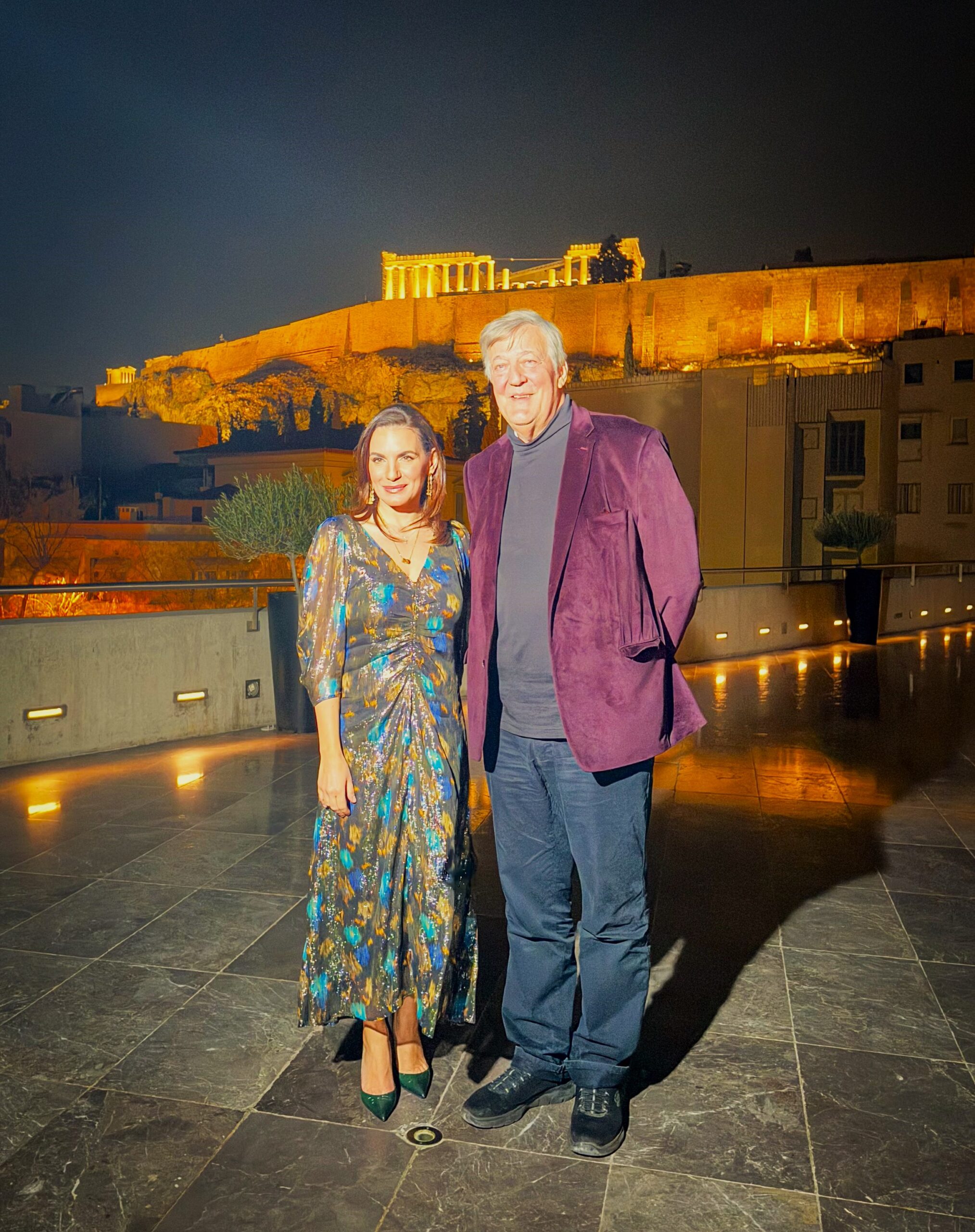

In a prestigious event held at the Acropolis Museum, the Ministry of Tourism honored Sir Stephen Fry for his invaluable contribution to promoting Greek hospitality, Greek culture, and his tireless support for the reunification of the Parthenon Sculptures. Sir Stephen Fry, one of Britain’s most versatile and beloved intellectuals, is considered an iconic ambassador of Greece and Greek culture—not only within the British market but worldwide.
Minister of Tourism, Ms. Olga Kefalogianni, in her speech, emphasized that Greece will continue to serve as a beacon of culture and creativity, attracting travelers from all over the world. She added: “I am confident that, with the support of individuals like Sir Stephen Fry, we can achieve our goal: to welcome visitors who respect our cultural heritage, to share the richness of the Greek spirit, and, above all, to reunite the Parthenon Sculptures with their homeland. Sir Fry, your contribution to this mission is invaluable.” The event in honor of Sir Stephen Fry was organized on the occasion of the release of his new book, “Odyssey.” “This is not merely a literary rendition of Homer’s epic,” Ms. Kefalogianni stated, “but a modern bridge that connects the past with the present, myth with reality… The Odyssey is a story of quest, endurance, and return. And we could not find a more fitting metaphor for the Parthenon Sculptures. For two centuries, they have been away from their homeland, but their journey of return has never ceased.” The Minister of Tourism underscored the enduring significance of Greek culture and its decisive role in shaping the world’s cultural heritage, as its unparalleled works of art, philosophy, democracy, and mythology continue to serve as a timeless beacon of inspiration and knowledge. “Greece is not just a tourist destination but a place where the past and present coexist in harmony,” the Minister pointed out. “Our cultural heritage is at the core of Greek identity and makes our country unique on the global tourism map.” Ms. Kefalogianni further stated that cultural tourism is one of the fundamental pillars of the Ministry of Tourism’s strategy, emphasizing that visitors who choose Greece come not only for its natural beauty but also to explore the history, art, and philosophy that gave birth to Western civilization. “Visitors to our country do not simply seek to admire our monuments, but to experience history, walk in the footsteps of ancient wisdom, and touch the roots of civilization,” she remarked.
Through targeted initiatives, Greece strengthens its position as a top cultural destination. The Acropolis Museum serves as the living symbol of this strategy, offering a comprehensive experience to visitors while reinforcing the call for the reunification of the Parthenon Sculptures. The Minister of Tourism emphasized that Stephen Fry’s support for the reunification of the Parthenon Sculptures is not merely a symbolic gesture but a meaningful act of cultural justice and respect for history. “Sir Fry’s speech at the Intelligence Squared Debate, where he passionately defended Greece’s request, gained international attention and became a key milestone in the struggle for the return of the Sculptures. Through his books, such as ‘Mythos,’ ‘Heroes,’ and ‘Troy,’ he highlights the significance of Greek mythology, making it accessible and appealing to a global readership.” The international support for Greece’s request is growing stronger. The recent return of the Fagan fragment from Sicily and the donation of sculptures from the Vatican mark the beginning of a new era. Greece, with allies like Sir Stephen Fry, continues tirelessly in the fight for the restoration of its cultural heritage. “The return of the Parthenon Sculptures is not just about Greece. It is a global issue of cultural justice. Your voice, Sir Fry, has been instrumental in strengthening this cause,” the Minister emphasized. Ms. Kefalogianni concluded by stating that the Ministry of Tourism will continue to highlight Greek culture as an integral part of the country’s tourism identity, ensuring that Greece remains a top destination for those seeking an experience that combines history, tradition, and modern creativity.
Sir Stephen Fry’s Remarks
In his address, Sir Stephen Fry stressed that there must be political will from the United Kingdom: “We must find a common language, the right words that will satisfy both sides. The word ‘collaboration’ is the best choice. We are standing in one of the world’s finest museums, which is now fully capable of hosting the Parthenon Sculptures currently held at the British Museum.” He also noted that the British Museum can utilize new technologies and create replicas of the Parthenon Sculptures. “We are in one of the finest museums in the world, which can now host the Parthenon Sculptures,” he reiterated, adding that the British Museum can embrace modern technology and have its own replicas. Speaking about the profound themes of his fourth book, “Odyssey,” Sir Fry emphasized that it explores universal issues that remain relevant today. He made a special reference to the risks and potential of Artificial Intelligence, drawing a parallel with the myth of Prometheus.
Speech by the Director of the Acropolis Museum
With a profound and moving presentation, Professor Nikos Stampolidis, Director of the Acropolis Museum, argued in favor of the reunification of the Parthenon Sculptures in Greece, highlighting both the cultural significance and the ethical and legal framework. “We move forward. Because the mission of the Acropolis Museum is to provide scientific arguments in support of this cause,” said Professor Stampolidis. He added: “We expect all democracies of the civilized world to fulfill their duty by reuniting the fragmented pieces of a single body. The Parthenon calls for them. It is not just Greece asking for them back. Greece asks for them on behalf of all humanity.“
The event, hosted by ERT journalist Yiannis Moutsios, was attended by intellectuals, artists, politicians, and representatives from the tourism industry.