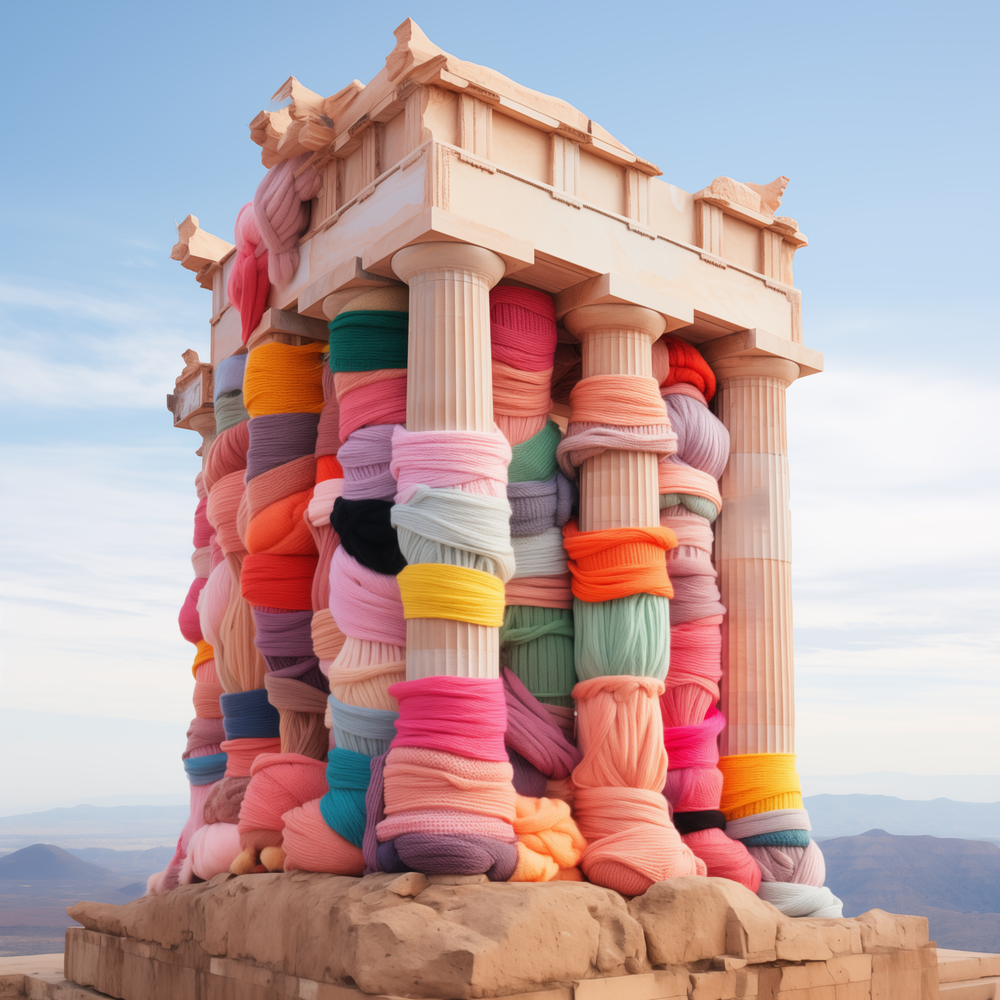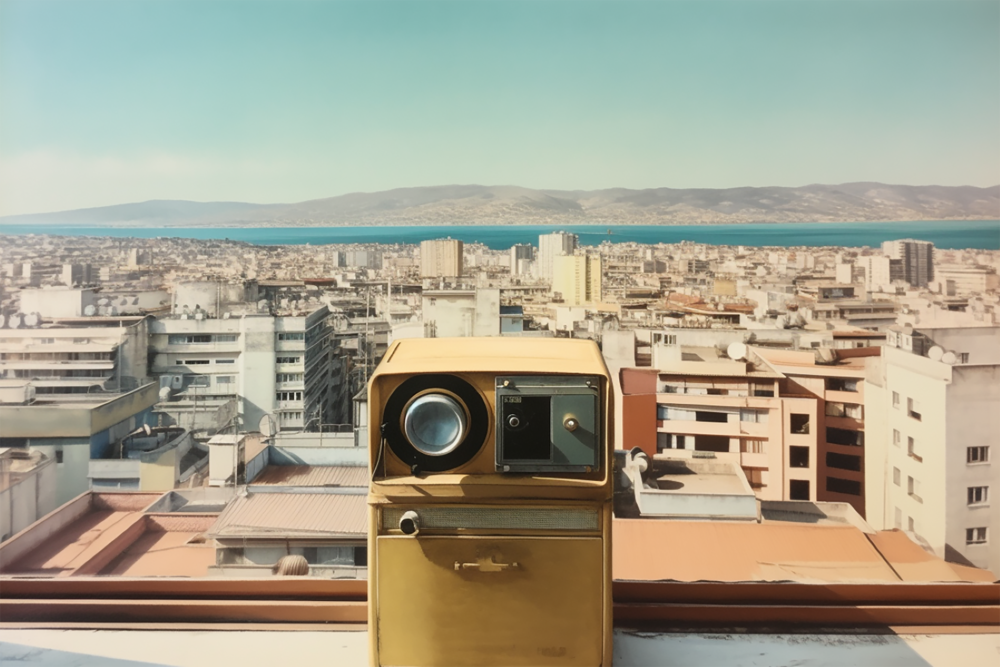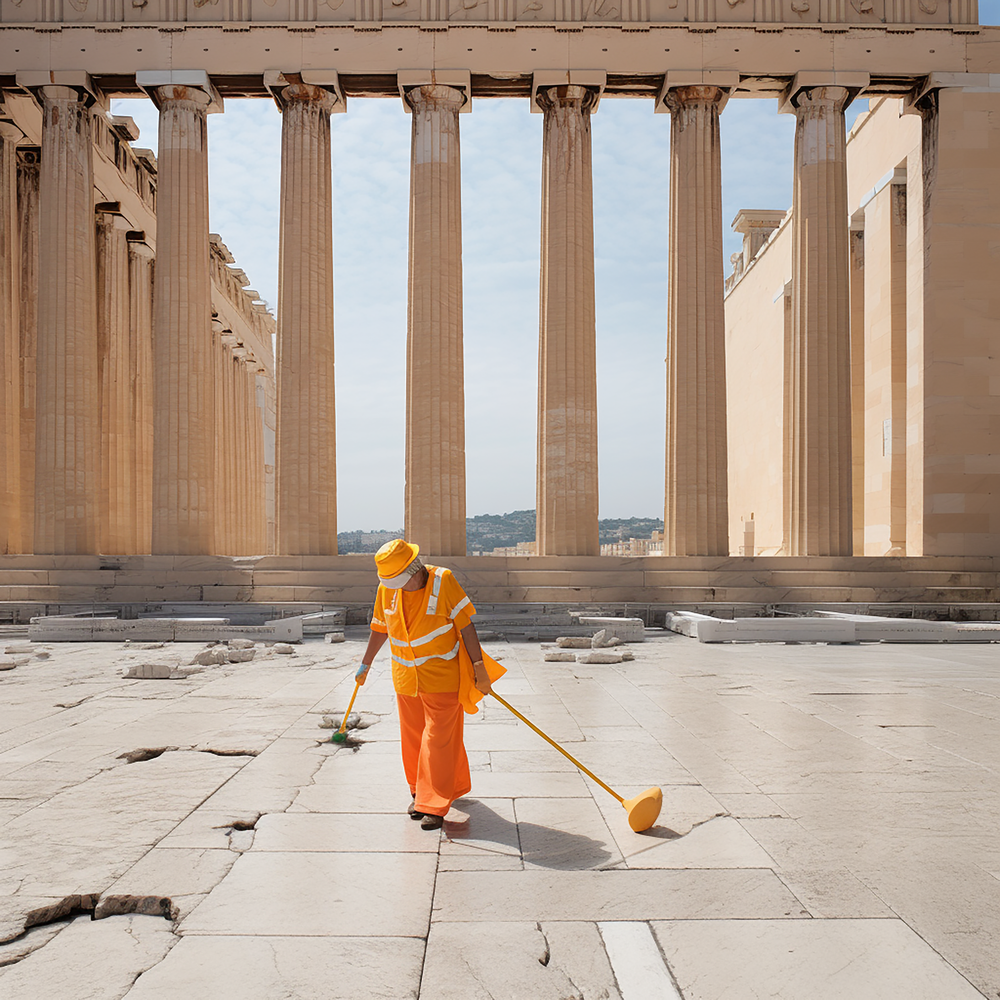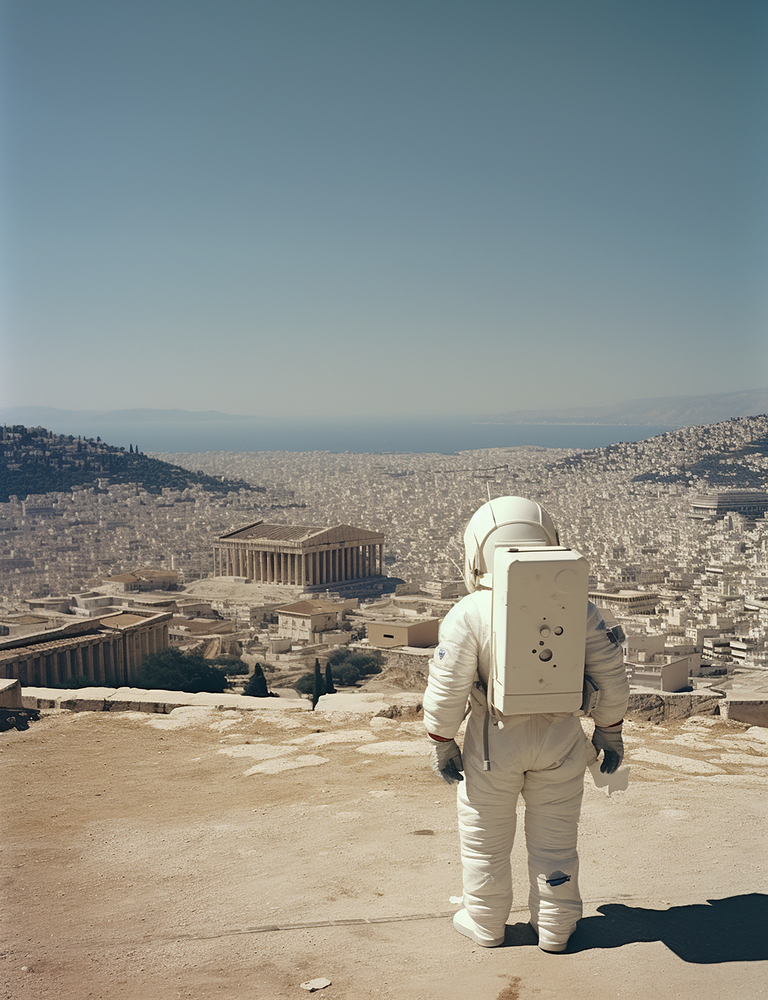

Through Athens Surreal, Tina Marinaki explores the city’s multiple identities by reconstructing the Athenian landscape through memory, imagination, and technology.
Tina marinaki is a Greek architect and artist, creator of the project Athens Surreal, which merges artificial intelligence with surreal aesthetics and the urban experience of Athens. Raised in Palaio Faliro, she studied architecture in Patras and completed her postgraduate studies at Columbia University in New York. Her work balances between the real and the imaginary, offering a new interpretation of Athens through digital creativity.
How was the idea of Athens Surreal born and how has it evolved to this day?
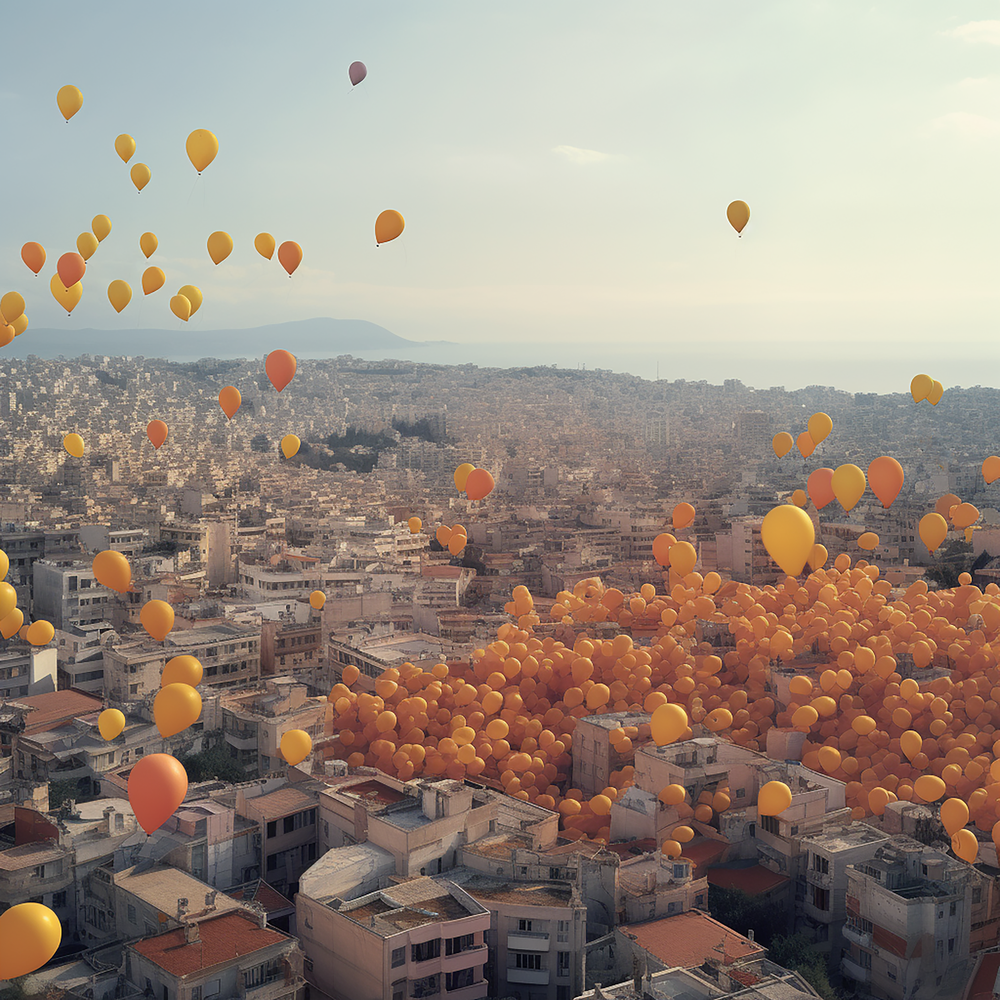
The idea of Athens Surreal was born from a desire to explore the new possibilities of Artificial Intelligence, the combination of the unexpected and the inexplicable of surrealism with the power of machine learning and the computational processing of Artificial Intelligence. I was interested, through the application of Artificial Intelligence in the world of surrealism, in a search for new forms of expression, thanks to the collaboration between human imagination and technology. The evolution of the Athens Surreal project concerns both the technical means – as Artificial Intelligence develops its capabilities – as well as the challenges and collaborations.
Athens, a city so familiar and chaotic, was presented through a new, almost dreamlike condition.
Did you expect the project to receive such a strong response on Instagram?
What do you think attracted the audience the most?
At first, the project was a personal exercise in creativity, a spontaneous exploration of forms and ideas without a specific destination. The immediacy and dynamic interaction with the audience on Instagram created a lively dialogue around Athens and Artificial Intelligence. The audience’s response proved to be catalytic. The account evolved through a reciprocal process: together with the audience, we were discovering not only Artificial Intelligence – a technology unfamiliar to both of us – but also Athens itself, through a new, almost dreamlike perspective. I believe what attracted the most interest was the sense of the uncanny within the familiar. Athens, a city so familiar and chaotic, was presented through a new, almost dreamlike condition, where the real and the imaginary are blurred. The combination of Artificial Intelligence with the urban landscape produced images that evoked emotion. Through this journey, I have received countless moving messages, I have had conversations with strangers about the city, Artificial Intelligence, and the concerns of our present day. These interactions were not merely dialogues; they were windows into new worlds, sources of inspiration, and prompts for reflection.
What are the limits of the Surreal in contemporary Athenian reality?
The boundaries of surrealism in contemporary Athenian reality are fluid, perhaps because the city itself constantly moves between the real and the imaginary. From abandoned neoclassical buildings coexisting with monstrous apartment blocks, to unexpected shop signs and urban interventions that generate new, unforeseen meanings, the city produces surreal images on its own. Athens is full of contrasts: the past and the present coexist in an irregular landscape, the ancient and the modern engage in a dialogue through disconnected architectures, while everyday life is often interrupted by scenes that seem to emerge from a dream – or a nightmare.
To what extent does Artificial Intelligence become a creative collaborator and not remain merely a tool? Is that something you define?
Artificial Intelligence is a very important tool that allows us to explore the boundaries of imagination. In the process of creating images through Artificial Intelligence, human intervention remains essential. The user is not merely an observer, but an active co-creator who shapes the outcome through their choices. It is the user who imagines, directs, and “translates” their idea into terms (prompts) that are understandable by the system. The collaboration between human and machine can lead to new forms of expression. On the one hand, creative thinking, inspiration, judgment, and the ability to convey emotional connection and narrative in a work remain crucial human traits. On the other hand, Artificial Intelligence allows for the creation of images that were previously difficult or impossible to achieve through traditional means.
You live in New York, yet you create for Athens. How does this distance shape your perspective on the city?
This distance functions both as a filter and as a magnifying lens. There is an element of imagination and reinterpretation that perhaps wouldn’t exist if I lived there. It is an Athens that draws from reality, but is reassembled through memory and nostalgia, Artificial Intelligence, and the creative distance that allows me to rethink it without the limitations of my physical presence there.
The combination of artificial intelligence with the urban landscape produced images that evoked emotion.
Athens is constantly evolving, with its southern suburbs – and especially its coastal front – preparing for a major transformation. What would you like to see in its new architectural identity?
I would like to see an architecture that respects and incorporates the natural environment, that highlights the coastal landscape with a focus on public spaces, gentle uses, and sustainable development that takes climate challenges into account. The goal is not merely aesthetic improvement, but the creation of a space that serves the residents and not only tourists or investors. A space that unites rather than isolates, that strengthens the sense of belonging and reconnects Athens with its sea – not as a spectacle, but as a living element of daily life.
If the Athenian Riviera were to become part of Athens Surreal, what would it depict?
I would like to see the coastal front not as a rigid, overdesigned space, but as a dynamic zone where nature and culture are not in competition but in continuous dialogue. Islands within the city, urban landscapes that do not occupy space but coexist with it, leaving room for the sea to penetrate the city – both literally and metaphorically. A landscape that is not static, but full of questions: what would the Athenian Riviera look like if we approached it as a space for everyone and not just for the few? What would it look like if we let it develop organically, without typical urban intervention? And finally, where does the city end and where does the sea begin?