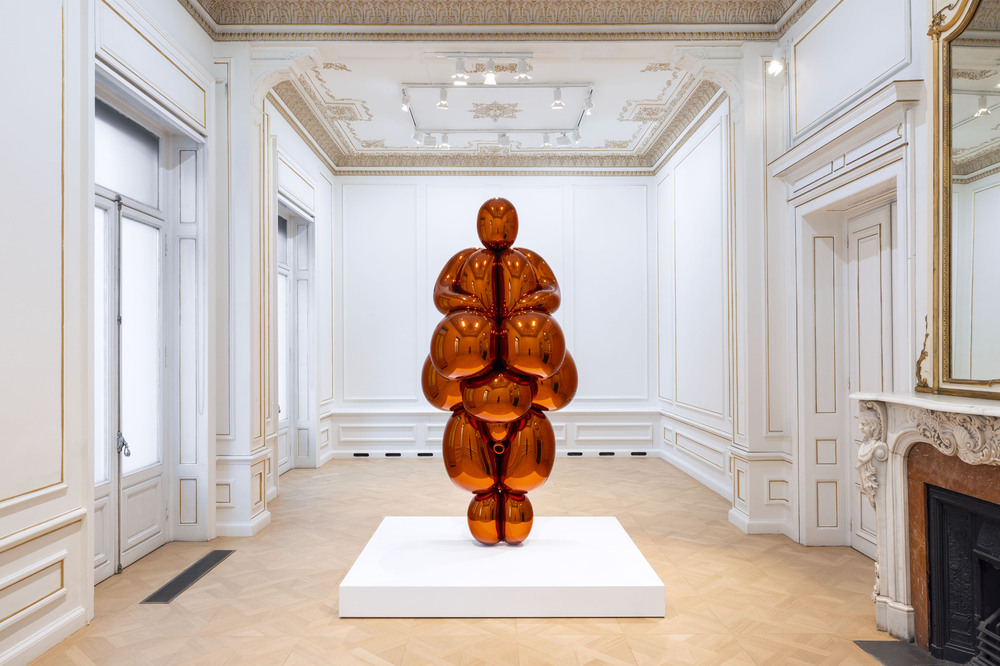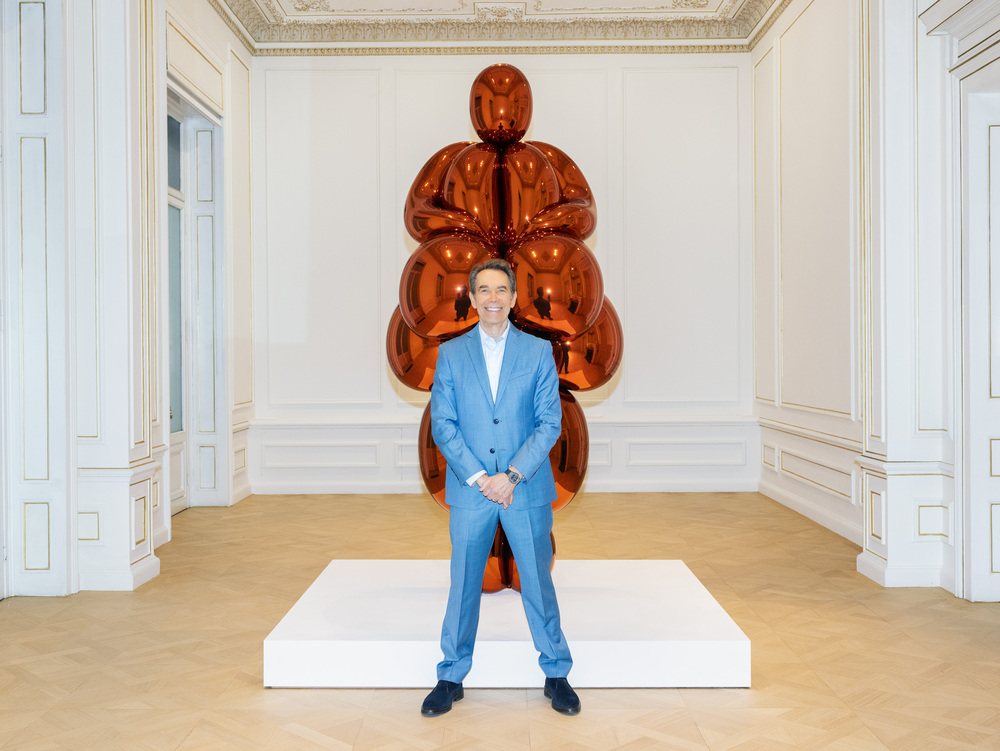

Of the four versions of Balloon Venus that I created, the ‘Venus of Lespugue’ seems to be more closely connected to the idea of modernism, as it places historical forms of the Paleolithic era in dialogue with the modernist movement. Among others, references to the sculptures of Giacometti and Brancusi are evident. In the shape and form of Balloon Venus, the impact of Cycladic art on modernism can also be discerned.
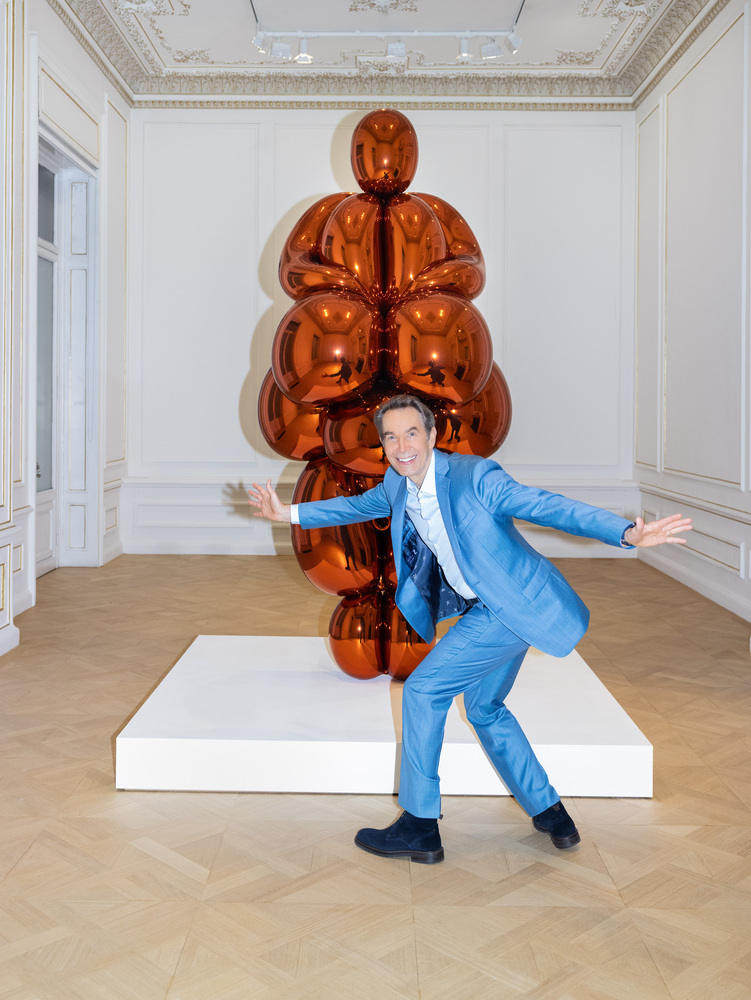
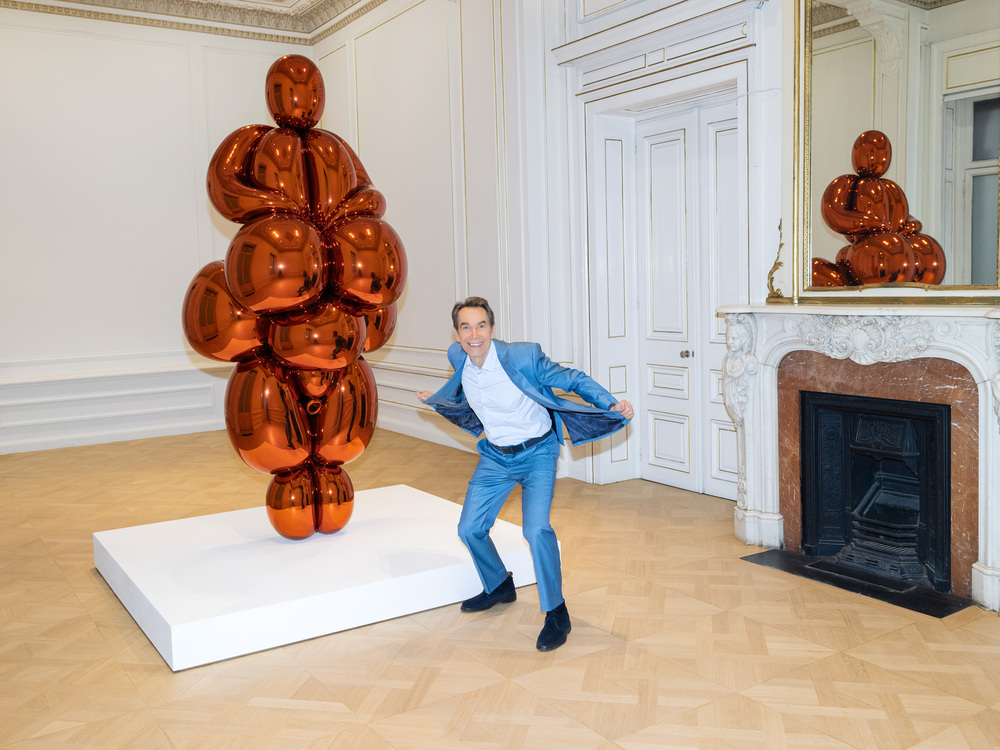
Jeff Koons, 2026
What could connect a small prehistoric figurine carved from mammoth ivory approximately 28,000 years ago with a monumental Venus sculpture made of reflective stainless steel in the 21st century?
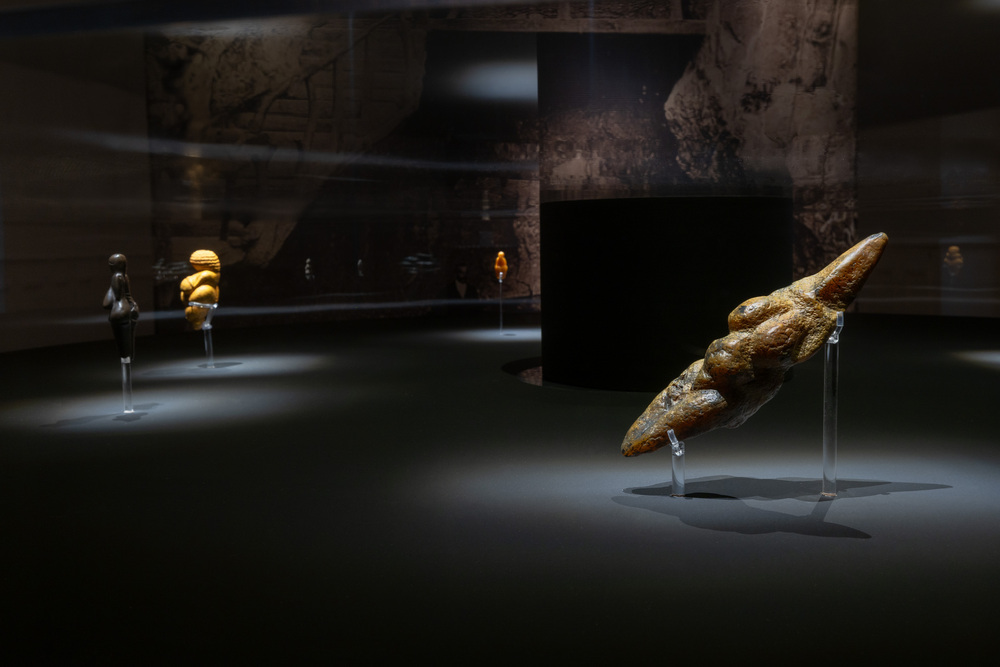
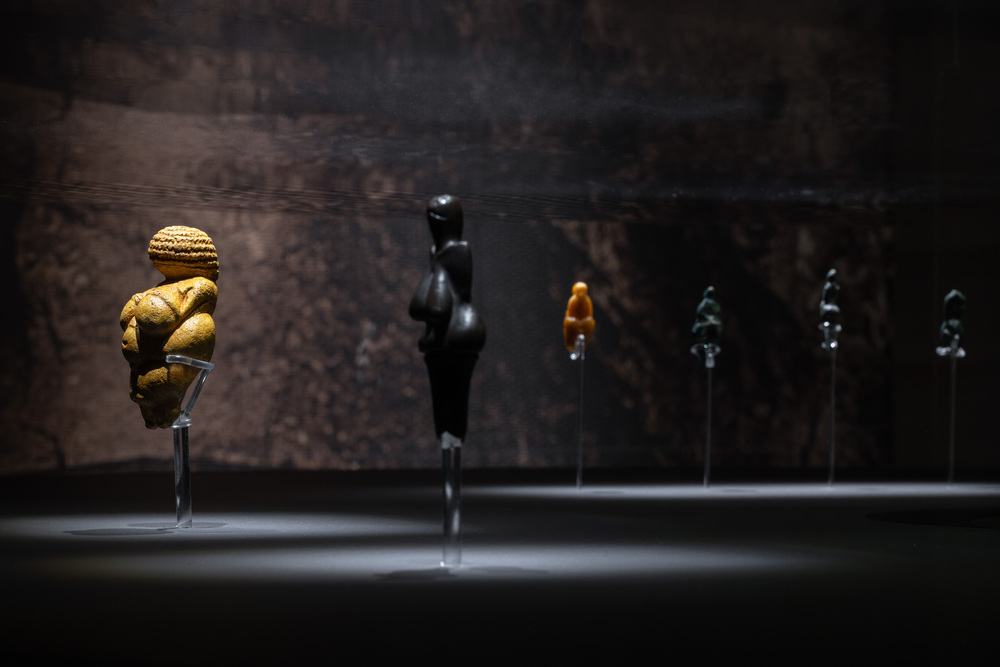
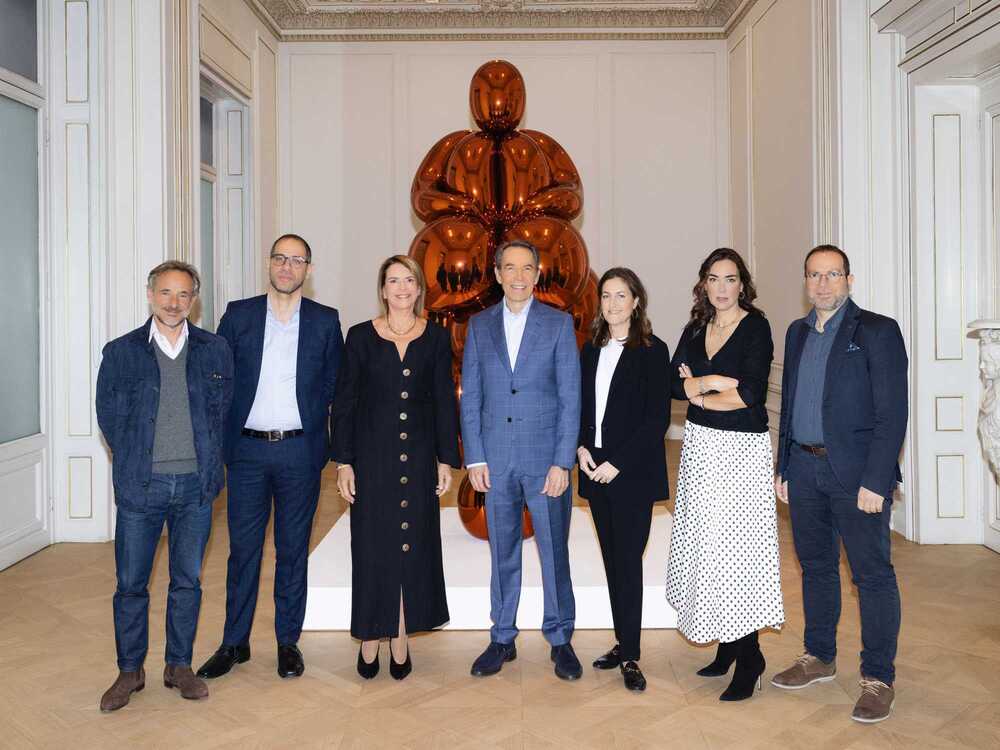
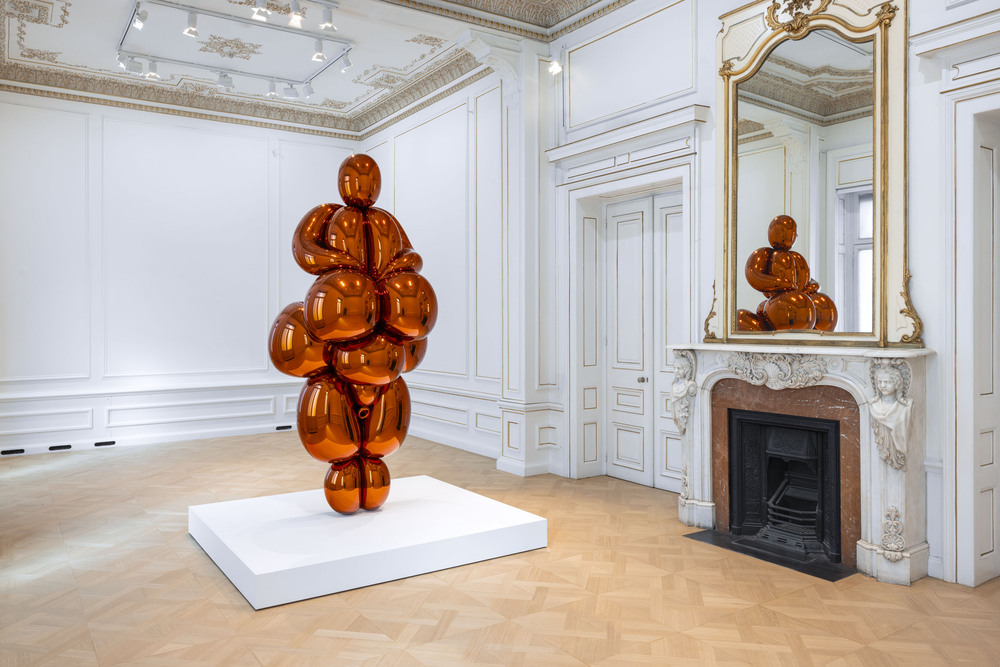
The Museum of Cycladic Art presents from March 20 to August 31, 2026 the exhibition Jeff Koons: “Venus of Lespugue”, an original museum proposal that brings Paleolithic art into dialogue with contemporary art. Exploring the significance of the Venus form from the Paleolithic period to the present day, the Museum presents for the first time to the public the work of internationally acclaimed American artist Jeff Koons, Balloon Venus Lespugue (Orange) (2013–2019), from the Homem Sonnabend Collection of Antonio Homem Sonnabend and Phokion Potamianos Homem, in dialogue with ten Paleolithic “Venuses,” through certified replicas of the immovable originals preserved in major European museums. The exhibition explores the female form from the Paleolithic period to contemporary art, proposing a dialogue that spans more than 40,000 years of human creation.
As the artist himself states:
It is a great honor for me to exhibit my work Balloon Venus Lespugue (Orange) at the Museum of Cycladic Art, where it is presented in dialogue with the replicas of the original prehistoric ‘Venus’ figurines spanning the entire Paleolithic period. The experience of the objects within the exhibition—from Balloon Venus Lespugue (Orange), which exceeds 2.5 meters in height, to the museum models, whose height ranges from 4.7 to 15 centimeters—reveals a striking contrast in both scale and materials. There is an ongoing discussion regarding the use of these ‘Venus’ figurines and their meaning. Their size, however, suggests their portable nature. One could hold them in the hands, making possible a physical connection with the magic of fertility.
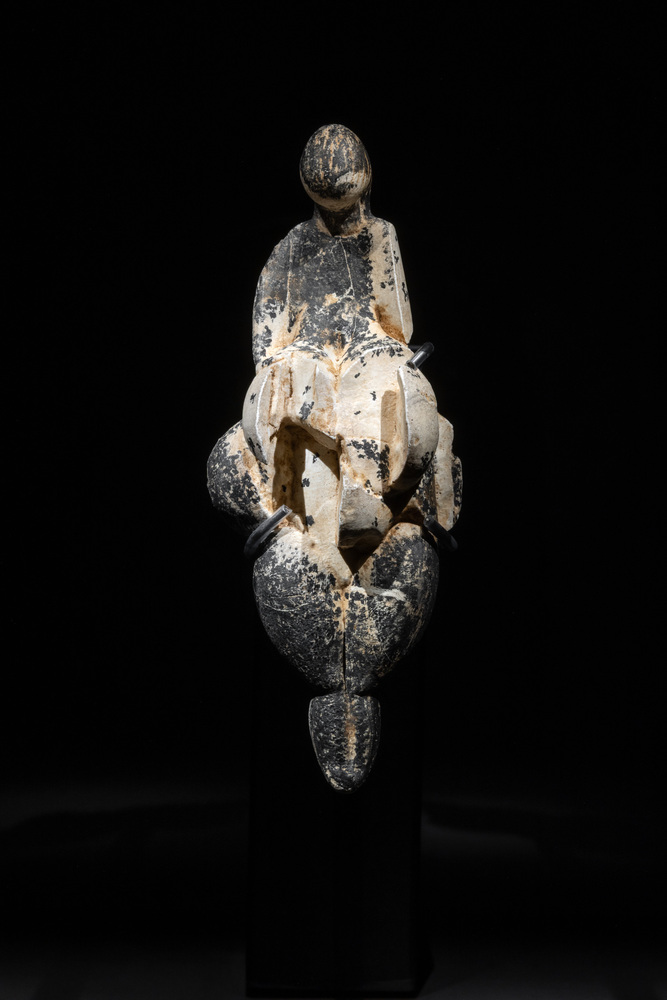
For the work Balloon Venus Lespugue, Koons draws inspiration from the Paleolithic “Venus of Lespugue,” a figurine carved from mammoth ivory, dating to approximately 28,000 years before present. Referring to the figure of Venus, goddess of love and fertility, its depiction has influenced Koons’ work since the late 1970s. The artist’s interpretation of the “Venus of Lespugue,” part of the Antiquity series initiated in 2008, includes a wide range of references to art history, from Botticelli and Titian to Duchamp and Brancusi, and more broadly to timeless notions of beauty and form. Koons transformed the original fetishistic figure, known for its exaggerated curvilinear features, into an imposing sculpture of polished, reflective stainless steel that appears to be made of balloons, recalling the proportions of Giacometti’s works.
The exhibition does not propose a linear history of art. Instead, it is organized as a dialogue of forms and ideas that transcends the limits of time, exploring the following questions:
- In what ways has the symbolic body evolved from the Paleolithic period to postmodernity?
- Is there a universal archetype of fertility and femininity that transcends eras?
- How does the transformation of materials (from mammoth ivory and limestone to reflective stainless steel) alter or preserve the sacred meaning of the form?
A journey of 40,000 years across Eurasia
Between approximately 42,000 and 20,000 years ago, across the Eurasian continent—from the Iberian Peninsula to Central Europe and Central Asia—Paleolithic peoples created small female figurines from ivory, limestone and clay. These objects, known today as Paleolithic “Venuses,” are among the earliest sculptural works of humanity.
In addition to the replica of the “Venus of Lespugue” from the Muséum national d’Histoire naturelle in Paris, the exhibition presents nine other Paleolithic “Venuses,” which reveal a shared morphological vocabulary repeated across vast geographical distances.
For these “Venuses,” the Museum collaborated with the following institutions: Moravské zemské museum (Moravian Museum), Brno, Czech Republic; Musée d’Archéologie nationale, Saint-Germain-en-Laye, France; Museo Archeologico Nazionale di Taranto MArTA, Italy; Museo delle Civiltà, Rome, Italy; Muséum national d’histoire naturelle, Musée de l’Homme, Paris, France; Naturhistorisches Museum Wien, Vienna, Austria.
The journey begins with the “Venus of Lespugue,” discovered in the Rideaux cave in southern France and carved from mammoth ivory. Its enlarged abdomen, pronounced hips and breasts are characteristic features of a form that emphasizes fertility and the vital force of the body.
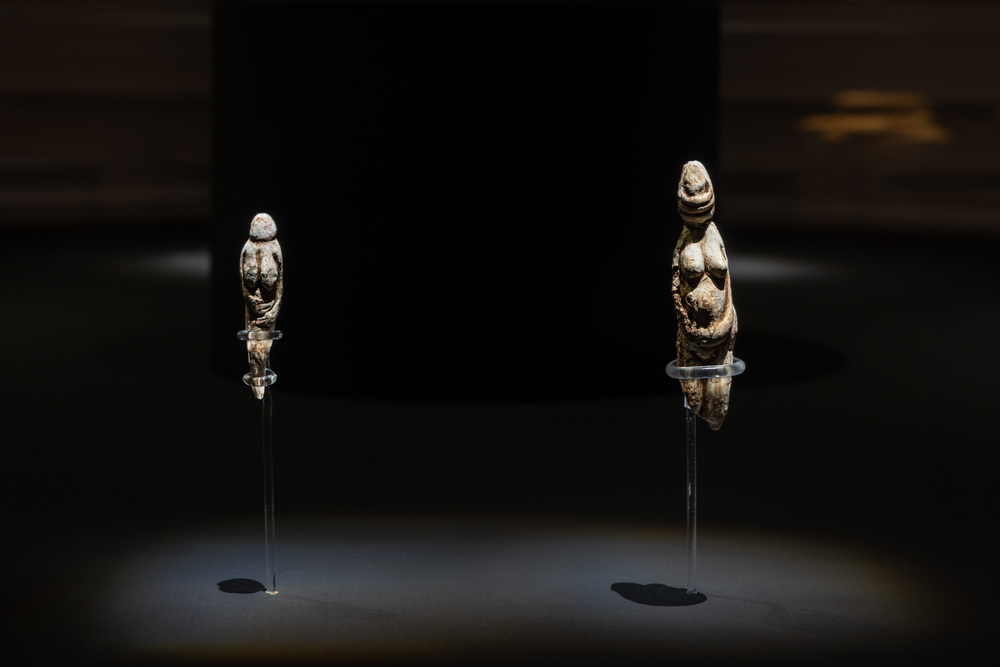
It continues with the “Venuses of Grimaldi,” originating from the Balzi Rossi caves near the French-Italian border, presenting a different, more elongated rendering of the female form.
From Italy comes the “Venus of Savignano,” a stone sculpture with a strongly abstract form, while from Central Europe the exhibition includes the “Venus of Dolní Věstonice,” one of the oldest known ceramic sculptures in human history.
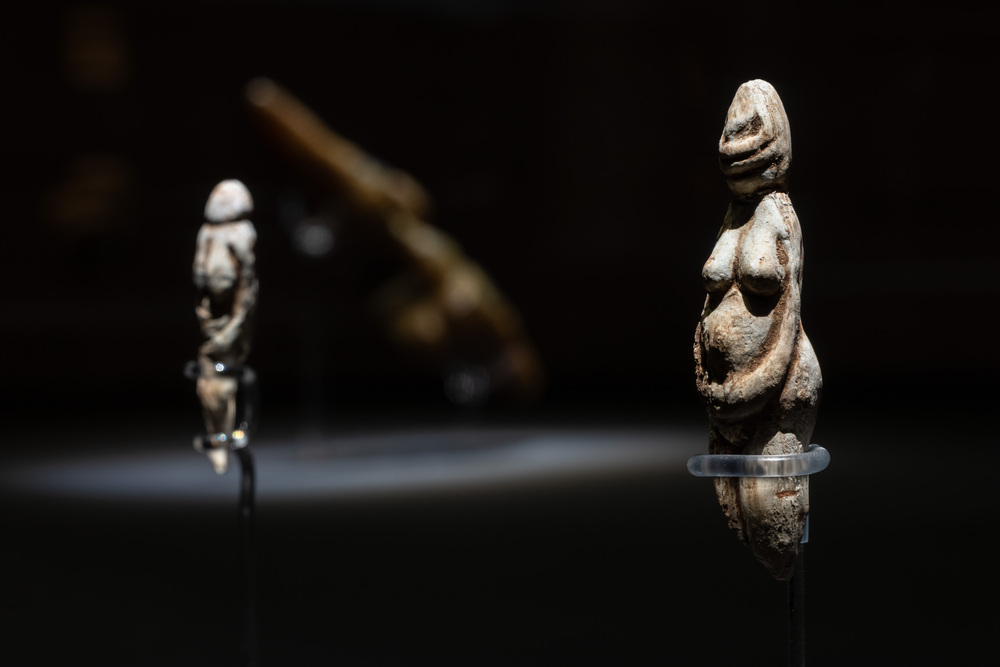
The route continues with the famous “Venus of Willendorf” from Austria, one of the most recognizable works of Paleolithic art, as well as the two “Venuses of Parabita” from southern Italy.
Despite the great distances separating their places of discovery, these figurines share common characteristics: small scale, strong emphasis on the reproductive features of the body, and a high degree of abstraction in the rendering of the face and limbs.
As noted by the exhibition curators and Scientific Directors of the Museum of Cycladic Art, Dr. Panagiotis Iossif and Dr. Ioannis Fappas:
The most striking feature of these Venuses lies in the exaggeration of their form: bulbous abdomen, accentuated hips, full breasts, while facial features and limbs are often minimized or entirely absent. The body becomes a message, and its form the vessel that carries meaning.
Jeff Koons and the contemporary reinterpretation of Venus
In the exhibition, the “Venus” figurines represent one of the earliest aesthetic codes of humanity. At the end of this journey through the prehistoric world appears the work of Jeff Koons. Koons’ “Venus” reexamines this prehistoric visual language through a radically different medium and context: the industrial, hyper-material world of the 21st century.
Through the reflective surface of Balloon Venus Lespugue (Orange), visitors are invited to explore how material transformation alters or preserves symbolic meaning, and how contemporary art can reconnect us with the ancient dimensions of human existence. The work translates the small Paleolithic figure into a monumental sculptural presence made of reflective stainless steel. Its polished surface reflects both space and viewer, transforming the act of viewing into active participation.
The exhibition also includes original drawings by Jeff Koons for the production of the works in the Balloon Venus Lespugue series, as well as a short film produced by the Museum of Cycladic Art in which the artist discusses his work. It is accompanied by a scholarly catalogue featuring essays by Jeff Koons and distinguished researchers on Paleolithic “Venuses” and their enduring significance.
In addition to the guided tours offered as part of the exhibition, monthly Guided Talks with special guests will take place, offering the opportunity for deeper engagement with the questions activated by the exhibition.