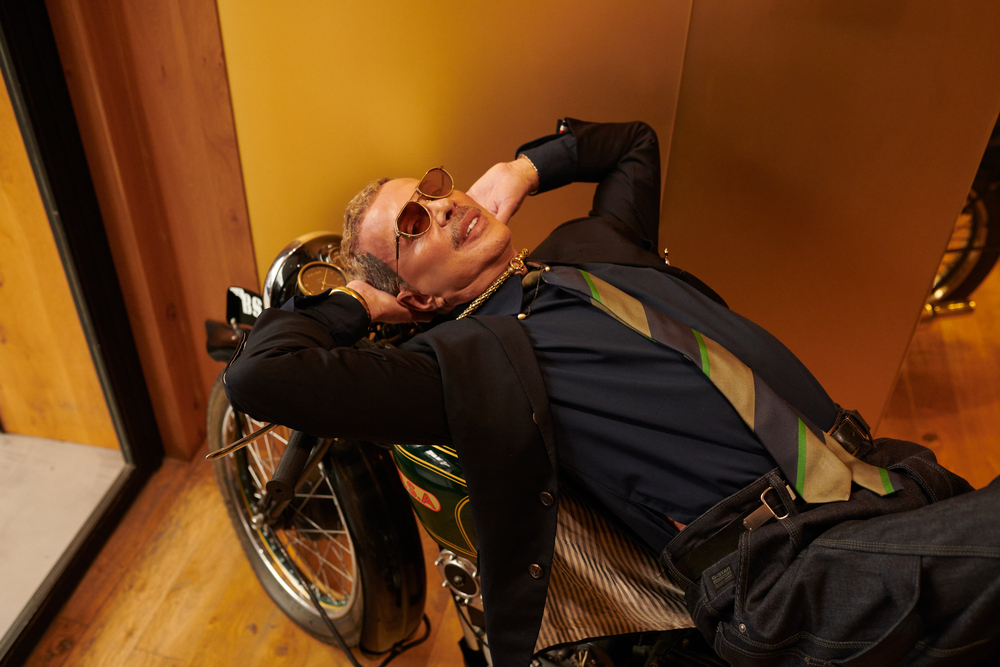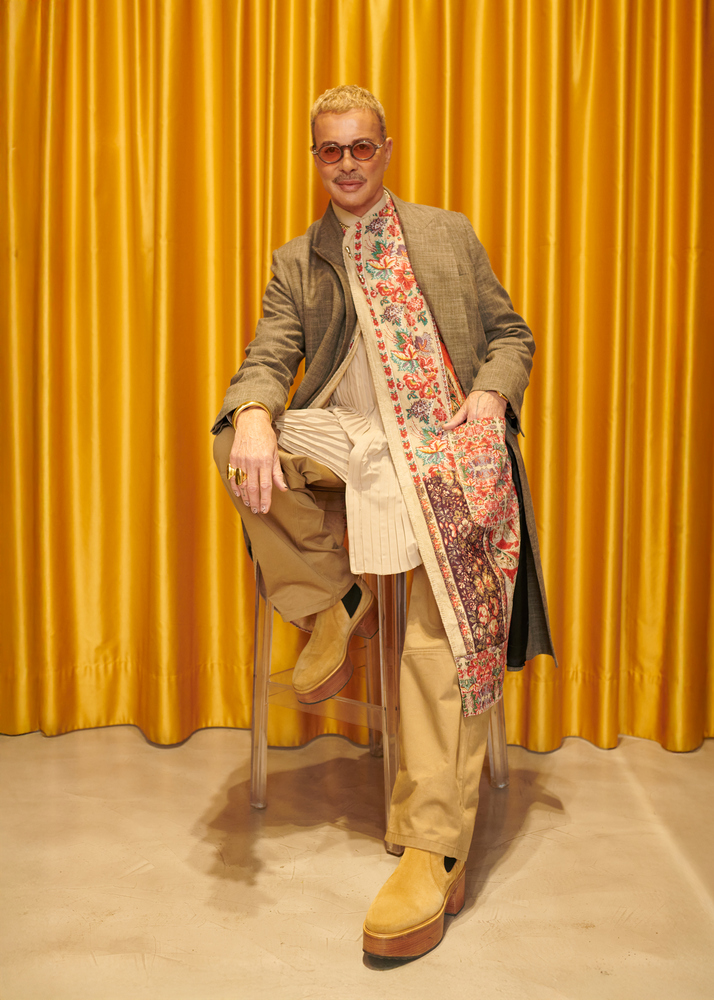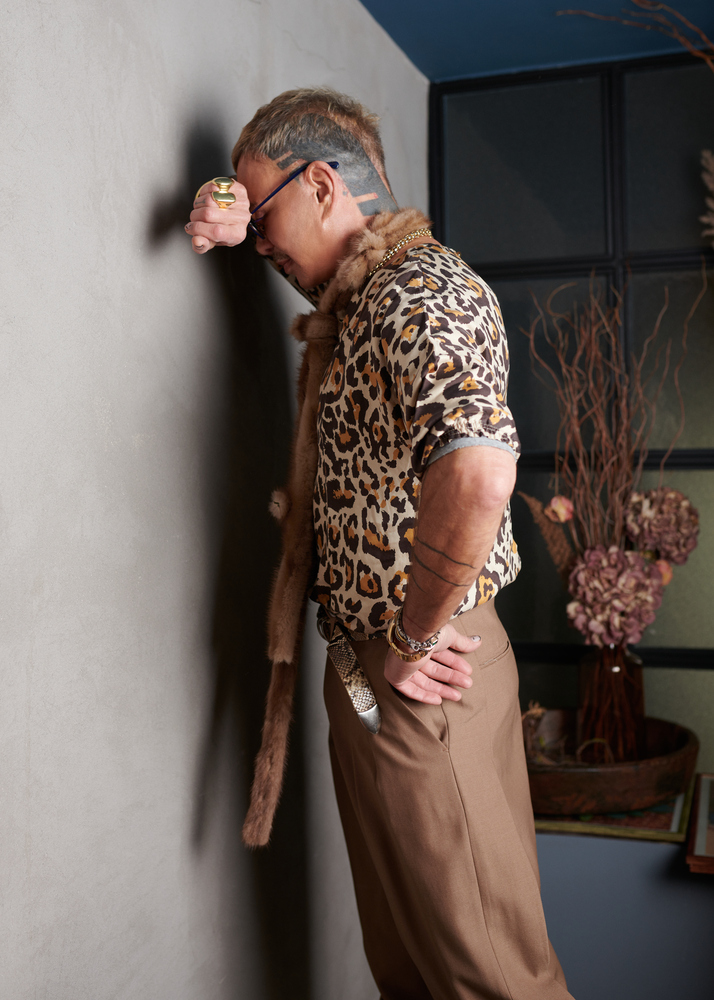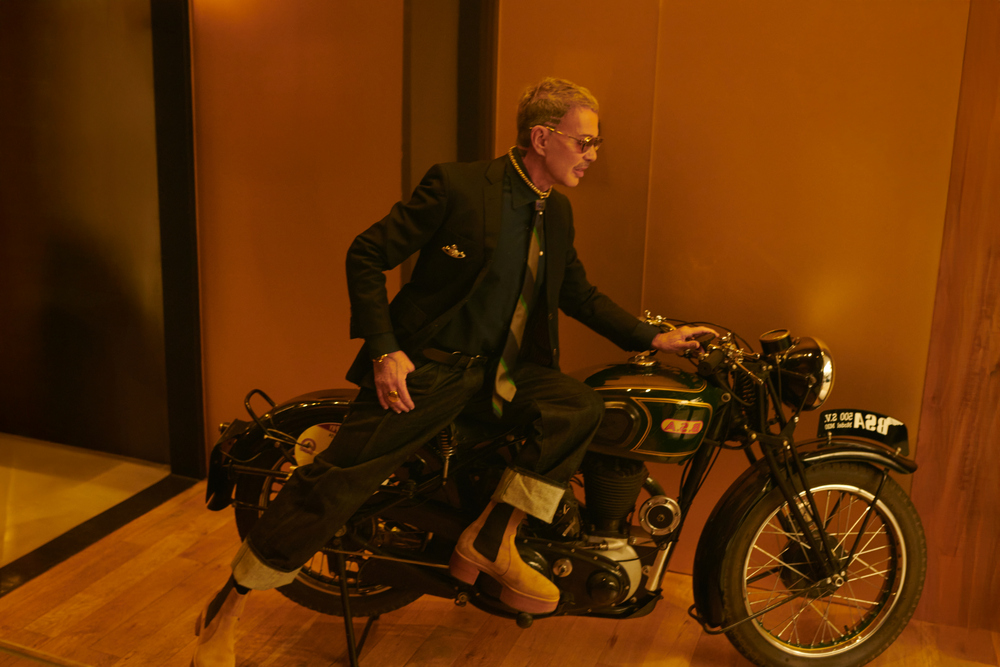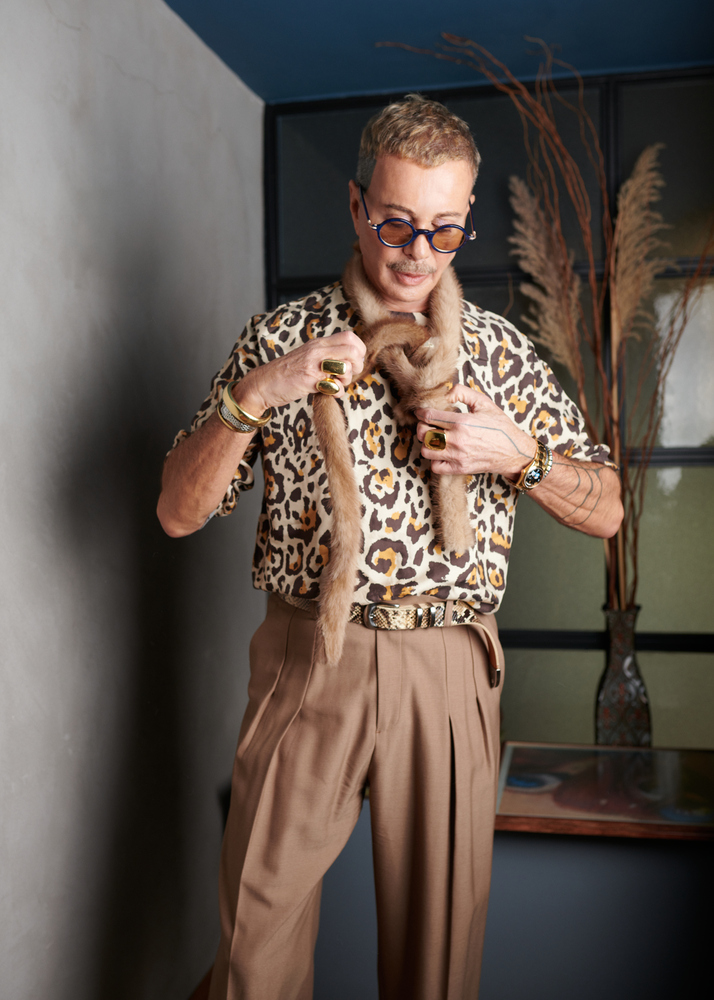

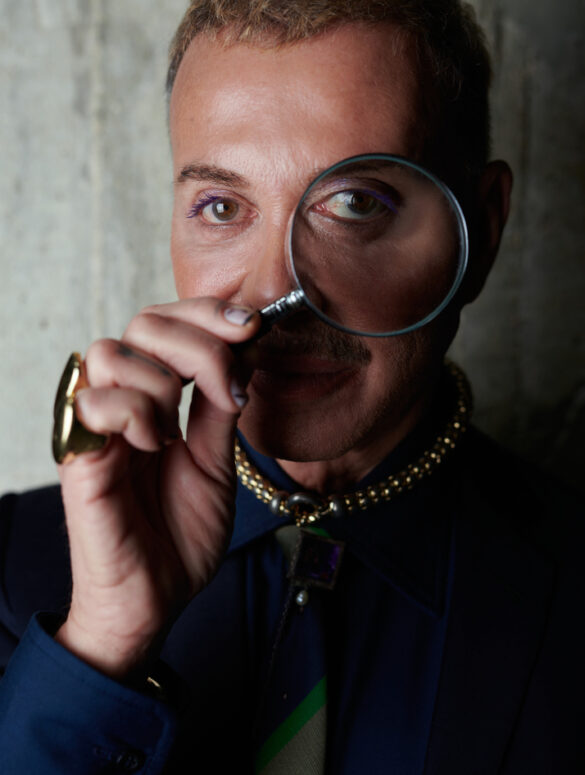
Lakis Gavalas is not simply a fashion icon, but a life icon — a man who experienced brilliance, faced collapse, and consciously chose to rise again without ever losing himself.
Lakis gavalas is one of the most recognizable figures in Greek fashion, yet the story he carries extends far beyond any single title. We share the same roots — Piraeus, Korydallos — and, more importantly, a similar way of seeing life: unfiltered, fearless, grounded in discipline and truth. I’ve known Lakis for many years; we’ve crossed paths at different moments of his journey, and what continues to resonate with me is his uncompromising honesty. Our conversation unfolds at
the pace of memory, returning to the neighborhood streets of Korydallos, moving through Europe’s fashion capitals, and ultimately arriving at something far more essential: what it truly means to live freely, authentically, and with purpose.
When you think about your younger self — teenage Lakis — what do you remember? What would you tell him today as an adult?
I was born in Piraeus and grew up in Korydallos. My childhood was filled with joy, play, and a sense of freedom — in the neighborhood streets, in the courtyards of my home and my relatives’ houses. That’s where my character was shaped. I vividly remember playing ball, games like dodgeball, all those childhood “bets” where the prize might be a book or a ball — things that may seem small, but meant everything to me. I almost always won — not necessarily because I was better, but because I wanted to win more. That’s where I learned what it means to have a goal. Even in those simple childhood games, there was already a drive inside me for growth, progress, and achievement. Today, if I could speak to that teenage Lakis, I would tell him to keep trusting his instinct. To never be afraid of discipline, knowledge, and hard work. Because in the end, everything begins in those neighborhood streets — and if you learn how to win with integrity as a child, you learn how to endure as an adult.
How deeply did the decision to leave dance and Italy behind in order to enter the world of fashion entrepreneurship in Greece shape you? What sacrifices and unfulfilled desires came with that choice?
Discipline was always a constant in my life. From a very early age, I felt the need to learn languages, to broaden my horizons, and to create space for my ambitions to take shape. That path led me to Italy — a country that embraced me and chose me to work with major ensembles, prestigious ballet companies, and significant artistic productions. Dance was a defining chapter of my life: a demanding and rigorous school, but also one that offered profound freedom. At a certain point, however, commerce drew me in. Perhaps because I realized I could merge creativity with strategy, instinct with structure. Major fashion houses began to trust me with their collections, and through those relationships I was able to bring them to Greece, introducing an entire way of thinking and living. It was a life shift, not simply a career change. Of course, there were sacrifices. Dance is not something you ever truly leave behind — it remains within you, as a memory of the body and the soul. Everything I learned through dance — discipline, endurance, precision, and respect for time and the body — I carried intact into the world of fashion and entrepreneurship. And in the end, that became the greatest validation of my choice.
My dream is to leave something behind that helps future generations understand what it truly means to live: to fall, to rise, to take flight, to land — and to keep going.
When you look back at your years of peak success — the stores, the travel, the major names in fashion — what do you miss most today? And what makes ou proud of that period?
Those years were truly extraordinary. There was an openness in Greece at the time — a willingness to embrace lifestyle, to welcome what was new, different, and international. The knowledge I had gained from major European and global capitals — France, Italy, England, and the United States — could then find real space and application. The stores were not merely retail environments; they were cultural meeting points, places of exchange and aesthetic dialogue. What I miss most is that sense of freedom and momentum — the feeling that you could dream without being held back by fear. At the same time, I feel deep pride in having been part of that era. They were years of intense creativity, bold risk-taking, and achievement. Years that will not return, but ones that left a lasting imprint.
Your journey also includes very dark moments. How did you hold on to hope and inner
strength during the period of bankruptcy?
After an extensive period of growth and a large business turnover, the major financial crisis hit Greece in 2011. It was a time that pushed many merchants to the edge and caused countless companies to collapse. I found myself facing debts to the state, largely due to the inability of wholesale clients to meet their financial obligations. That situation ultimately led me to prison. Yet even there, I did not break. I knew I was in the right, and a deep sense of determination rose within me. That determination is what kept me standing. I knew who I was, what I had contributed, and what I was still capable of giving. I emerged stronger, with a clearer mind and greater resilience. And as harsh as it may sound, that experience forced me to see society, politics, and my country with far greater clarity. I did not lose hope — I reinforced it with awareness.
What changed within you after the experience of prison? Is there something you once considered important that you now see differently?
Prison forces you to be alone with yourself. That’s where you truly understand what has real value and what was merely noise. Before, I may have placed greater importance on image, speed, and the intensity of everyday life. Afterward, I learned to distinguish what is essential from what is unnecessary. Relationships, truth, and inner balance took on a different weight. I learned that a fall is not the end, but a moment of realignment. And that freedom is not a given — it is a way of life. Since then, everything I do carries greater awareness and far less vanity.
You’ve said that “life is a journey.” Looking back on that journey today, which moments did you once believe were “lost,” only to realize they taught you something profound? And which were the most beautiful surprises you never expected to experience?
Travel has always been fundamental to my life — not merely as movement, but as meaningful experience. From every country and every city, I tried to absorb cultural, aesthetic, and human elements and carry them into my path, my style, and my personal evolution. At the same time, there were moments that, while I was living them, felt lost or unjust: the fall, isolation, prison. Those periods felt like life had been put on pause. In reality, they became my most powerful lessons. That’s where I learned to subtract, to observe, and to understand the human being behind the image. And the most beautiful surprises came when I least expected them: the love of people after the fall, acceptance, and the ability to stand up again and move forward with a clearer perspective. This journey taught me that nothing is ever truly lost, as long as you have the strength to transform experience into knowledge.
Freedom means the ability to be truthful. To speak without fear, to create without dependence, and
to live without being defined by my past — neither by my successes nor by my failures.
If you had the opportunity to start your career again from scratch — free of burdens or preconceived notions — what would you do differently, and what would you do the same?
I would keep the same boldness and the same sense of commitment. I wouldn’t change my need to take risks or to open new paths. However, I would likely be more cautious in management, more skeptical of circumstances, and less romantic about a system that rarely forgives excess. What I would unquestionably do the same is invest in knowledge. Learning languages, traveling, observing the world. That is the one form of capital no one can ever take away from you. Everything else comes and goes.
What does the word “freedom” mean to you today — after so many years of intense living, glamour, downfall, and reinvention?
Today, freedom has nothing to do with glamour or excess. For me, it means the ability to be truthful. To speak without fear, to create without dependence, and to live without being defined by my past — neither by my successes nor by my failures. After the experience of prison, freedom took on an entirely different meaning. It became an inner state. It is knowing who you are, accepting the fall, and continuing forward. Falling, rising, taking flight, and landing again — and remaining standing, with dignity.
Is there a moment or experience — perhaps small, perhaps significant — that, when you look back
on it, makes you feel that “everything made sense,” even if it didn’t at the time?
There are many such moments, but one feeling connects them all: the realization that you endured. That you didn’t break. That you remained standing. Those are the moments that give meaning to everything. Nothing was wasted. Everything led me to know myself more deeply and to face life with greater truth.
You’ve spoken about an early attempt to write your autobiography, which you ultimately
set aside. What made you feel that first version didn’t express your truth and
your real self?
A significant part of my life is captured in my autobiography Lakis Gavalas Loaded, published by Agyra. However, before reaching that point, there was an earlier attempt that I chose not to pursue, because I felt it didn’t fully represent me. I wasn’t interested in simply recording events or listing achievements. I wanted the truth to be told — with all its contradictions, excesses, falls, and restarts. The message I want to leave behind is not success itself, but the journey. How a person can fall, be questioned, lose, and still find their way back to themselves. That is the story worth telling.
Nothing is ever truly lost, as long as you have the strength to transform experience into knowledge.
In an era where fashion and image are so fleeting, what do you believe “real identity”
means?
Today, as fashion changes at dizzying speed and technology, overproduction, and A.I. redefine everything, it is extremely difficult to hold on to one’s identity. For me, real identity has nothing to do with trends; it has to do with consistency. With knowing who you are, where you come from, and what you stand for. The most valuable thing I never want to lose is my truth. Remaining authentic, even as everything around me changes. Because without truth, there is neither creation nor substance.
How do you view the Greek fashion scene today?
Today I teach fashion at SAEK ALFA in Athens, Piraeus, and Thessaloniki, as well as at UCLan University Cyprus, and I see the new generation up close. I can say with certainty that there is tremendous talent. Despite the challenges in the job market, young creators possess knowledge, aesthetic awareness, and an international mindset. The market is no longer just Greek — it is global. That is exactly what I try to pass on to my students: the need to prepare for an international arena. Greek fashion is still searching for its identity, but it has all the tools needed to shape it.
In a highly competitive international environment, do you believe Greek fashion can stand on equal footing with major foreign fashion houses? What helps us — and what holds us back?
Greek fashion can absolutely stand on equal footing, as long as it believes in itself and becomes properly organized. What helps us is talent, creativity, and our cultural heritage. What often holds us back is a lack of strategy, fragmentation, and fear of taking risks. The competition is tough, but it is not unbeatable. It requires knowledge, patience, and an international outlook.
What dreams do you still have — not as a businessman or designer, but as a person
who has lived so much — for the years ahead?
There have been discussions about my life being adapted for a platform such as Netflix, something I am considering quite seriously. Not for publicity, but because I believe such a story could serve as a lesson in life. I am someone who worked hard, lived intensely, fell, and rose again. I remain deeply Greek in my values and traditions, yet with a global perspective. My dream is to leave something behind that helps future generations understand what it truly means to live: to fall, to rise, to take flight, to land — and to keep going.