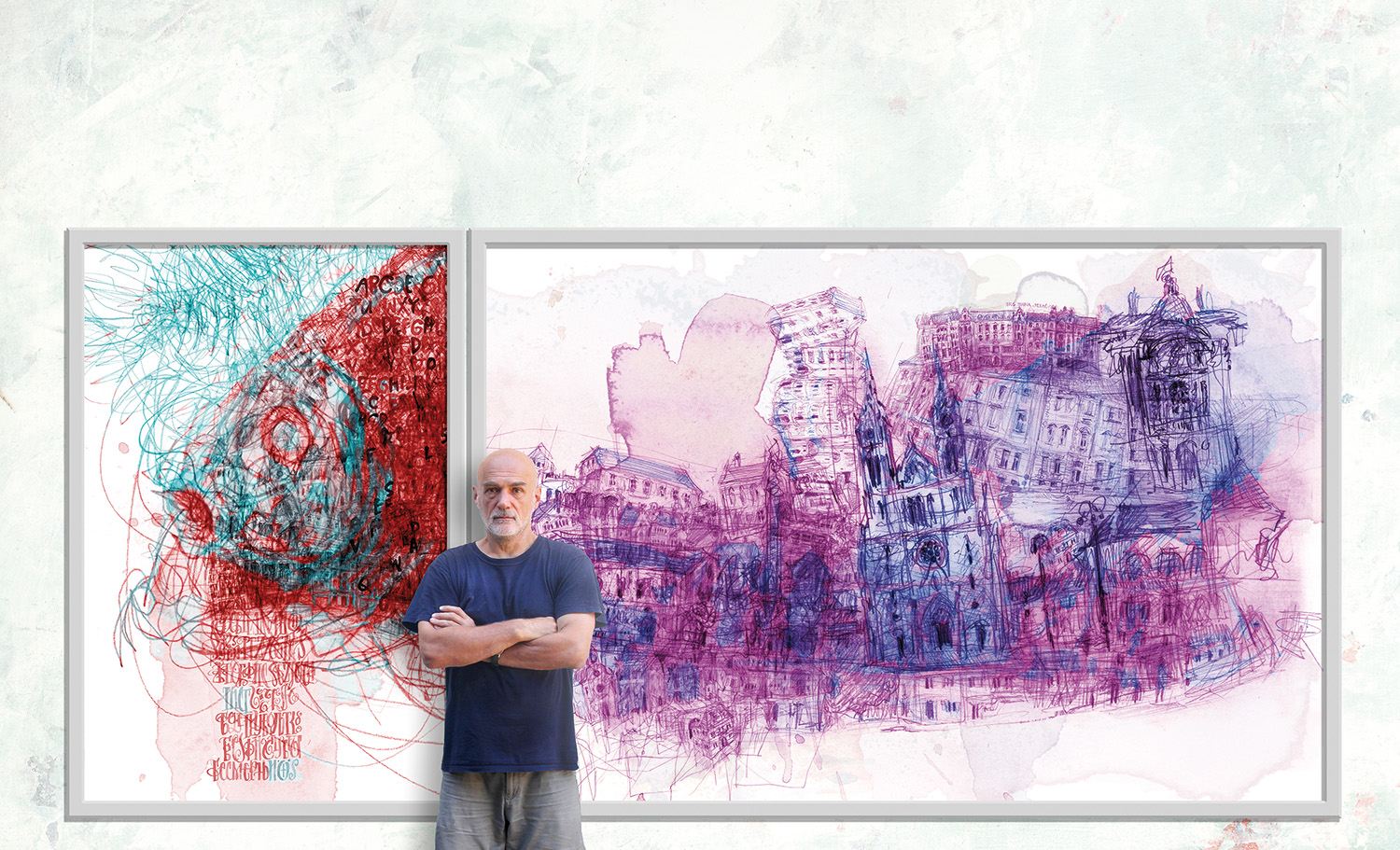

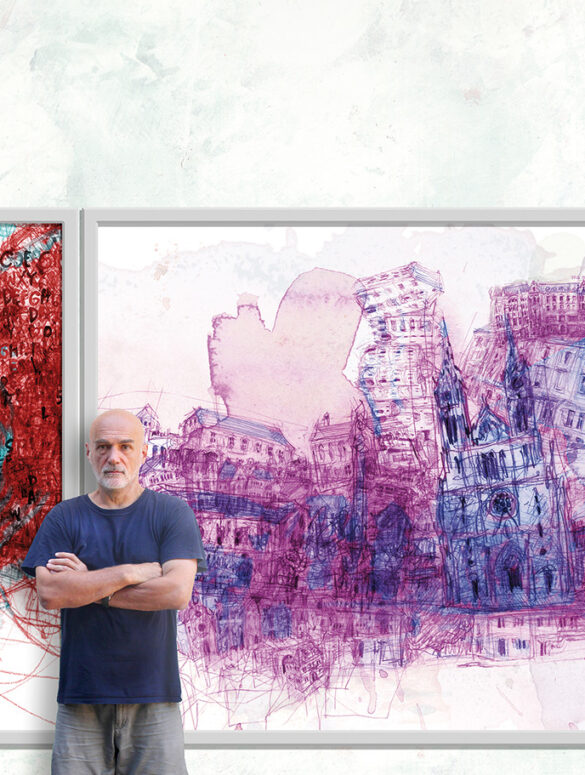
Vladimir Radibratovic, a talented creator in the field of design, highlights his unique aesthetic through stunning works that stand out for their detail and originality.
Between Greece, Serbia, and Croatia, which cultural elements and environments influence your creative expression the most?
At a young age, Ancient Greece and its stories of Hercules’ labors and sculptures captivated me through a book my grandmother bought me. Simultaneously, Serbia and its fairy tales, as told by my other grandmother, had a profound impact on me. My mother’s hometown of Split, located on the Dalmatian coast, with its culture reminiscent of Italian seaside towns, also left its mark. In Serbia, I studied architecture, then applied arts and painting. Later, of course, came Athens, a city where I spent 25 creative years, which further enriched my references.
How would you describe your artistic language and the deeper quests that guide it? Are there specific themes or symbols you aim to communicate through your work?
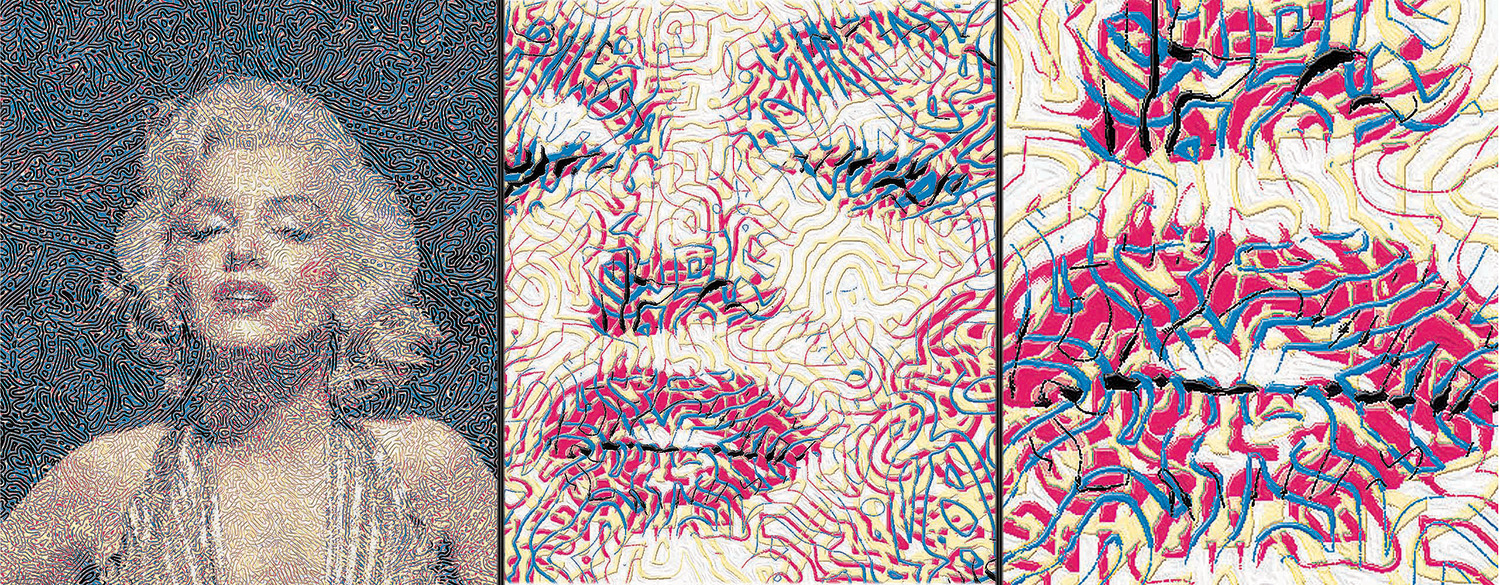
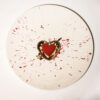
In my pursuits, the future and what it holds are always at the forefront—for instance, advancements in Artificial Intelligence. Even though I studied painting, the war in Yugoslavia brought me to Greece, where I turned to magazine illustrations. Within three months, I had signed my first cover. Although I tried to connect with some art galleries to engage in painting, I ultimately ventured into the markets of print and advertising. Soon, I became part of a vibrant community of creative individuals, enjoying that era’s lifestyle, including VIP parties, and so on… Moreover, I think I suffer from what I call the “shiny object syndrome,” where, like a child, I feel compelled to see and experiment with beautiful or intriguing new things. Over time, I evolved into someone ready to embrace the new or tackle the unknown, even when dealing with challenging clients. I ended up creating with a variety of materials, utilizing traditional painting techniques, digital tools, and unconventional mediums like flour, wine, and coffee. Essentially, I sought to experiment through unexpected or non-traditional methods.
In a challenging era, I search for sources of inspiration that AI cannot replicate.
Could you guide us through the journey from the initial idea to the final form of a project?
The process depends on the project. For example, when I was asked by Mega Channel to design the logo for Maria Ekmektsioglou’s show “Apo Tin Poli Erxomai,” I came up with the idea of spreading flour on a table, moving it around, and capturing thousands of photos to create a stop-motion animation for the title. This project remains one of my favorites in my portfolio. In this instance, too, I thought of something “unorthodox.” This approach to personal inspiration and discovery is something I have occasionally taught my students. A creator must first understand themselves to learn how to create. Each of us also has our own rituals: my ideas often come just before I wake up, while still relaxing in bed. I may fall asleep with a pencil and paper next to me, sketching before I drift off, and wake up with a good idea in the morning. Searching is everything.
That’s also why I explored calligraphy in Greece, looking for old notebooks to practice the Greek alphabet. I was the first to incorporate it into my works, such as recently with the typeface I created for Yorgos Lanthimos’ film Poor Things.
Is there a particular work or collaboration you value for its personal or artistic significance? Which collaborations or experiences opened new creative paths for you?
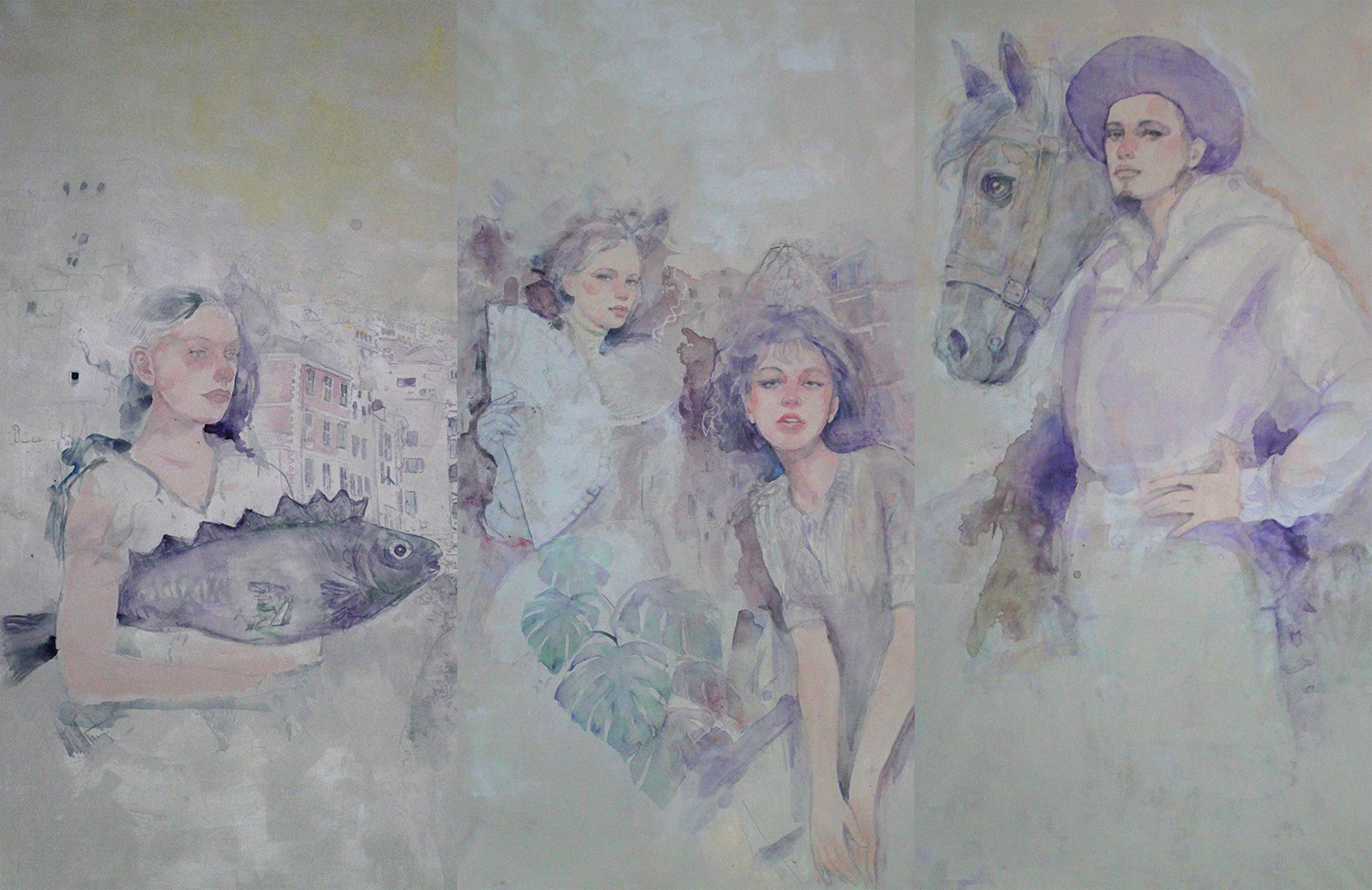
I cannot single out a specific project, as I have done many diverse works. Anything that expanded my horizons carried greater significance for me. For instance, during Greece’s campaign for hosting the Olympics, I hand-designed labels for olive oil bottles for Minerva’s special packaging, as well as handwritten letters sent by the company to world leaders. With my earnings, I managed to acquire equipment that allowed me to transition into the digital era of creation, only to realize that this medium resulted in uniformity. Thus, I took a step back and started illustrating using watercolor, a technique that is challenging to mimic, even with Artificial Intelligence. Personally, I enjoy working with watercolor because it doesn’t offer absolute control. Water behaves in its own way, and the accidental “mishaps” during creation add value, making each work unique.
You are intrigued by the idea of working alongside Da Vinci, even in his kitchen! If you could converse with a great artist or polymath from the past, who would you choose, and what would you like to learn from them?
Da Vinci did so many diverse things—he was a fantastic painter and draftsman, but also engaged in architecture and inventions. Because of his audacity, I once jokingly wrote that I would like to be a cook working in his kitchen, to learn what he ate and emulate him. Apart from Da Vinci, I greatly admire ancient sculptors. I even named one of my sons Myron, after the creator of the Discobolus. Among modern Greeks, I like Panayiotis Tetsis. During my university years, I was deeply influenced by two Austrian painters, Egon Schiele and Gustav Klimt. I would also choose Svetlin Vassilev, who lives in Greece and is, in my opinion, one of the best illustrators in the world.
The Athenian Riviera is a stunning canvas of evolution; how would you illustrate the energy it exudes?
I have traveled extensively and consider it one of the most beautiful areas in Athens. What inspires me is the sea and its scent, the trees, and the pines. When I see the stones on the seashore, my mind immediately connects them with the ancient Greek stones that became sculptures.
How do you envision the future? Are there dreams or goals you wish to achieve in the coming years?
In a challenging era marked by the advent of Artificial Intelligence, I search for sources of inspiration that AI cannot replicate. Recently, through a Greek design studio, I began creating works painted with coffee, which I enjoy as a material. Now, I want to explore new materials for painting. I also plan to start a workshop where I will teach therapeutic calligraphy. I believe art is therapeutic for both those who practice it and those who appreciate it. I notice that when I deeply enjoy my work, I find it hard to sleep afterward because my energy remains high.
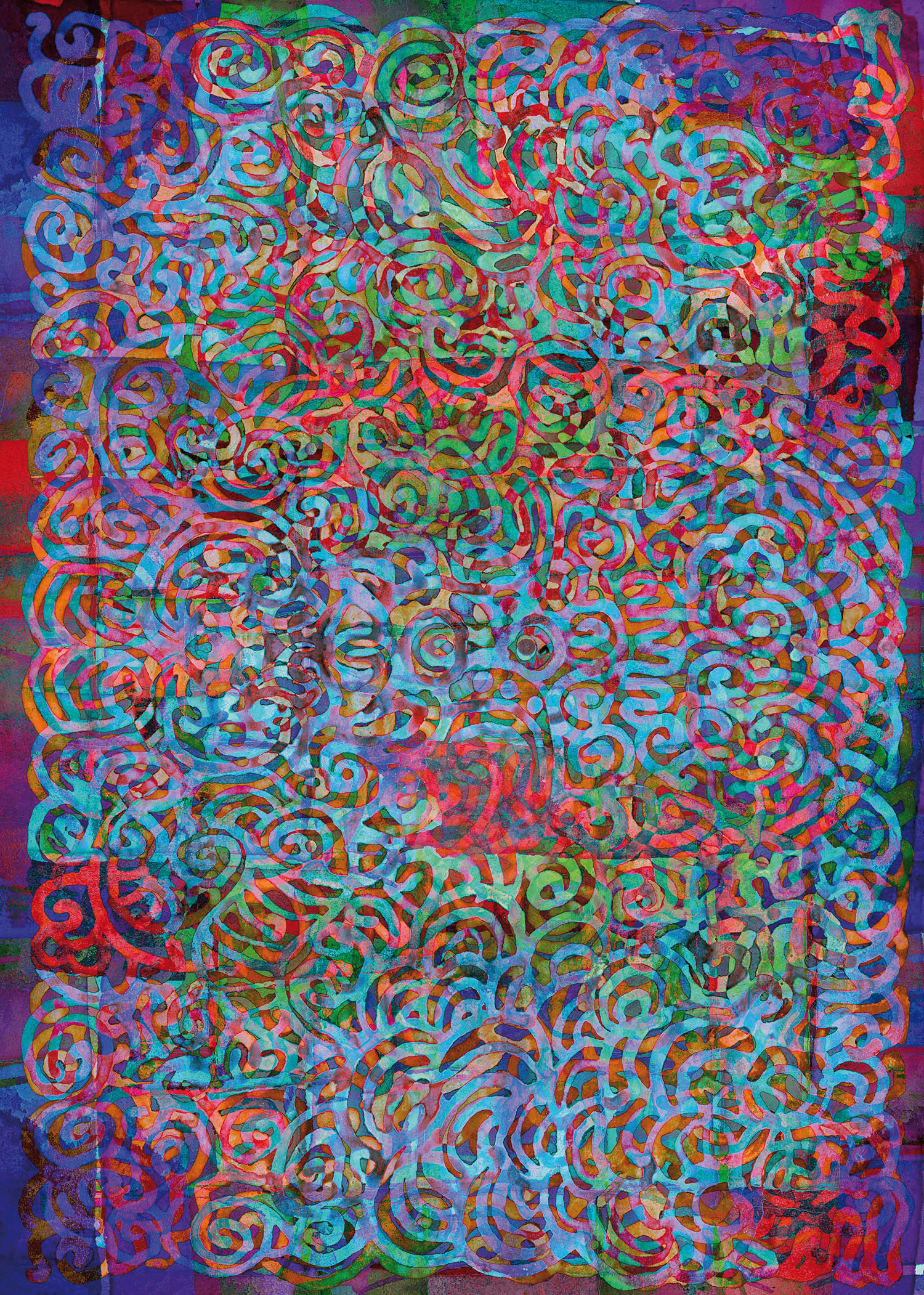
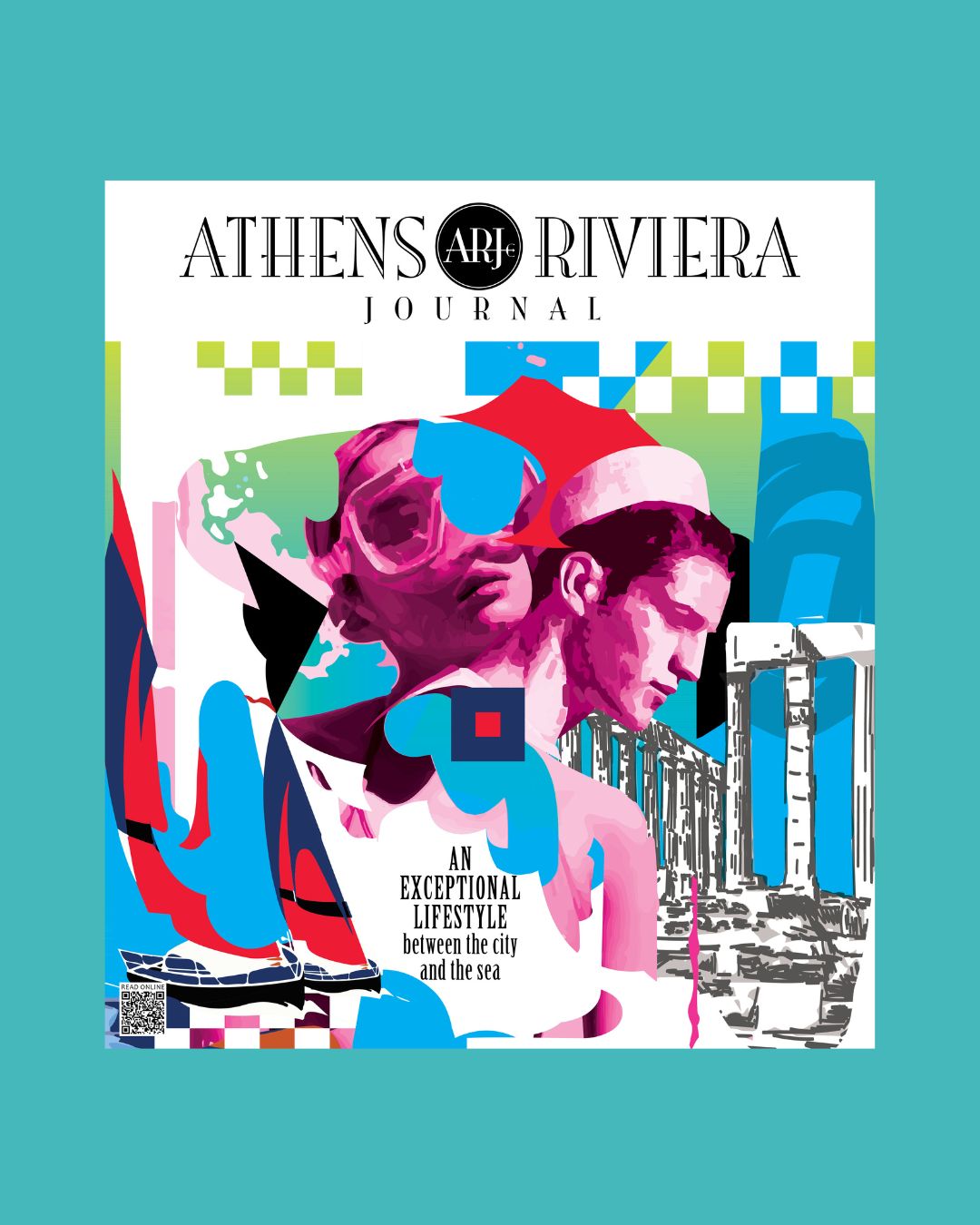
Vladimir Radibratovic designed the stunning cover of the 5th Athens Riviera Journal Print Issue.