

In 1965, the OMEGA Speedmaster was the only watch to successfully pass the rigorous tests of the American space agency, NASA.
This happened exactly sixty years ago, on March 1, 1965. As part of the development of the U.S. space program, NASA was looking for a watch that was reliable, accurate, legible, and easy to use for its space missions. The goal: a certified watch for all future manned spaceflights, amidst the competition to conquer the Moon.
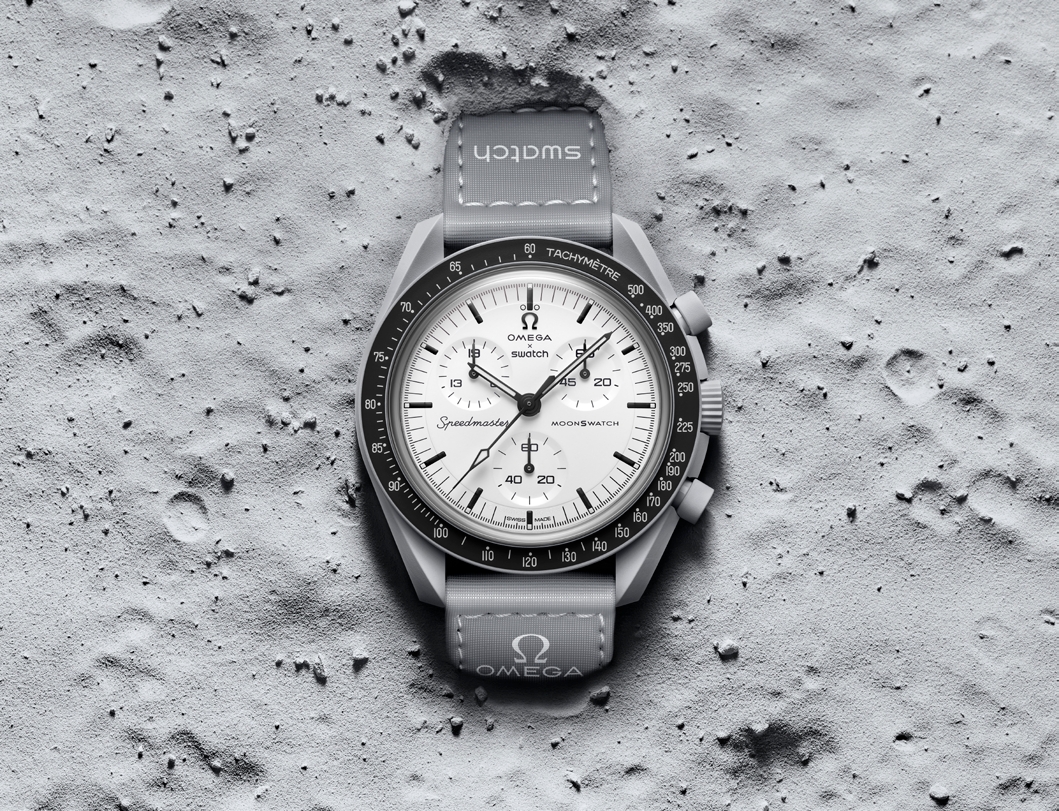
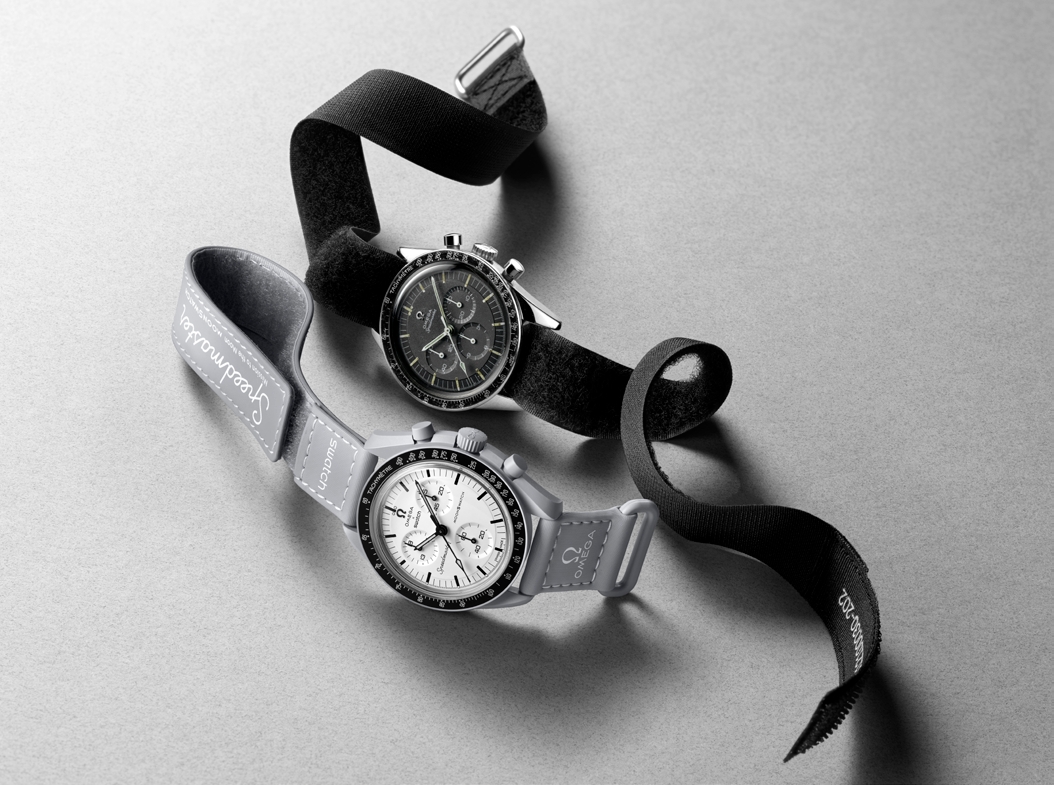
As a government organization, NASA was required to issue an official request for proposals (RFP), inviting watch manufacturers to submit their models. The U.S. space agency was requesting the submission of existing series models. OMEGA submitted the Speedmaster model (ST105.003 from 1964), Longines submitted the Wittnauer 235T, and brand X submitted the model 6238. NASA then subjected these chronographs to 11 consecutive tests, based on strict criteria specifically designed for the occasion by the U.S. space agency. Of the three watches tested, only one received, on March 1, 1965, the prestigious flight certification for all NASA manned space missions and NASA’s extravehicular activities: the OMEGA Speedmaster. The new MOONSWATCH 1965 is a tribute to this unique watch and its NASA flight certification six decades ago.
NASA’s test supervisors preferred and recommended the OMEGA Speedmaster for its “superior accuracy, reliability, easy readability, and ease of use” compared to the other models. The Speedmaster’s flight certification quickly became a reality. Three months after the tests, during the “Gemini IV” mission on June 3, astronaut Ed White ventured outside the spacecraft for 20 minutes, with the OMEGA Speedmaster on his wrist.
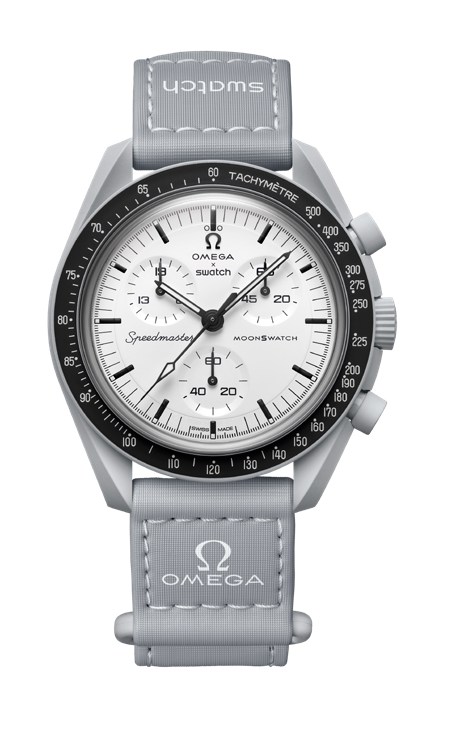
The MOONSWATCH 1965 retains all the visual characteristics of the Speedmaster that underwent NASA’s testing sixty years ago. The OMEGA logo used at the time (which also appears on the strap and crown), the hands, and the typography of the engravings all capture the style of the original watch, giving its modern version a charming vintage feel. But the surprises with this watch don’t stop here. The dial, for example, is another nod to the impeccable OMEGA Speedmaster Moonwatch Professional with the white dial that was released in March 2024 (310.30.42.50.04.001).
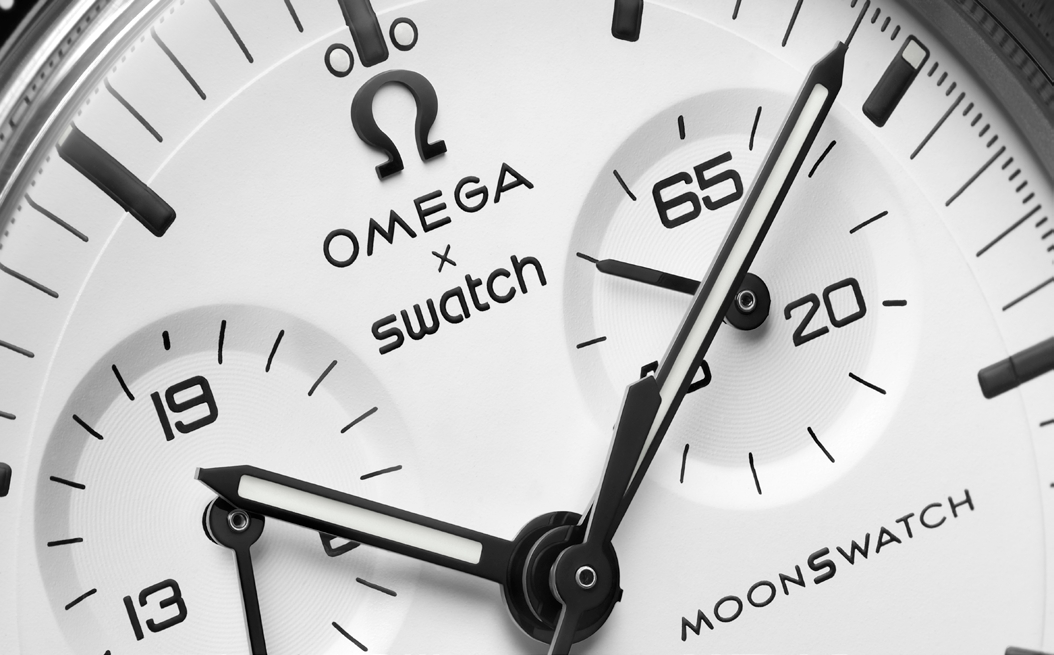
The two subdials at the 10 and 2 o’clock positions on the new MOONSWATCH 1965 are also new additions. The first features the number 19 (usually 60) at the top, while the other features the number 65 (usually 10), a reference to the year 1965.
For this purpose, the chronograph counters have been modified to measure:
- 10 o’clock counter: 19 hours
- 2 o’clock counter: 65 minutes
Thus, the dial highlights the numbers 19 and 65 to form “1965,” along with the number 60 in the small seconds subdial at the 6 o’clock position (which remains unchanged). The chronograph reading differs slightly, as the counter first measures a total of 65 minutes, and only after completing those 65 minutes does it begin counting hours. Specifically, the hands of both subdials function as follows:
- The 10 o’clock counter (19 hours) and the 2 o’clock counter (65 minutes) complete a “victory lap” upon reaching the 64th minute.
- The 10 o’clock counter rotates once to display 1 hour (or rather, one additional hour).
- The 2 o’clock counter rotates once to show the 5th minute.
This way, without resetting the (minute) counter at 2 o’clock to zero, the time can be read normally by adding hours and minutes. This process repeats every 65 minutes, with both hands moving simultaneously.
The subdials also display the year 1965 and the 60th anniversary of NASA’s flight certification. The number “19” appears on the 10 o’clock subdial, the number “65” on the 2 o’clock subdial, and the number “60” on the 6 o’clock subdial, all of which are also visible under ultraviolet light. The hands and markers feature Super-LumiNova® Class A coating for optimal visibility in the dark.
The MOONSWATCH 1965 includes its mission statement on the case back and the OMEGA X SWATCH logos on the dial and crown. The sleek astronaut style is completed with a gray VELCRO® strap, suitable for space suits, with contrast stitching matching the case and strap color.
The essential features of the original OMEGA Speedmaster Moonwatch remain: the asymmetrical case, the famous tachymeter scale with the dot over 90, and the signature Speedmaster chronograph hands. Like all Bioceramic MoonSwatch designs, this new watch features a chronograph function.
As with all OMEGA X SWATCH collaboration watches, the non-limited “1965” is made from Swatch’s patented Bioceramic material, a unique blend of two-thirds ceramic and one-third bio-sourced materials derived from castor oil.
The new Bioceramic MoonSwatch Collection design has been available since March 1 (the date on which NASA certified the Speedmaster in 1965) exclusively at select Swatch stores worldwide. As with the entire Bioceramic MoonSwatch Collection, sales are limited to one watch per person, per day, per Swatch store.
NASA’s Eleven Consecutive Tests
NASA had high expectations for the tested watches before certifying them for manned space missions. Reliability was of utmost importance during the 11 consecutive tests in which the chronographs of three different brands were subjected. The required accuracy was five seconds per 24 hours, ideally within a range of +/- 2 seconds per 24 hours. The watches had to have a stop function, be legible, and be anti-magnetic.
- High-temperature test: 70°C for 48 hours, then 93°C for 30 minutes under partial vacuum.
- Low-temperature test: -18°C for 4 hours.
- Vacuum test: Heating in a vacuum chamber, followed by cooling to -18°C for several cycles.
- Humidity test: Ten cycles of 24 hours at >95% humidity with temperatures ranging from 25°C to 70°C.
- Corrosion test: In an oxygen atmosphere at 70°C for 48 hours.
- Shock test: Six shocks of 40G in six different directions.
- Acceleration test: Gradual acceleration to 7.25G for five minutes, then up to 16G for 30 seconds on three axes.
- Low-pressure test: Pressure of 10^-6 atmospheres at 70°C for 90 minutes, then at 93°C for 30 minutes.
- High-pressure test: Air pressure of 1.6 atmospheres for 60 minutes.
- Vibration test: Random vibrations on three axes between 5 and 2,000 Hz with an acceleration of 8.8G.
- Acoustic test: 130 decibels at frequencies from 40 to 10,000 Hz for 30 minutes.
(Source: OMEGA archives)