
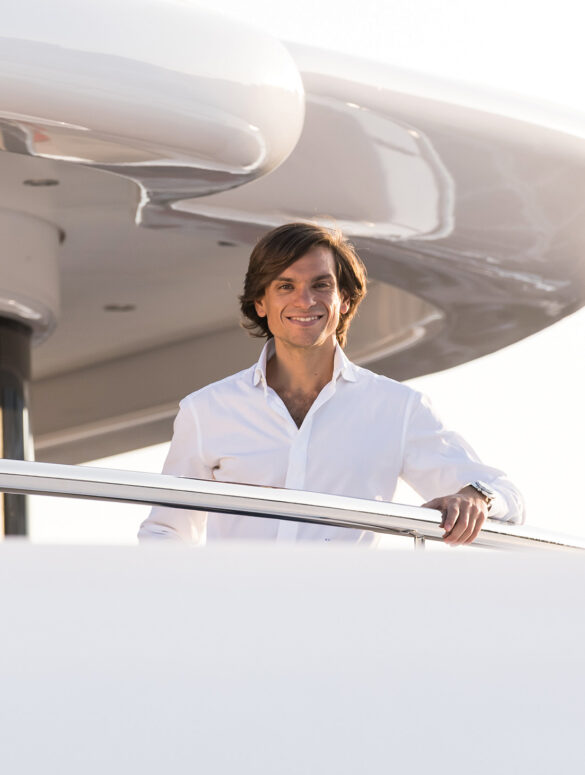
As a prominent designer of the new generation of Studio Vafiadis, Stefano Vafiadis is the artistic translator of the new yachts’ trends.
A yacht should reflect the inner world of its owner. How can this component be achieved?
Boats are among the objects that best reflect the owner’s taste and ethics. The fact that they are surrounded by water and contained within a hull and superstructure makes them independent from the rest of the world. It could also be said that they are like small islands, or small states, in which there is a lifestyle and an experience on board dictated by the tastes of the owner; this is also the reason for the great appeal of owning one. The owner’s taste is certainly present in all the design choices of the yacht: starting from the type, from the chosen and desired speed, from the interiors even more so. All the choices made during the construction crystallize the character that is given by the owner. We, as designers, are simply translators of these flavors and we collaborate to fulfill the dreams and desires of these lucky owners, making them the best.
Representing the new generation in boat design, what do you think will be their biggest contribution?
I think that the attitude of our generation of designers is different from the previous ones, more open to mutual collaboration and the search for a new form of luxury: less focused on age-old canons of intrinsic value of materials and workmanship and more instead on value “conceptual” and “functional” of the design on board. Freedom from pre-established social rules and the overpassing of the old rules in favor of a casual life on board, based on well-being and fun, are the new must. The environmental impact also represents a new ambitious and necessary challenge for the next generations. The big compromise we are facing between ethics and luxury is merely not to sacrifice our lifestyle onboard and, at the same time, reduce the consumptions and the emissions of our yachts on a cruise and also, very importantly, during the construction of yachts.
Could the impressive design of the DOM Yacht be described as the “gateway” to a series of futuristic yachts?
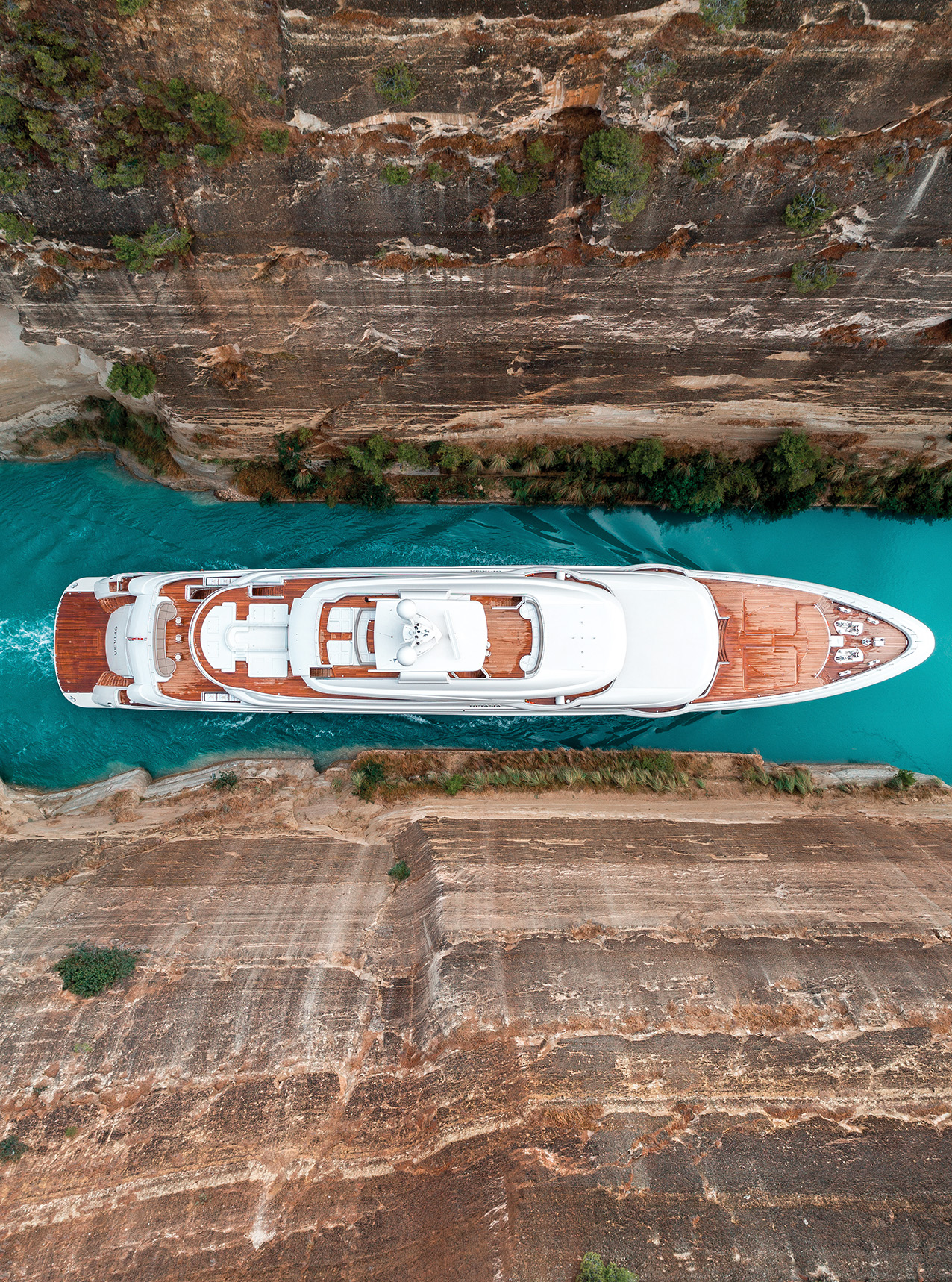
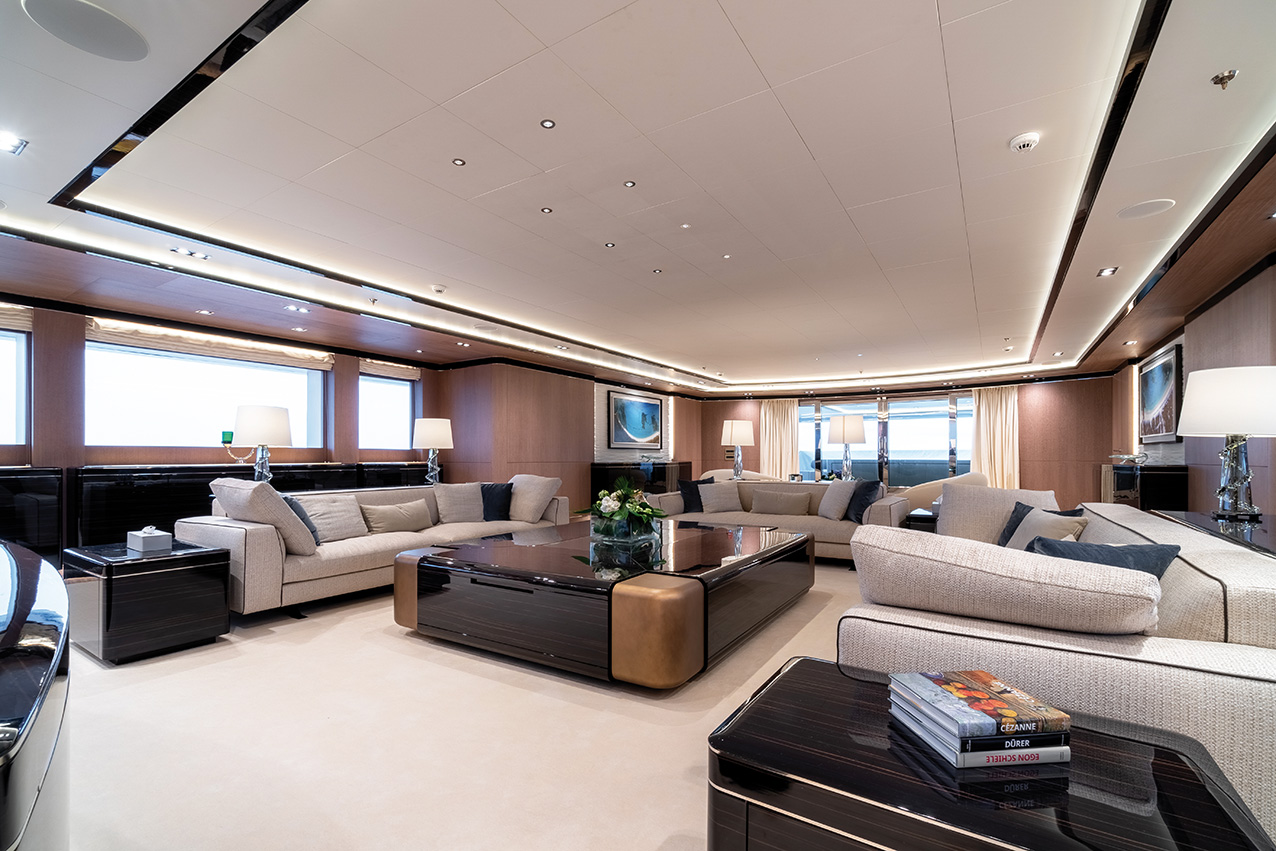
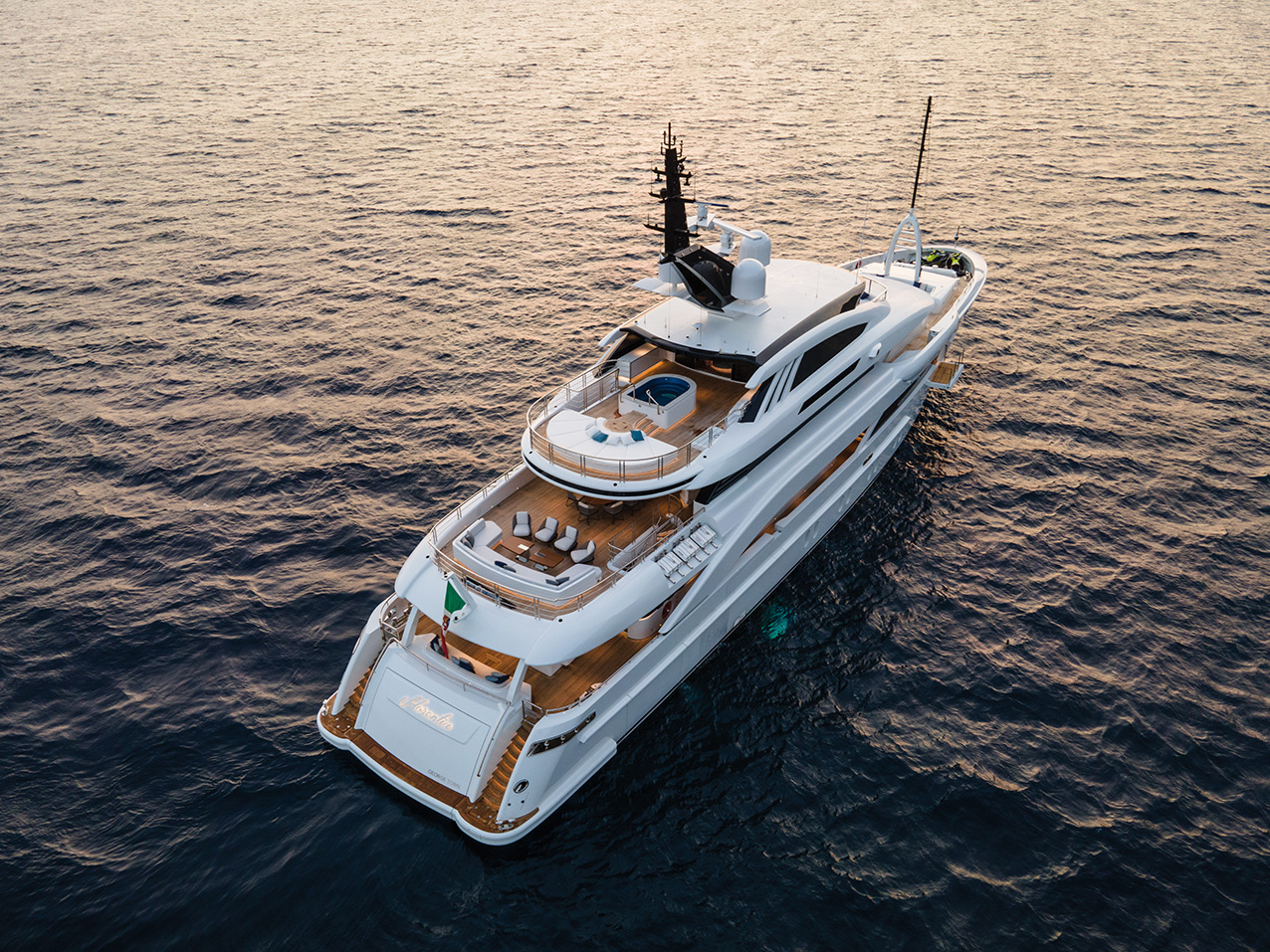
I believe that the design of the DOM is a good balance between the present and the future, with shapes that are never exaggerated but rather outline a modern and contemporary boat without necessarily chasing fashions or currents that would instead make her rapidly age. A design at the service of a modern owner who offers many possibilities for life on board with lots of space and lots of flexibility, without sacrificing the typical style and elegance of Italian design.
To create something new and futuristic, we have to base ourselves on reality and modify it by making conceptual leaps—not necessarily explainable, but certainly plausible.
Is yachting the most ideal means of exploring a destination? What are its advantages?
The advantages of having a boat at your disposal is the exclusivity of being able to travel at your own pace and with your own company, served as if we had stayed at home, if not better. Contact with places is certainly a more authentic experienced on board, leaving the usual tourist channels and tourist traps. The service offered on the boats always guarantees genuine experiences that can be in deep contact with local realities thanks to expert captains who know the destinations well and always know how to recommend the best. The combination of a refined travel environment and a dedicated service certainly create the conditions for being able to better enjoy every peculiarity of the destinations you are visiting.
What is the difference in the design of a yacht that makes it ecological?
A boat to be properly defined as “ecological” or “sustainable” must certainly arise from a dedicated project to reduce its environmental impact: on the contrary, it is difficult to do ecology afterwards, after a boat has been built and launched. It is therefore a path that comes from afar, right from the genesis of the project, which passes through the study and research of new technologies and ways to experience the boat today. Our contribution must be authentic and not “screamed”, evaluating the cost/effect balance carefully and without preconceptions. For example, the DOM project was born with the possibility of having a hybrid propulsion system that reduces consumption and allows you to navigate in electric mode for about 50 miles at a speed of 7 knots. But ecology isn’t just in the propulsion: choosing less polluting construction techniques, recycled materials or materials that can be easily recycled in the future is one of the first steps. Even the shipyard can do a lot by generating electricity useful for construction from renewable sources or, for example, using hydrogen, on balance offsetting a consumption of carbon dioxide equal to 10 years of life of a boat in some cases.
Inspired by the design of the award-winning STAR WARS model, what is your inspiration for your new project?
Inspiration is something within us but still triggered by external factors, such as what we see, what we hear. For this reason, it can certainly be stimulated by people, places, images. In the case of the Star Wars project, I was inspired by the ships of the empire, which are very fascinating and which I love, and also by the modern stealth warships of the army that are very interesting projects. I had the opportunity to see one in a sea trial in Fort Lauderdale during a fishing day with my family. Maybe that could be the source of inspirations. Who knows!