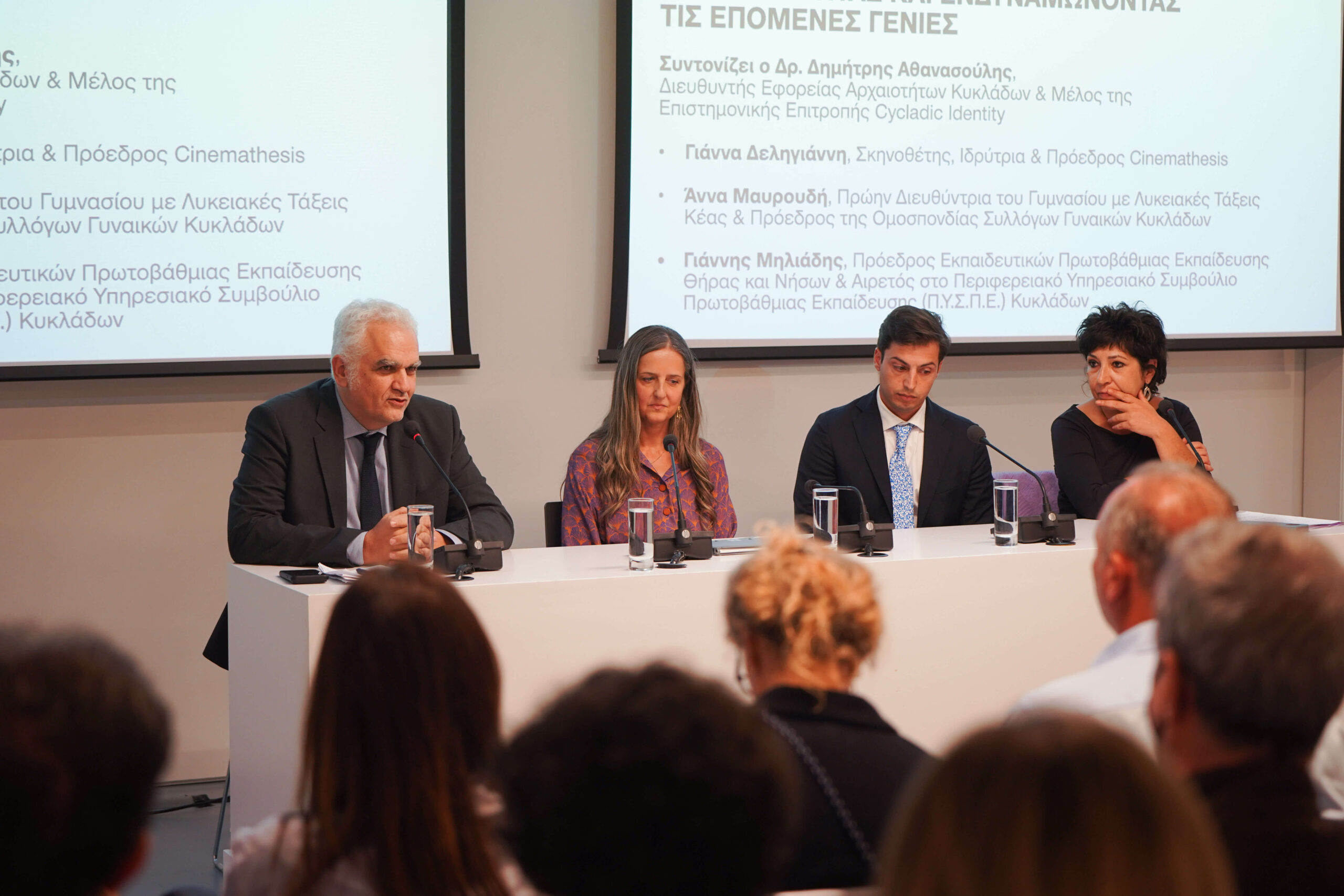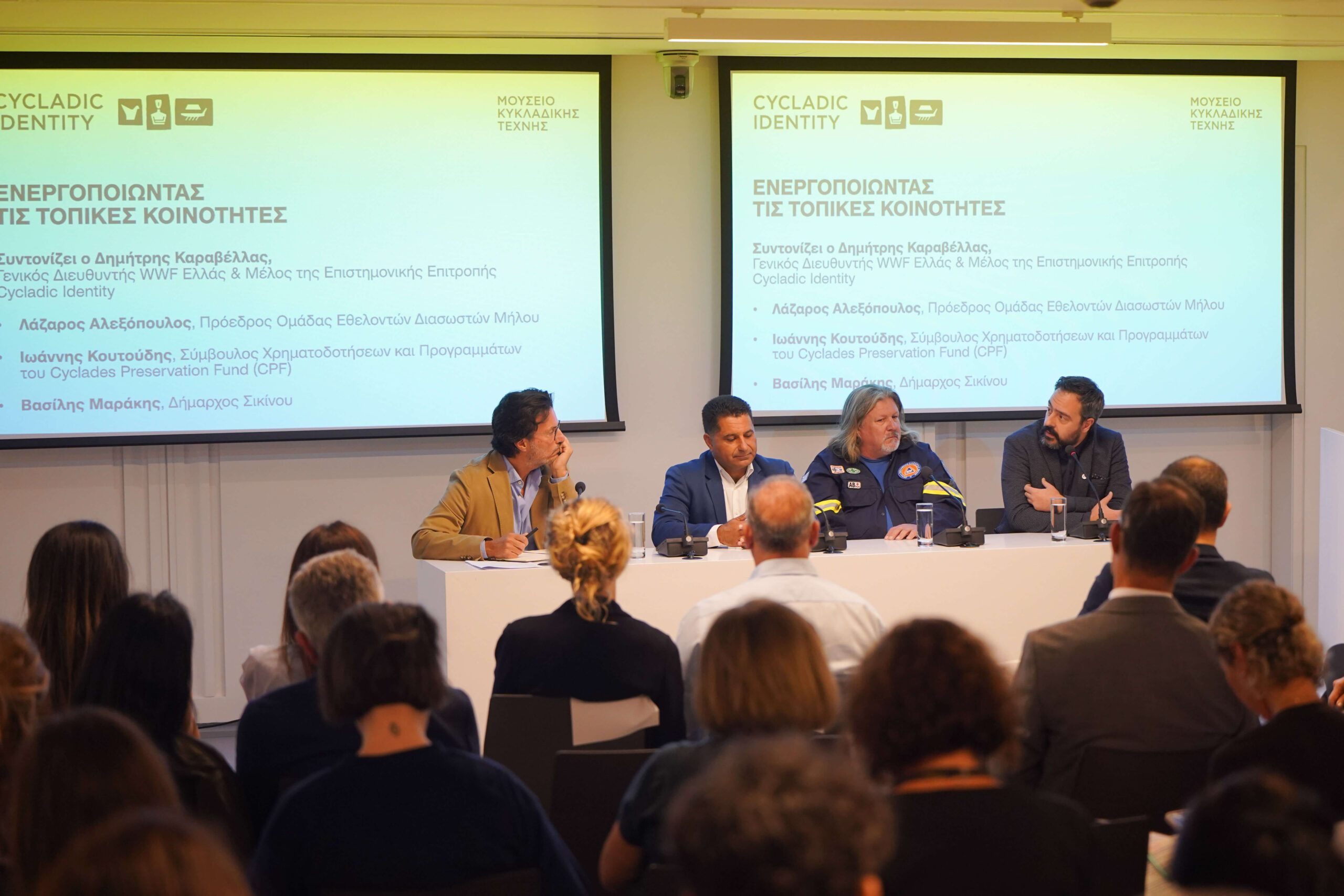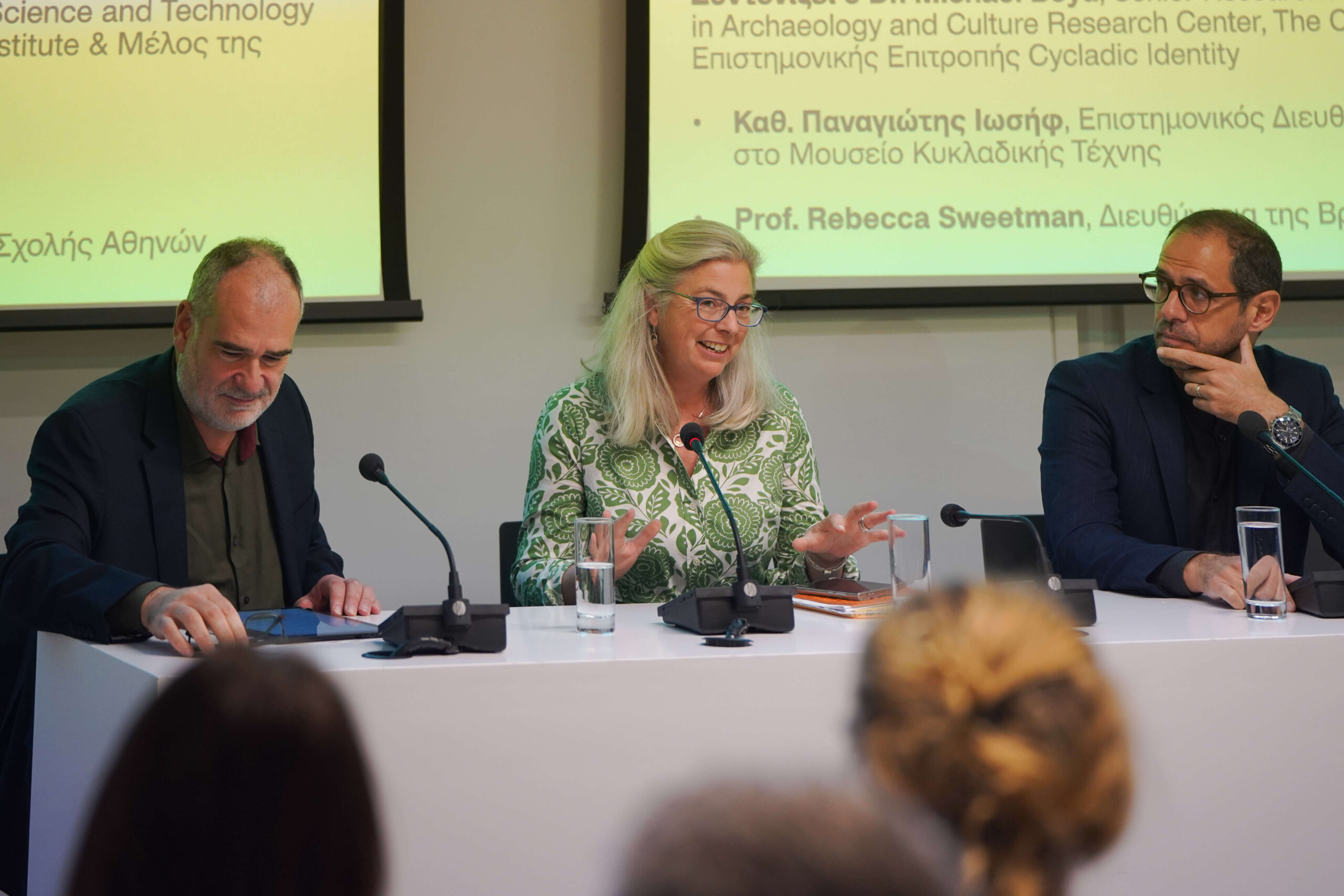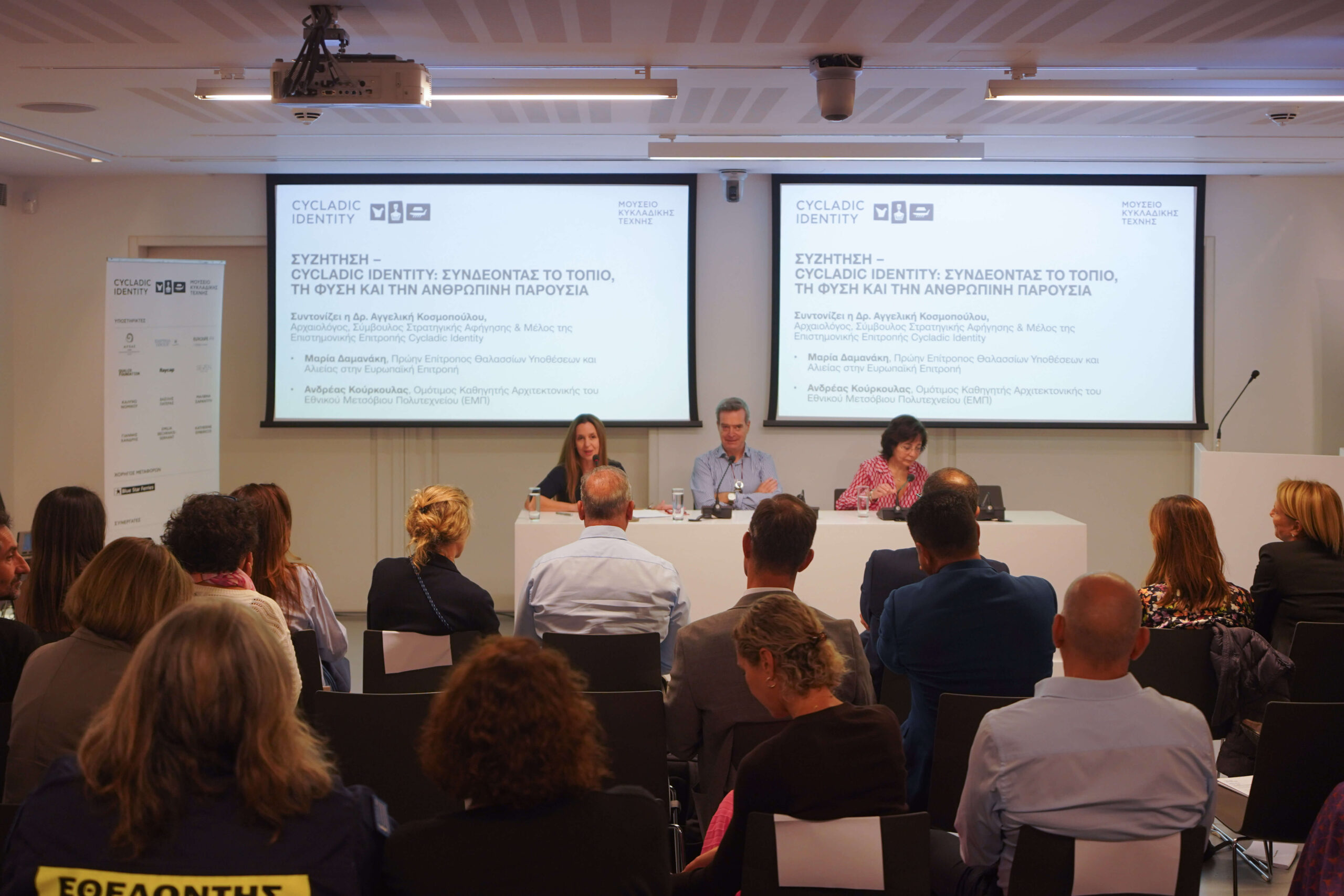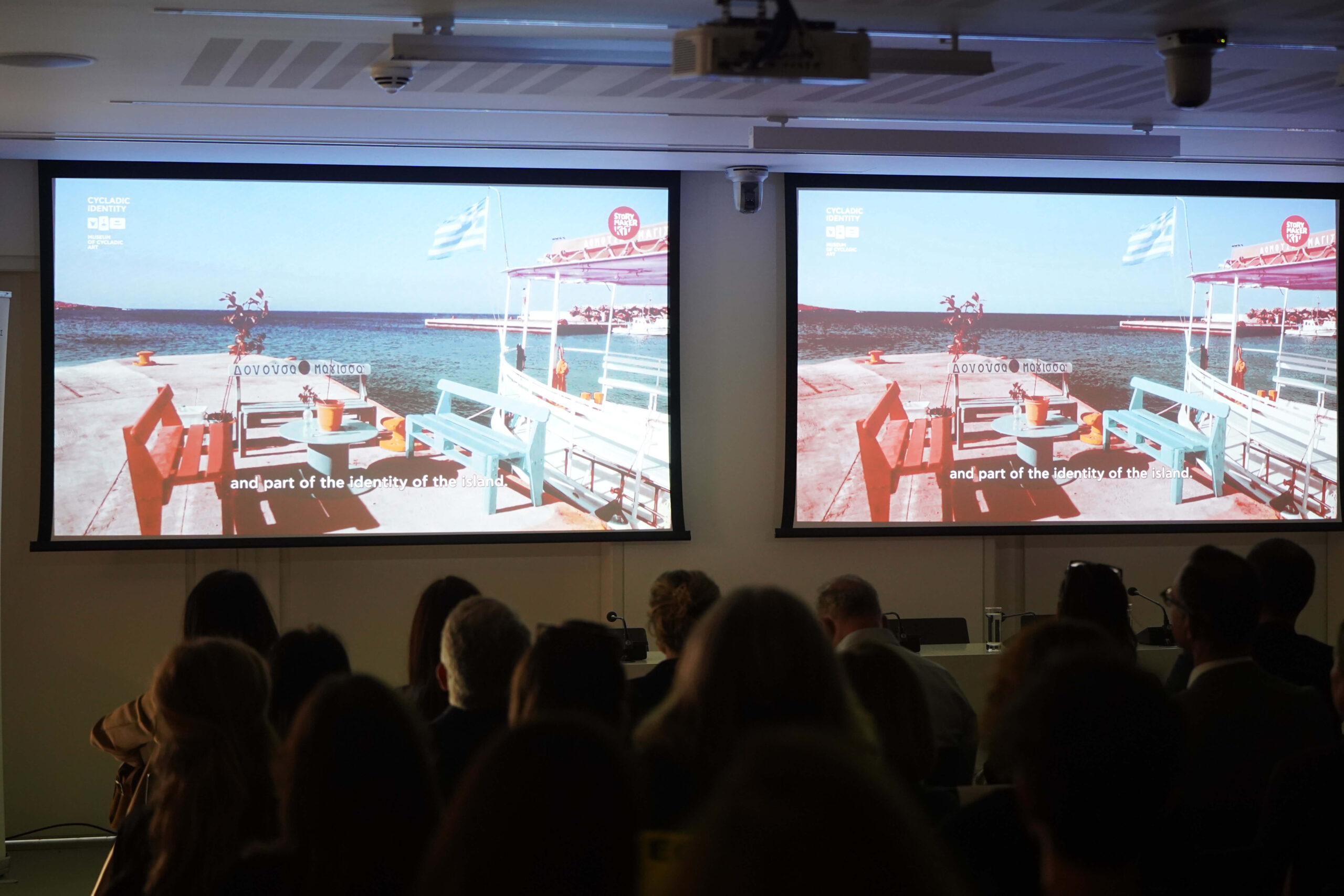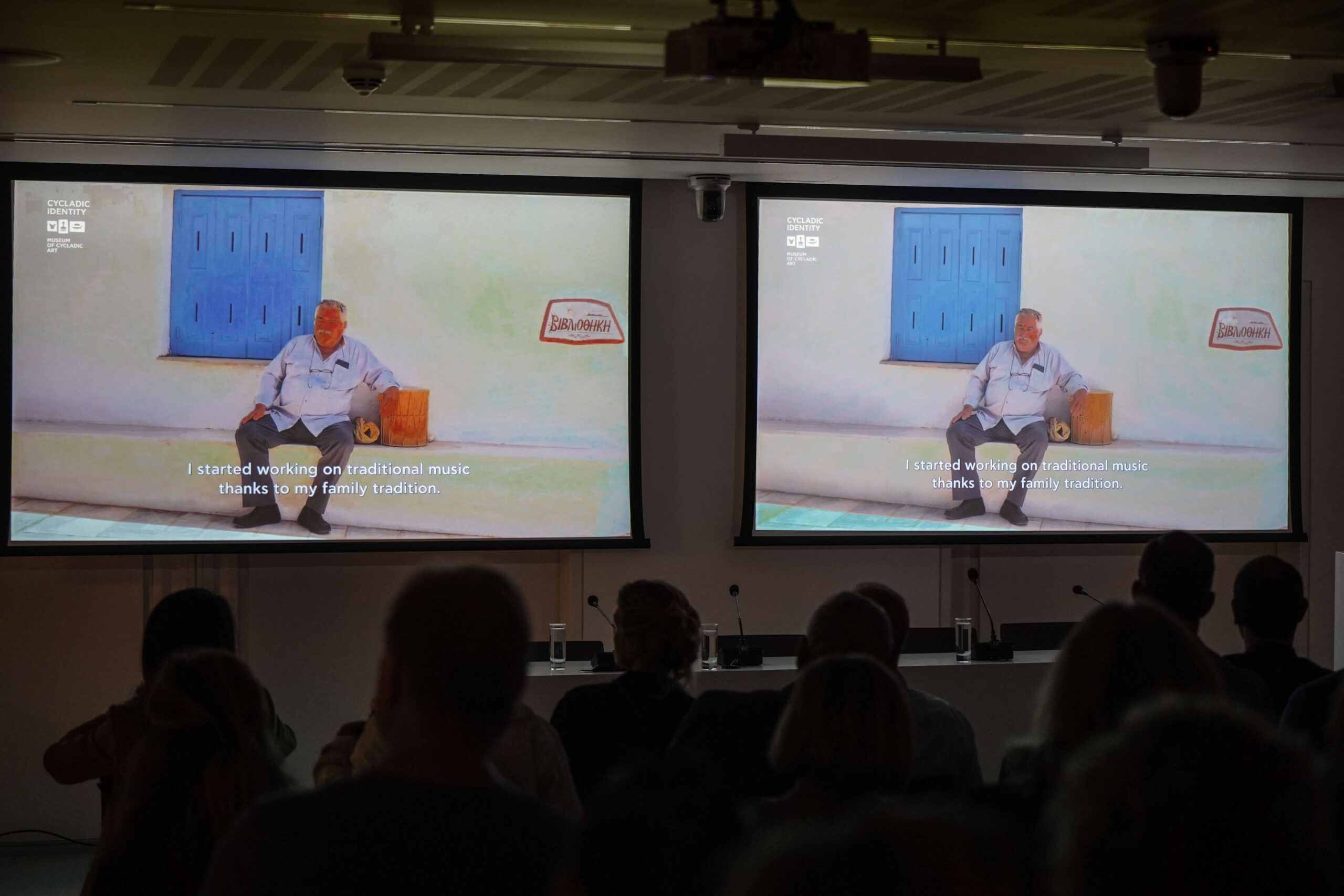

The Cycladic Identity Initiative of the Museum of Cycladic Art hosted its second annual conference on Monday, November 3, at the Museum’s Auditorium, bringing together educators, local authorities, civil society representatives, researchers, and cultural practitioners from across the Cyclades.
Under the title “Cycladic Identity in Action: Community Empowerment and Impact Creation,” the conference highlighted how island communities can actively shape a sustainable future—socially, environmentally, and culturally.
Now in its third funding cycle, the Initiative supports 10 new programs across eight Cycladic islands—Andros, Donousa, Koufonisi, Mykonos, Santorini, Serifos, Syros, and Tinos—along with two inter-Cycladic collaborations. To date, it has funded 16 programs across 11 islands, reinforcing local engagement, biodiversity protection, and the safeguarding of both tangible and intangible heritage.
Communities at the Heart of Cycladic Identity
Speakers emphasized that the Cyclades face intense pressures—from overtourism and unregulated development to climate challenges and biodiversity loss. Local leaders, volunteers, educators and NGOs shared examples of grassroots action: civil protection teams created by islanders, environmental initiatives funded by local organizations, and municipalities adopting sustainable development models to preserve authenticity and landscape integrity.
As the President of the Museum of Cycladic Art, Sandra Marinopoulou, noted, “Cycladic Identity lies with the people who bring these programs to life, proving that culture, nature, education, and society are threads of the same fabric.”
A Global Lens on a Local Heritage
International scholars explored the Cyclades through broader historical and cultural perspectives—highlighting millennia of resilience, strong inter-island ties, environmental adaptation, and the unique continuity of Cycladic traditions from antiquity to the present. Speakers called for a move beyond tourist stereotypes and toward storytelling led by local voices.
Education as a Foundation for Identity
Educators from across the islands stressed the need for cultural education within public schools, noting persistent gaps in arts instruction, funding, and cultural access for students. They emphasized that cultivating identity and respect for heritage must begin in early childhood and be supported by coordinated action by the ministries of Culture and Education.
Landscape, Nature & the Human Presence
The final thematic section focused on the Cycladic landscape as a living system shaped by both nature and people. Experts highlighted the significance of dry-stone walls, water management, agriculture, and traditional architecture as expressions of sustainable coexistence. Speakers emphasized that “Cycladic Identity” embodies insularity, locality, and a feminine ethos—care, balance, and economy of space—qualities threatened today by unchecked development.
A Growing Network for the Future
The Cycladic Identity Initiative continues to expand as a platform that funds, supports, and connects local projects rooted in culture, biodiversity, and community well-being. Its Scientific Committee—composed of leading archaeologists, researchers, environmental experts, and museum professionals—evaluates and guides its programs.
The conference concluded with a shared call: to protect the Cyclades not as a tourist image, but as a living cultural ecosystem, where tradition, landscape, and community remain inseparable.
Watch the full conference here.