
The prestigious “German Design Award Winner 2025” represents one of the most significant global distinctions. The German Design Awards are the premier accolades bestowed by the German Design Council. With their international impact and renown, these awards are among the most recognized design honors across all industries.
The “German Design Awards” are presented by the “German Design Council,” which aims to identify and highlight design trends that shape the future of architecture and design. Each year, the esteemed jury, comprised of highly regarded professionals, selects innovative projects from a vast array of outstanding works worldwide. Established in 2012, the “German Design Awards” are recognized globally as one of the most reputable competitions in the design sector.
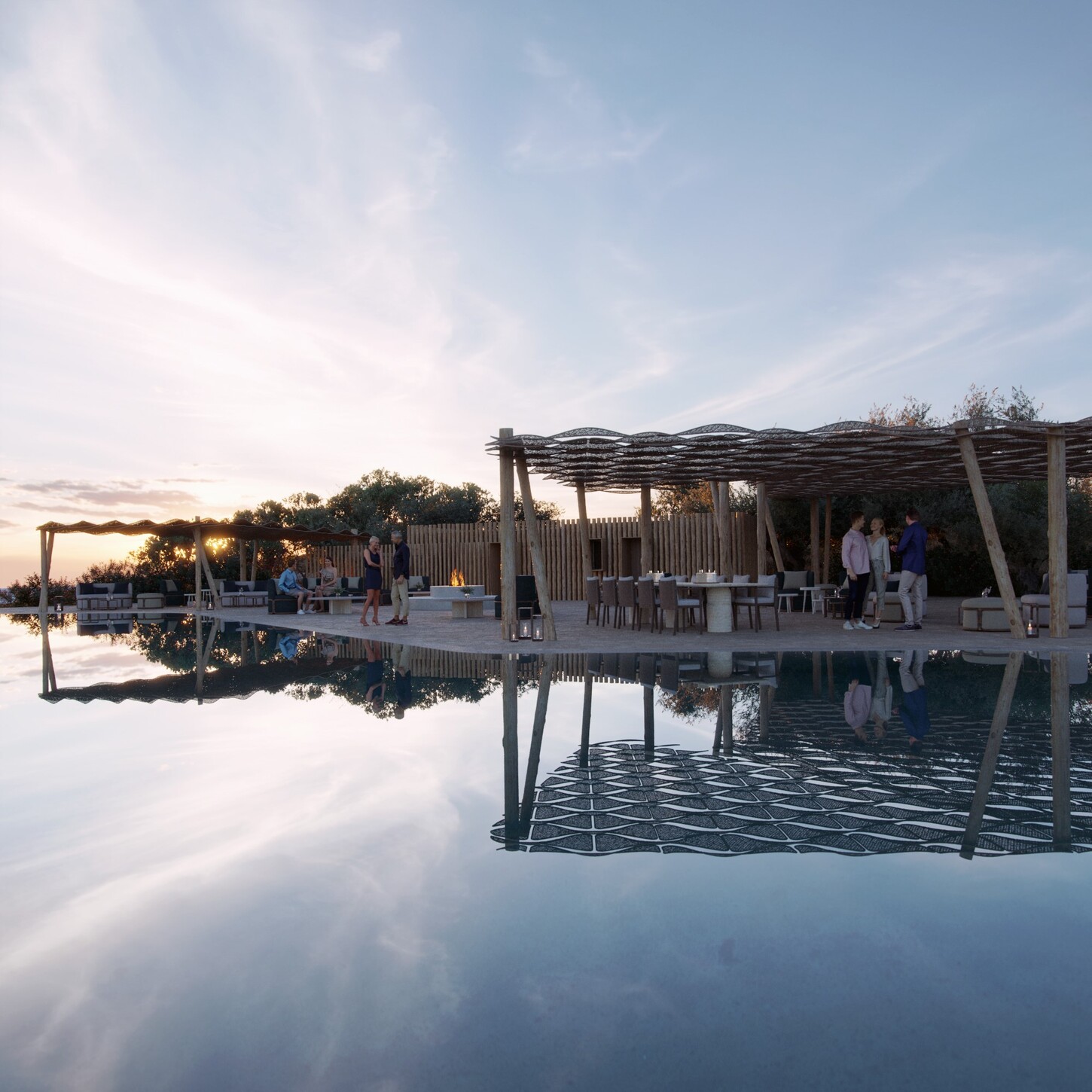
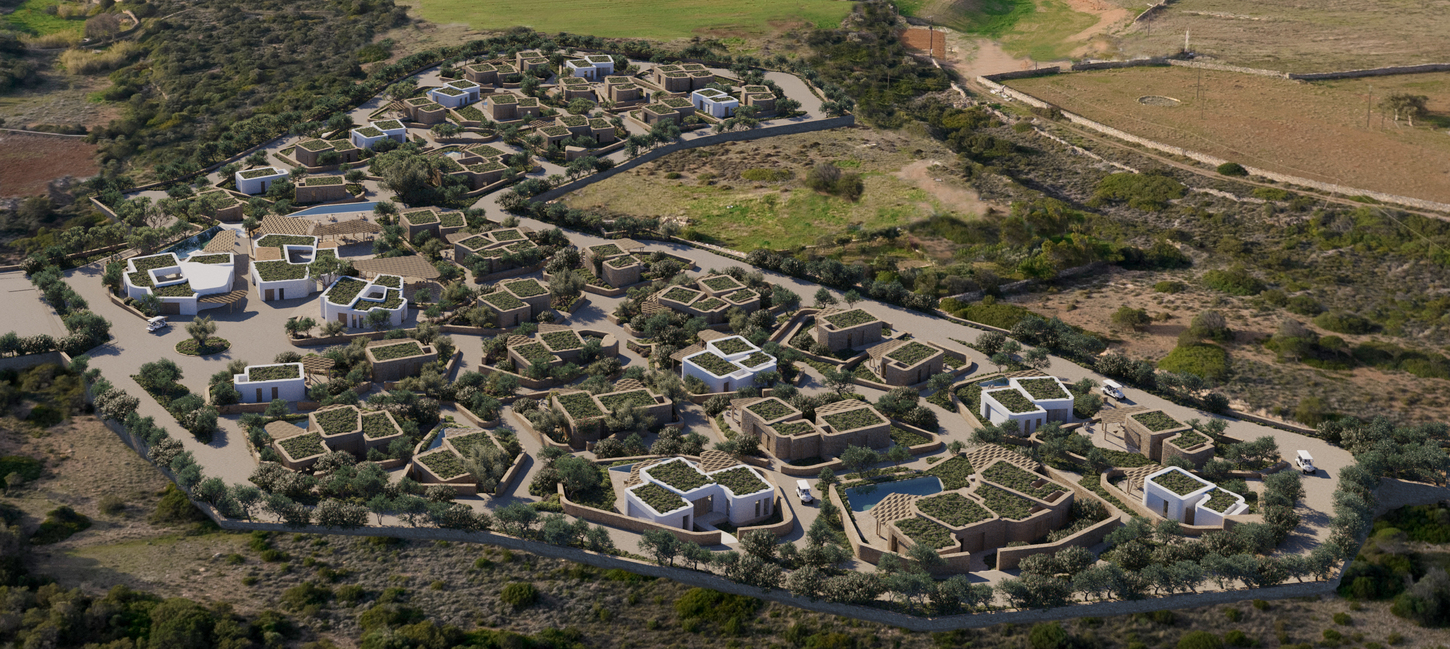
The “Winner” award at the German Design Awards, given to the project “Slow Living Resort in Cyclades” by Potiropoulos+Partners, celebrates the exceptional and exemplary design approach of the work.
A Few Words about Slow Living Resort in Cyclades
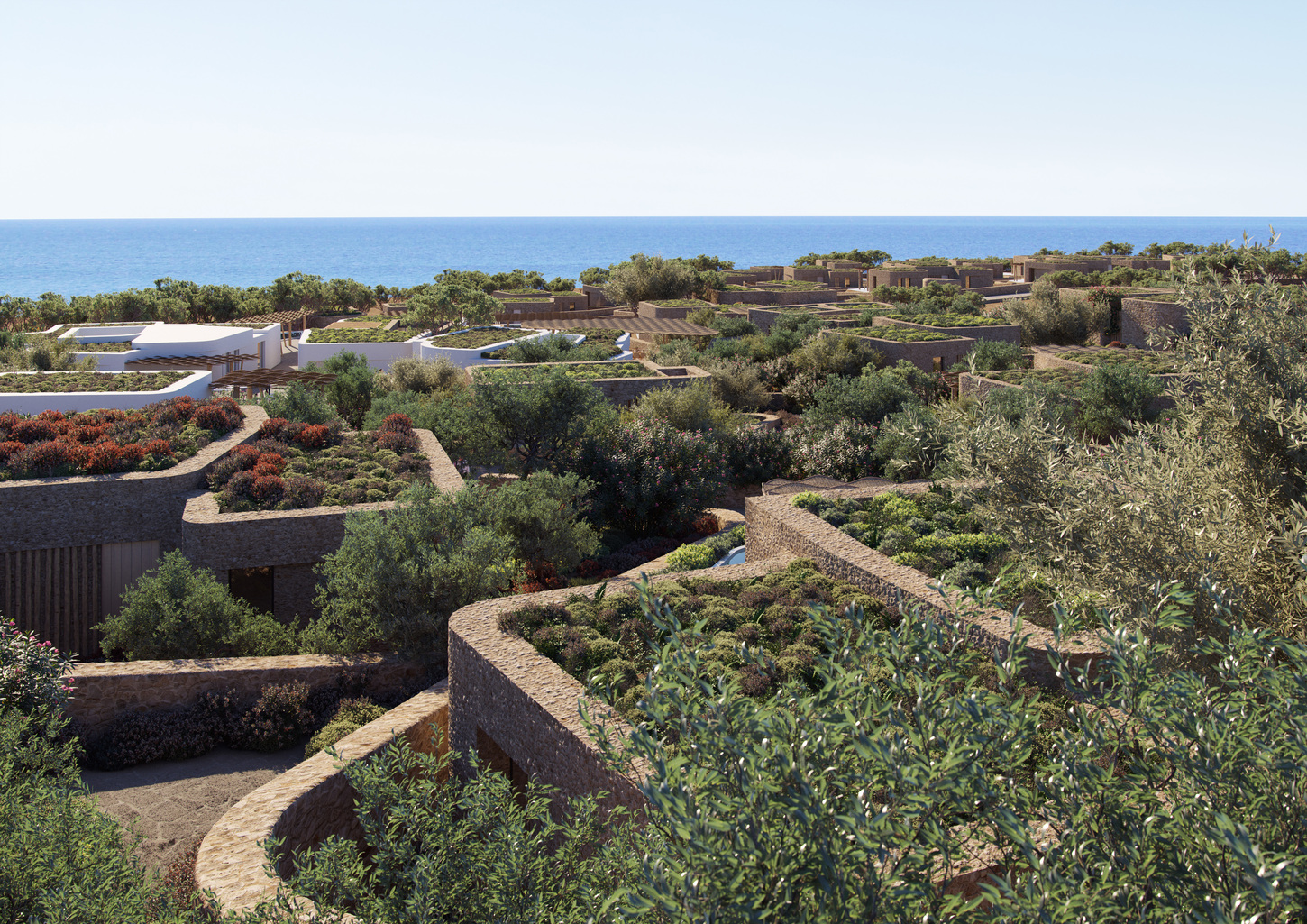
The central concept unfolds at the intersection of parallel explorations related to the unique topography of the wider area, orientation, views, and the characteristics of Cycladic settlements in terms of scale, density, and style. The design avoids spectacular gestures, instead focusing on the deep-rooted local idiom. It aims to “do more with what is already there,” as Jean-Philippe Vassal would say. By freely interpreting the contours and the sinuous edge of the coastline, it also maintains a subtle connection to the sculptures of Richard Serra. The design’s intention was not to create a “monumental building complex” but an open system rooted in the philosophy of well-being, allowing light, air, greenery, seasonal changes, and colors to flow through it. The primary objective was to offer a multisensory experience within nature, reawakening connections that have been neglected due to modern living.
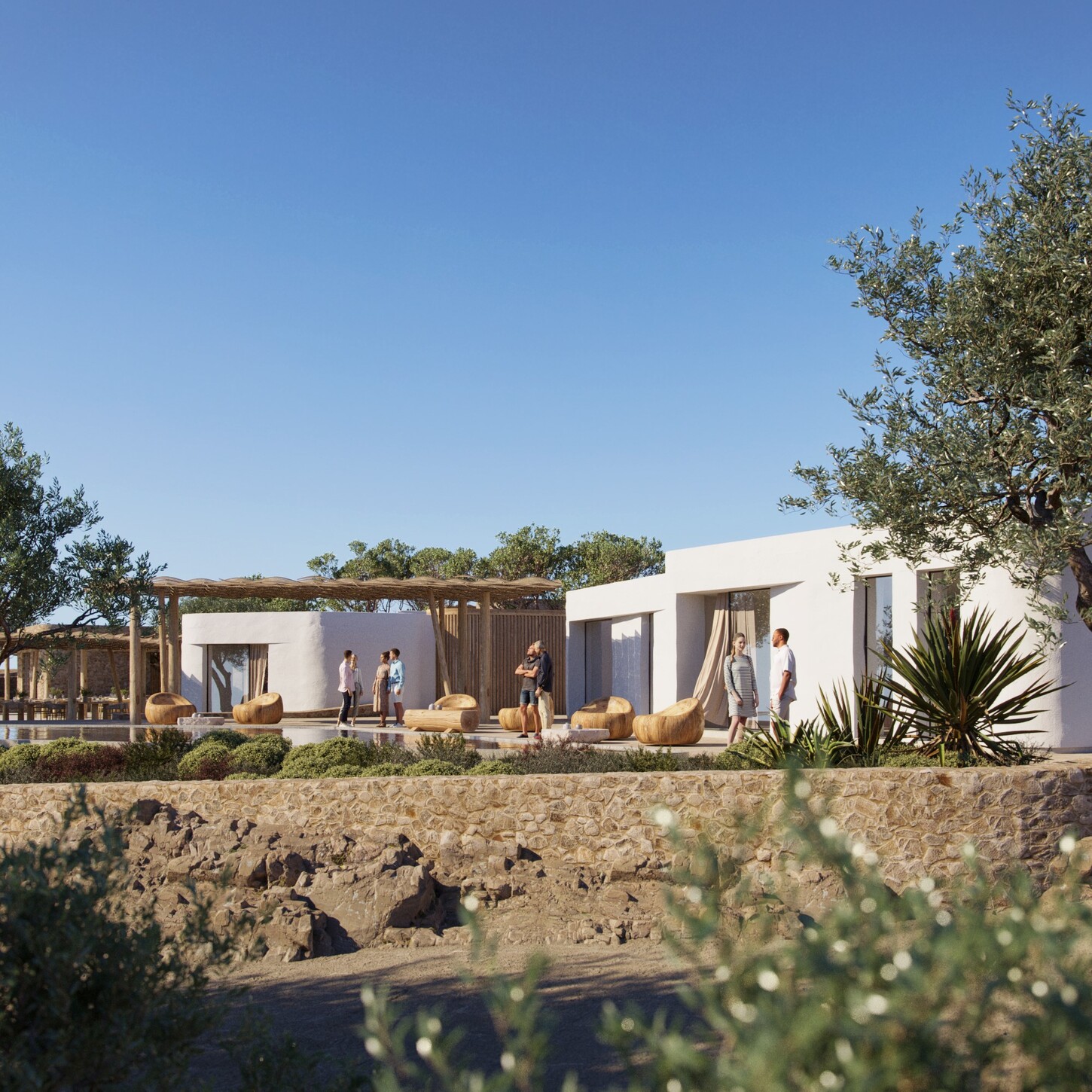
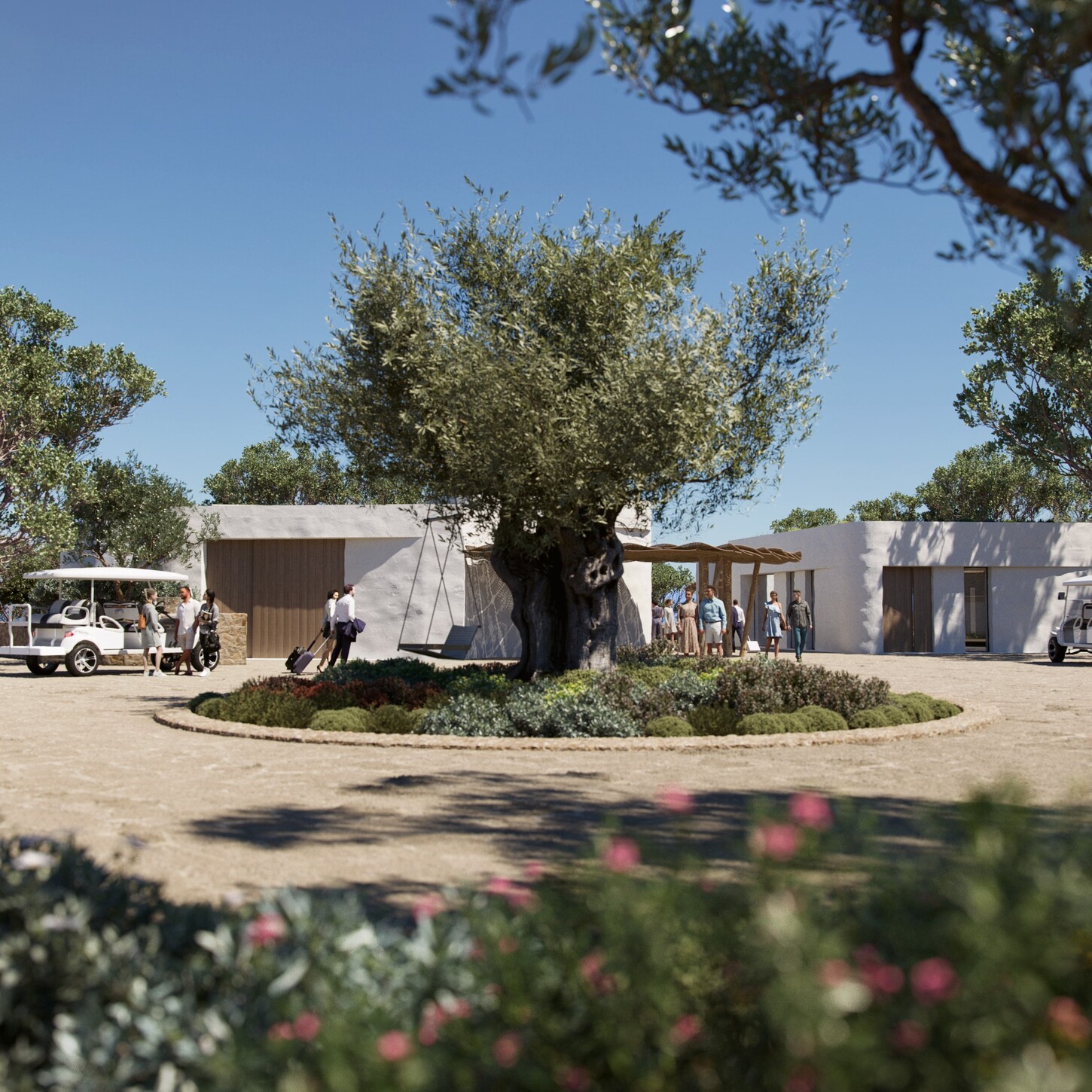
The overall design canvas follows the forces of the terrain, sets boundaries, divides while uniting, and creates space. With single-story volumes organized around a main spine comprising public functions, a network of pedestrian pathways, and a peripheral ring, the master plan’s structure and architectural language resonate with the inherent simplicity of local architecture. The central square—an archetypal space filled with memories and expectations—serves as the heart of the complex. Oriented towards the panoramic view, it harmonizes with the landscape while regulating the flow of movements and stops according to the functions it serves: reception building, restaurant, tavern, and event space. With a clear reference to the cultural and social backdrop of Cycladic settlements, the complex’s center becomes a place of celebration of life itself. Visitors experience a continuous, fluid transition from one function to another, from “defined” and more “formal” to the “abstract” and “everyday.”
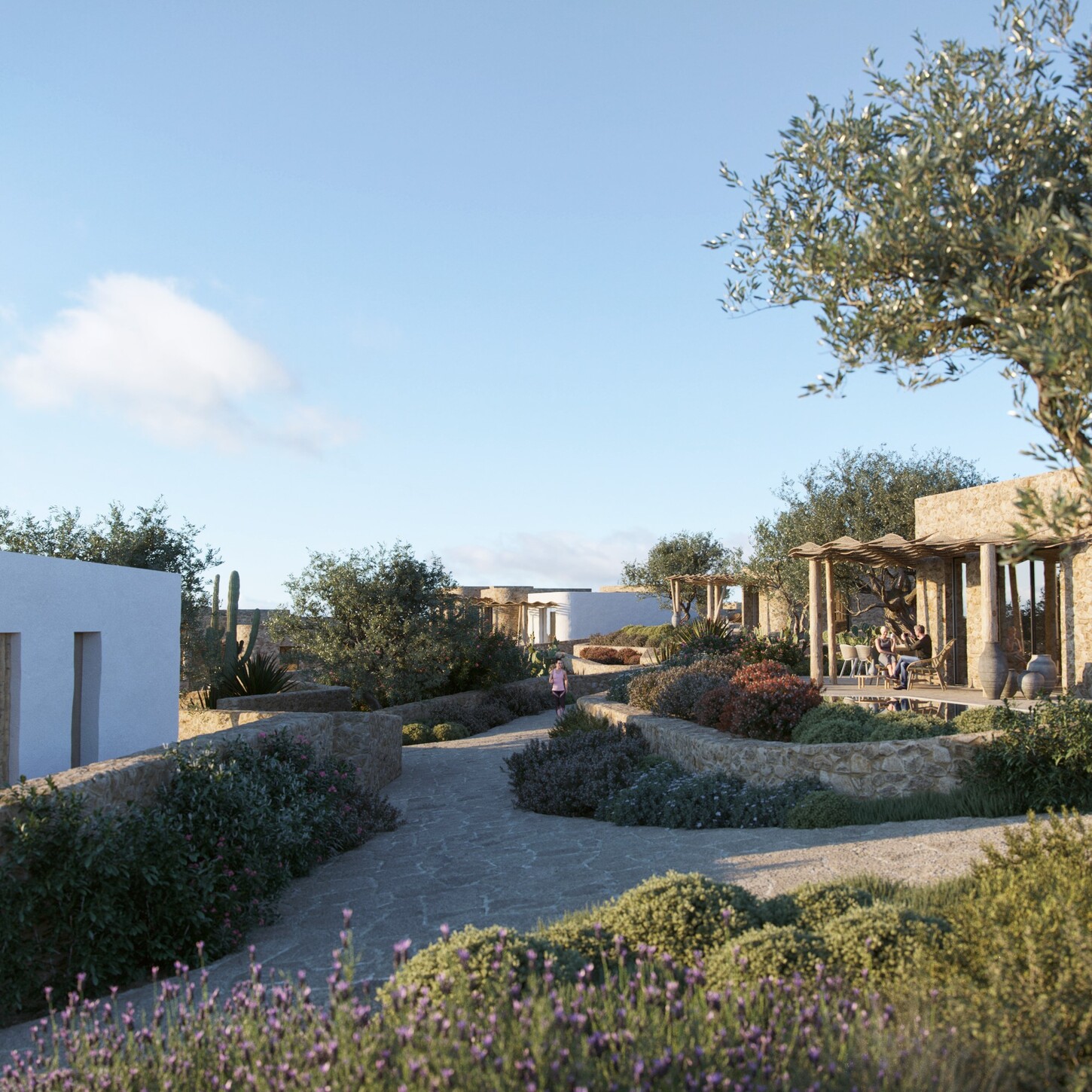
Following the geometric randomness of the general layout, as shaped by the sculptural stone walls along the pedestrian network, the stone-built accommodation units and some plastered structures integrate harmoniously into the terrain’s undulations. Their protected Mediterranean courtyards open to the view, forming a continuation of the interior spaces, merging the “inside” with the “outside.” Pergolas and shading elements made from raw wood and woven, straw-like surfaces complement the structures, providing a natural feel. Their refined craftsmanship recalls traditional techniques.
The poetic use of materials carries its own symbolism and vocabulary, while the interplay with light—both natural and artificial—highlights unexpected relationships and contrasts that captivate the gaze. Public and private “gardens” embrace the buildings, reminiscent of extensions of the terrain, like an elevation of the landscape. Nature dominates. Small orchards, vegetable gardens, rosemary, thyme, geranium, lavender, olive trees, and sporadic pines and cypresses enrich the greenery, contributing to the creation of a temperate Mediterranean microclimate. The landscaping with stone paving and stabilized soil enhances the earthy homogeneity, while their permeability allows underground rainwater collection for irrigation. Overall, the design aimed to create a sustainable, biodiverse ecosystem promoting the idea of sustainability.
The “Slow Living Resort” gently adapts to the natural terrain, receding in some areas while asserting its presence in others. “Throughout the space, in a continuous experiential present, humanity exists.”