
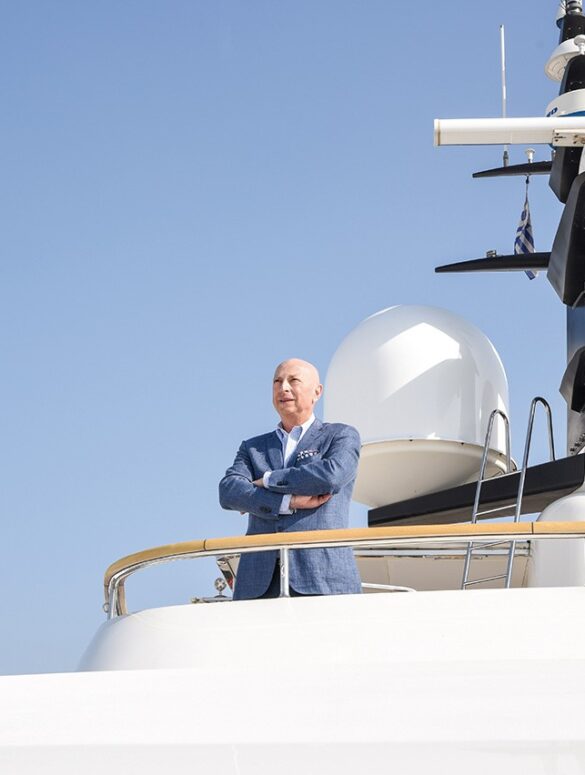
As the Mediterranean Yacht Show (MEDYS) celebrates its 10th anniversary, Michael Skoulikidis reflects on the journey, sharing insights into the event’s impact and the evolving landscape of yacht chartering in Greece and globally.
After 10 years of organising the MEDYS, what makes it stand out, and what are the development prospects for this institution over the next decade?
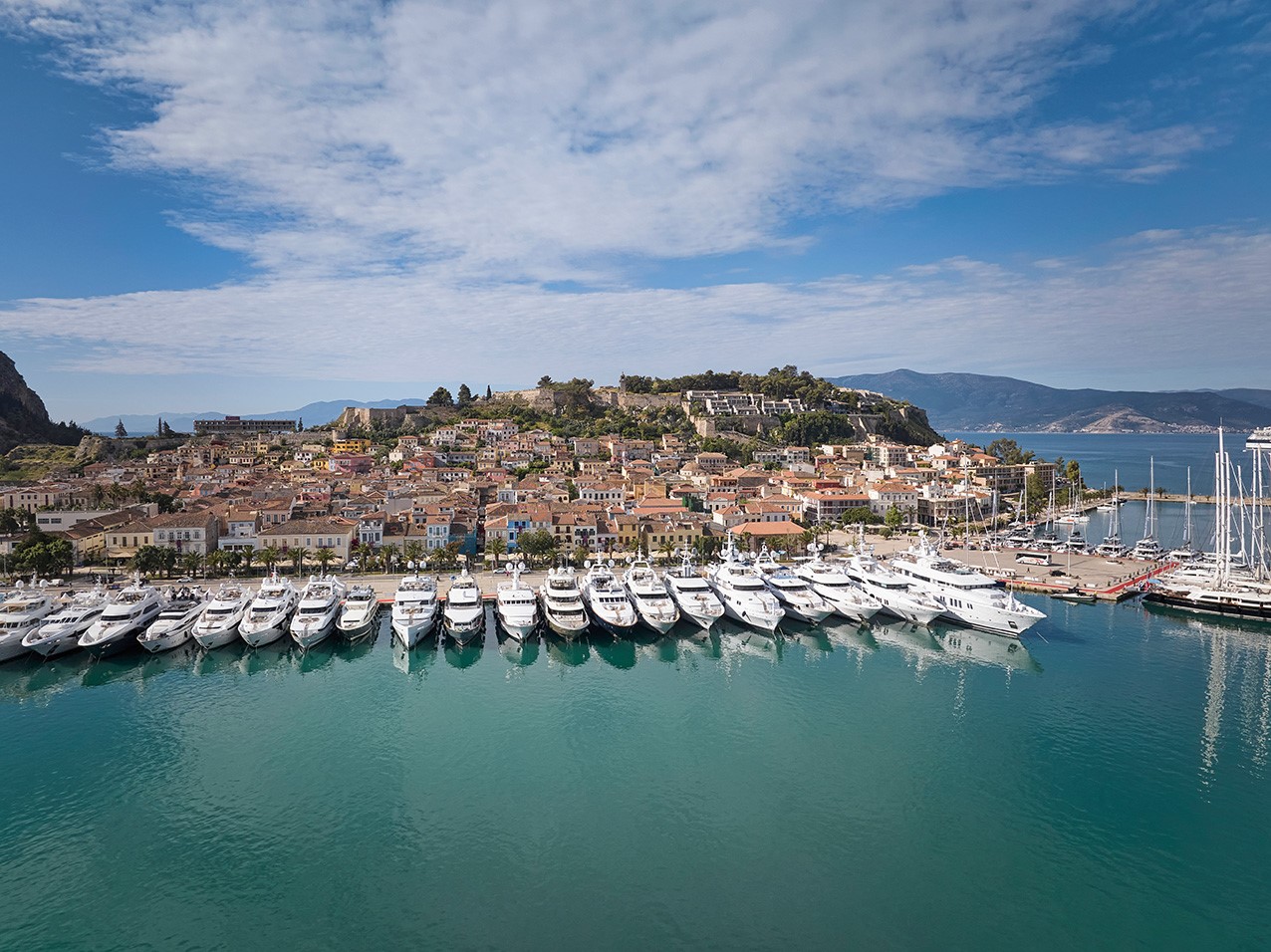
The MEDYS has long established itself as the largest crewed yacht charter show in the world, a distinction achieved through consistency, professionalism, and unwavering dedication. Since its inception a decade ago, it has become a corner-stone of the global yachting calendar, annually attracting an impressive fleet of crewed yachts with a Greek charter license and a median LOA of 43 metres. What has set us apart on the global stage is that we are “attendee-friendly”. We are a no-frills event that is centred on getting down to business but, at the same time, everyone who has visited Nafplio knows that attention to detail is paramount for us. The fact is that we know and value every single one of our attendees, and we spare no effort when it comes to making the days they spend with us as easy and productive as possible. Everything (yachts, accommodation, restaurants, bars and shopping) is within walking distance and everyone from the organizing committee is within earshot. As far as the number of attending yachts is concerned, there is not much room for growth. The port of Nafplio has what I describe as a “fixed capacity” and the fleet it can accommodate is between 96 to 100 vessels (with the deciding variable being the beam). It is already an exceptionally large show as the maximum number of yachts that experienced brokers can view per day is 8 (40 over the total duration of the show). So, what we are focusing on is attracting an even greater number of international charter professionals, who serve as excellent ambassadors for our country, and elevating the show experience for attendees. We are also making efforts to expand our reach and grow our audience by building alliances with nonspecialised media, something that will ultimately be beneficial for the entire tourism industry in Greece.
How do you see Greece positioning itself internationally compared to other yachting destinations?
Greece has already positioned itself at the very top of the global market as far as superyacht chartering is concerned. It is not at all surprising as it is a yachting destination unlike any other. The question is: what do we need to do to stay there? In an increasingly competitive market, our many unique selling points are no longer enough. We need to add to the breathtaking beauty of our islands, exceptional weather conditions, rich history, culinary offerings and cultural heritage. In order to stay “on top of things” we need to improve the infrastructure of our marinas and ports, adopt a more aggressive and targeted approach to marketing our product and streamline our processes.
What initiatives do you consider most important for promoting Greece as a top yachting destination?
I would like to begin my answer with something that I read recently. It is a quote by Thomas Sowell, an economist and social philosopher, who said that “You will never understand bureaucracies until you understand that, for bureaucrats, procedure is everything and outcomes are nothing.” That is our problem in a nutshell. In order to promote Greece as a premier yachting destination, we need to implement regulatory reforms that will reduce bureaucracy. Outcomes should be everything and procedures, such as the establishment of Greek maritime companies (NEPA) and optimisation of the e-charter contract system, should be simplified. It is essential that we develop a national strategy with clear objectives and actionable measures. It is critical that we align tax policies by introducing competitive VAT rates – comparable to or better than those of neighbouring countries- which will significantly add to Greece’s appeal to investors and stakeholders. It is mandatory for us to actively participate in the major international yacht shows such as the Monaco Yacht Show and FLIBS as well as those that revolve around luxury products and services. They are our natural environment and not the trade events that promote tourism is general. Our clients are very selective, and we should be too if we want to be on their radar.
Do you believe that the marinas and other infrastructure of the Athenian Riviera are ready to meet the demands of a premier yachting destination?
In terms of location, the Athenian Riviera has great potential indeed. However, it sadly lacks the infrastructure that is fundamental to a premier yachting destination. While there have been some upgrades and facelifts to existing marinas, the shortage of berths remains an unsolved problem and it will only get worse. At the moment, there are not enough berths for all the yachts that are based in Greece let alone the foreign-flagged vessels that appear in their hundreds during the summer season. In terms of available options, ranging from fine dining and high-end shopping to entertainment, we are also not on par with what is being offered in other leading destinations in the Mediterranean. In the South of France, Sardinia and the Balearic Islands, charterers are spoilt for choice and they tend to visit repeatedly not only for the destinations themselves but for the exciting and luxurious lifestyle that they can enjoy ashore.
What inspired you to propose extending the Golden Visa program to the yachting market?
Extending the Golden Visa program, to investors originating from outside the European Union, is an initiative that aims to leverage the yachting sector as a driver of high-value investments in Greece. Equivalent programs have already been successfully implemented in countries such as Malta and Montenegro, where linking investment incentives to the yachting industry has attracted Ultra High Net Worth Individuals (UHNWIs) and delivered significant economic benefits, including job creation and increased tourism. A carefully designed version, tailored to Greece’s needs, could produce equally transformative results, strengthening the yachting sector and boosting the national economy. For Greece, such an initiative could create multiple revenue streams for the government and local businesses. Yacht expenditures (on insurance, crew, maintenance, docking, and shipyard services) will exceed its initial acquisition cost within an estimated time frame of 7 years and will be distributed across various market segments and social classes. In contrast, real estate investments lack such ongoing and widespread economic impact, especially after the initial purchase phase. Additionally, Greek-flagged yachts will serve as excellent ambassadors in our remote islands.
What advice would you give to young people who want to engage in the Greek yachting industry in such a challenging environment?
The yachting industry is scintillating and interesting but as times change so do employment opportunities. Those who are contemplating working within our industry should examine the positions that are currently in-demand, those that will be in future, and decide which one of them might suit them best. Many years ago, the role of yacht brokers was one of the most attractive ones and there was ample space for new entries. Today, the field is saturated and highly competitive, with space only for the truly talented. On the other hand, there is always room for great captains and engineers, and other specialized roles, such as talented chefs. My overall advice would be to focus on acquiring experience, to listen more than you speak, and stay abreast of global trends. You have to be willing to go the extra mile and demonstrate a proactive approach if you want to succeed. Knowledge and passion are the key.